Robert Adams of MrAMusicPlace.net discusses how composers of symphonic music create works that sound frightening. To get the most out of this article, copy and paste the Youtube links into a separate browser window and play the examples as you read the related material.

MrA_Image

Sounds can be among the scariest stimuli that we humans face. We are comforted by being able to see what has just frightened us, and when we cannot see the source of our discomfort, the dread within us increases. Anyone that has been alone in an old house can immediately relate to this. The night time creaks, the windblown branch scraping against a window pain; these things unnerve us because we cannot see them. Given our tendency to be frightened above all by sound, it should come as no surprise that music at times can sound frightening. Though our rational minds know that there is no danger posed by a home sound system or a symphony orchestra on a stage before us, still certain sounds initiate fright reflexes in spite of what we might think our rational selves would tell us.

Composers sometimes take advantage of our skittishness, building scary sounds into music in order to give us a good musical scare. What are these devilish devices served up to us by composers of concert music and film music alike? Let’s take three examples and see if we can find what they all have in common. First, listen to “A Night On Bare Mountain” by Mussorgsky. This is Mussorgsky’s original version, not the more often heard revision by Rimsky Korsakov. https://www.youtube.com/watch?v=zR2P-5J-2MA

This music has three of the things we humans are most afraid of: power other than our own, excesses, and unpredictability.This music lunges at us from the outset, and accosts us with largess. The timpani and low brass sound powerful amid a context of swirling, prowling strings and pounding, incessant, percussive repetition. The music immediately hammers away at us, catching us off guard and surprised by the ferociousness and ugliness of the sprawling creative ideas. Piccolos swipe away at us from their extreme and shrill upper perch. Then, a cymbal clash and all but the quietest and lowest sounds drop away, leaving us apprehensively awaiting where the music will deposit us next. A few moments of hopeful frolicking before darkness ambushes us again, and we are accosted all over again by the sudden trumpet attacks. A few unexpected harmonies and we are lost and surrounded in sonic darkness. Then beams of light come flashing through the flutes and scampering strings. Still unsettling in its uncertainty, the new found brightness at least for now entices us with hopefulness. Yet a storm begins to brew, and the woodwinds turn on us, now caught up in the returning stormy gloom. A bit of frolicking development with the ever returning hint of doubt. We are never far from hints of the ominous opening which leave us apprehensive, unwilling to find comfort in whatever peaceful moment we may find. The cellos again lurk beneath familiar melodies while the brass continue to stab at us, as if probing to discover our whereabouts. The melody struggles to cross over into major, at at the very last seems to succeed, but only to escape and not triumph.

Now let us consider a work not necessarily part of the usual classical music canon, but never the less symphonic and scary. The music immediately sets our innate physical defense system on alert. The abrupt, high, shrill blasts from the strings are well outside the pitch range of what we expect at the beginning of a musical work. The extreme high range of these pitch blows gets our attention, tricking our self-preservation mechanisms to prepare to defend our bodies. The adding of a dissonant interval heightens the affect, making the music not only threatening but also unpleasant which unleashes a feeling of sadness or despair. As in “Night On Bare Mountain,” the incessant repetition of this threatening unpleasantness builds tension and unsettledness throughout our bodies and minds. The repetitions last long enough to become irritating and to set us wondering just what sort of attack we are under. (Of course if we are watching the movie, we know; but we are talking about the music here, apart from the film images.) These attacks are eventually replaced with plodding basses, giving us a new image to interpret. The plodding is repetitive making its duration and destination uncertain, adding to the scariness. Soon repeated flourishes in the high strings are added, reminiscent of the swirling high strings near the beginning of “Night On Bald Mountain.” These two contradictory forces, the plodding basses and the swirling strings, now give us two potential threats to defend against. Then the plodding slows and stops, but never quite goes away, leaving us to wonder if we are safe or not. And that doubt is scary indeed. https://www.youtube.com/watch?v=Me-VhC9ieh0

The third example is the fifth movement from Berlioz’ Symphonie Fantastique. Once again we have basses in cellos beginning with an lumbering other worldly moving about, to which are quickly added once more high strings playing a rapid figure, a sort of musical version of nails on a chalkboard. Pizzicato notes climaxing with a descending trombone line leave us tentatively wading in an underworld of sorts. Then the flutes, piccolo and oboe impose a grotesque character of a devilish character wishing to be both friendly host and hostile interrogator. Then the protagonist herself arrives, the mocking and strident clarinet fixed on taunting us beyond what we can endure. The movement goes on with unexpected outbursts interspersed with retreats into quiet, death knells on the bells, the dies ire, ancient hymn of death in the requiem mass, and more unworldliness when the string players strike their strings with the wooden part of the bow. It is a parade of unexpected twists and orchestral effects that take the listener completely by surprise. https://www.youtube.com/watch?v=cao6WyF-61s

What we learn from this short survey of scary classical music, is that music is scary when it sounds like things that scare us in real life, such as big (low) strong (loud) or overpowering (high and shrill) beings, and situations in which we don’t know what to expect, have no power over, and in which we hear things that naturally frighten us. The wonder of music is that it can do all of this in an environment we know to be safe. It is a grand bit of trickery that music pulls off, and one that we seem to universally enjoy, just as if we were delighting in the terrifying drop afforded us in an amusement park roller coaster or free fall ride. It is this toying with our emotional survival mechanisms that makes scary music scary.

Country:USA

Posted in Uncategorized and tagged , , ,

Robert Adams from http://mramusicplace.net explores the devices composers use to control the speed of their music.

recite-vgbylk

It seems simple enough; when music gets faster, we call it an accelerando. Orchestral musicians know they have to watch the conductor, and conductors know they have to give an increasingly faster beat to create the accelerando. As far as it goes, this is all correct. But is increasing the beat the only way composers and performers create increases in speed?Are tempo and speed the same?

Consider the beginning of the final movement of Dvorak’s symphony no. 9, “From the New World.”The tempo is constant throughout, but the speed of the music clearly increases. This increase is achieved entirely through rhythmic means. The motif of an ascending semi-tone (half step) is written with a longer duration on the first note of the interval, and is followed initially by two beats of rest, thereby spacing out the second occurrence from the first. After one repetition, the duration of the first note is reduced by half a beat, and the rest between occurrences is also reduced, from two beats to just half of one beat. By the fourth measure, the first note of the interval is down to only half a beat, and the rest in between is down to one-quarter of a beat. In each case, the unit of the beat is the quarter note. By composing the rhythms this way, Dvorak has written an accelerando without increasing the tempo; therefore, accelerando and increase in tempo are not synonymous.

Apart from changes in speed, rhythm is also frequently used to present the same melodic material at the same tempo but at different speeds. Brahms was particularly fond of doing this. For example, in the fourth movement of the A Major Piano Quartet.27, measure 467, the accented material that is heard throughout the movement is played in the violin and viola in its original form, while in the piano, the pianist’s left hand plays it half as fast due to elongation, but at the same tempo.

From these examples, we can see that relying on tempo to define how fast or slow a piece of music goes is insufficient. Music with an extremely slow tempo may go quite quickly, as with the fast moving string parts playing sixteenth notes that accompany the slow moving theme written mainly in whole note and half notes in alla breve in the final section of Wagner’s Prelude to Tannhauser. To accurately define the speed of music, we must consider both tempo and rhythm. Music that is perceived as fast has notes that move at a relatively high rate per second, regardless of how they are notated. This can be achieve with a combination of a fast tempo and note duration equal to or divisions of the beat, or with a slow tempo and note durations that are further divisions of the beat. Conversely, music that is perceived as slow can be achieved with a combination of a slow tempo and note durations equal to or elongations of the beat, or with a fast tempo and note durations that are further elongations of the beat

In either of these cases, a rhythmic hierarchy is likely to be established. Music written primarily with divisions of the beat is likely to be perceived with a beat unit of a longer duration in order to keep the tempo manageably slow, while music that is written primarily with elongations of the beat is likely to be perceived with a beat unit of shorter durations, what musicians call subdivisions, in order to keep the tempo manageably fast, because both excessively fast and excessively slow tempos are difficult to comprehend and cognitively maintain. This is why designating a unit of beat is so important. It makes a tremendous difference if the beat is equal to a half note or a quarter note or an eighth note. The difference from one to the other in each case is halving the tempo.

From the listener’s perspective, the tempo at which music is moving is going to depend to Picture1a large degree on what beat unit he or she perceives, while we could expect the speed of the music, because it is measured in time and not beats, will be more reliable and consistent from on listener to another. An example of this is the first movement of Beethoven’s fifth symphony. A person (or conductor) who perceives the beat in quarter notes is going to find the music has a fast tempo; it has both a fast (quarter note) beat, and mostly durations that are divisions of that already fast tempo beat. A listener (or conductor) who perceives the beat in half notes is going to find the music has a moderate tempo and a fast speed; it has a moderate (half note) tempo, and mostly durations that are further divisions of that beat. The speed is still fast because the notes are moving at the same rate per second, and are divisions of divisions of the half note beat.While rare in practice, it is even possible to perceive the music with a whole note beat, giving the music a slow tempo but still fast speed. Listening to, conducting, or performing music with a slow tempo beat is valuable because it reveals rhythmic structure at a deeper level, focusing our perceived organization of the music over longer time spans compared to zeroing in on beats that occur over shorter time spans of music. For musicians, it is useful to be flexible in this matter so that listening comprehension is enhanced, and difficulties adjusting to conductors who use a different tempo beat than the musician is used to are minimized.

I mentioned earlier that tempo is measured in beats, while speed is measured in time. This statement needs some tightening up, because tempo itself is a kind of speed, and tempo is typically defined in units of beats per minute, as revealed in tempo markings and metronome usage. The distinction between beat and speed is necessary, as we have seen, because they can go in opposite directions. Even so, ultimately both are defined by time. This being so, the speed at which music moves must be defined entirely by time, and specifically by the number of musical events, whether they are beats, elongations of the beat, or divisions of the beat, that occur per unit of time. It is useful to define beats in units of occurrences per minute, because that is the established convention, and because beats are slow enough, even at fast tempos, to be so defined. Divisions of the beat, on the other hand, are more conveniently defined in units of occurrences per second. This is useful because knowing only the tempo does not give an accurate description of the speed.

Country:USA

Posted in Piano and tagged , , , ,

Upper Hands Piano: A Method for ADULTS 50+ to SPARK the Mind, Heart and Soul

Red IS The Rose

I’ve just posted a link in my blog to the sheet music for a St Patrick’s Day song called Red Is The Rose, appropriate for piano, vocals, guitar, bass and all G-clef reading instruments. I also included an offer for four more easy St. Patrick’s Day songs which I would be happy to send you by email- Danny Boy, The Irish Washerwoman, My Wild Irish Rose and Parting Glass (a recent Ed Sheehan hit!). Happy St Paddy’s Day, from Gaili and Upper Hands Piano.

http://upperhandspiano.com/blog/march-free-sheet-music-download-red-is-the-rose/?utm_source=feedburner&utm_medium=email&utm_campaign=Feed%3A+UpperHandsPianoBlog+%28UPPER+HANDS+PIANO+BLOG%29

Country:USA

Posted in Piano and tagged

In an era when many symphony orchestras are struggling financially and to attract new and younger audiences, Robert Adams of MrAMusicPlace.net analyzes a list of the top 25 classical works for it tells us about what audiences want.

MrA_Image

Developing new and younger audiences for classical music is of interest to those who teach music, and to those who run venues and ensembles that present classical music. One of the things that attracts audiences to concert halls is favorite repertoire being on the program. Contemporary composers of classical music have at times been at odds with audiences, because their music was not what people wanted to hear. While much has been written about the lack of appeal that atonal and aleatoric music has to audiences, it’s more important to know what audiences do like and do want to hear. With this information, purveyors of classical music will have guidance as they work to attract an audience outside the tried, true and aging faithful. A list of the top 100 classical music pieces found on kickassclassical.com provides some interesting food for thought. Let’s look at what is there.

While there are really no surprises on the list, what I find particularly interesting are the keywords associated with each piece. I counted the number of times each keyword shows up in the top 25 pieces; here is what I found. Four pieces or 16% (rank 3, 6, 15, 19) are matched with key words that are or suggestive of life events. Ten of them, or 40% (rank 1, 2, 4, 8, 9, 11, 14, 16, 22, & 23) are matched with key words that are or suggestive of emotions, and half of these are in the top ten. Five, or 20% pieces are associated with the word cartoon. This is born out in my classes. Students will invariably get the most excited and motivated to listen when they hear classical music that they recognize from or that sounds like music they have heard in cartoons.

Another interesting finding from this list is that all of the top five and 8 of the top ten have prominent rhythm in the themes. This produces an overall more driving, active kind of music, and it also results in a more explicit beat. This last point I believe is key. Young people in particular enjoy the heavy rhythm and beat emphasis of popular music. I have observed in my classes that the more rhythm and beat are prominent in a classical work, the more likely it is that they will enjoy that piece. Though not on the list, it is worth mentioning that among contemporary composers, the minimalists, including John Adams and Philip Glass, have been among the most popular, and that minimalist music is much more rhythmic than other styles.

It is also noteworthy that 15 of the top 25 pieces were written in the 19th century, and that the two most popular composers on the list are Beethoven (3) and Tchaikovsky (2). If my students are any indication, it appears likely that Beethoven’s popularity is driven in large part by two works, one of which (surprisingly) did not make the list: the fifth symphony, and Fur Elise. Tchaikovsky gets heavy promotion in the United States every American Independence Day (when the 1812 overture is common fare) and every Christmas season with the innumerable productions of The Nutcracker.

In general, I could conclude that pieces that have been worked into popular culture are also the most popular in the symphonic concert hall. Between weddings, holiday celebrations and films, many of the pieces on this list are familiar to a large population of people who have rarely or never been to a symphony orchestra concert. That familiarity breeds popularity is a well worn adage in the popular music industry, which relies on heavily promoted concerts and frequent plays on radio stations to popularize its product, and it was well understood by Richard Rodgers, who once explained that he could pick a song from a show and make it popular by placing it in the overture, in the first act, in the n’tract, and reprised in the second act. By the tie the audience left, they had heard the song four times and were humming it on their way home.

Singablility may well be another hallmark of more popular classical pieces. The bottom half of the list also includes many pieces made well known by use in popular media, but many of these have less lyric melodies. These works include Grieg’s Piano Concerto (used in Adrian Lyne’s 1997 film Lolita), Lacrimosa from Mozart’s Requiem (used in a recent DirectTV commercial), Overture to The Magic Flute, “Mars The Bringer of War” from Holst’s The Planets (used often in Carl Sagan’s Cosmos and referenced in the opening bars of “(Imperial March” from Star Wars), and even “March” from The Nutcracker, which comes in at only number 75. In conclusion, it may be that the most popular classical pieces strongly appeal to at least one emotion, are already popular to audiences through popular media, and are comprised largely of memorable and singable melodies.

Country:USA

Posted in Uncategorized and tagged ,

IMG_0337

Yesterday, I was sitting on my couch, reading a passage in Time Magazine and I was a little bored. I normally grab my electric cello or slide guitar and fool around with new ideas but I just wasn’t in that mood. I decided to pull out my classical cello and fiddle around with some classic pieces (especially the ones learned and performed during my years at Wayne State Music School with Marci Chanteaux) and I grabbed my old, worn down book of Bach’s Six Suites, began playing the famous Praeludium to the 1st Suite and felt good. Well, I went through the first three Suites, took a break to make a cup of tea, then continued to the 4th Suite. This is where it got interesting. All of these years as a cellist, I played these Bach Suites from a book interpreted and inspired by the great Pablo Casals, But, there was something that suddenly didn’t “grab” me. It was the fact that in the Praeludium to the 4th Suite, which is generally known for its classic and melodic arpeggios, had most of these arpeggios slurred. I put down my cello and bow and decided to go online and see what other legendary cellists might have done with this piece or, in other words, how they may have interpreted it. I went to YouTube and found a performance by one of the greatest cellists of all time Mstislav Rostropovich playing this 4th Suite Praeludium and, low and behold, he played almost the ENTIRE piece by single, beautifully drawn out notes and hardly any slurs. I picked my cello back up and played this piece again in Rostropovich’s style and it felt much more emotional and intriguing. So the question that I had been thinking about all evening and going into this new day is: Should music be held, examined and performed by technicalities or by true interpretation? I’d like to study this…..

Country:United States

Posted in Uncategorized and tagged

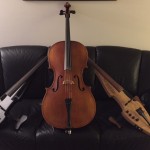
I'm a professional musician, graduating with a B.A. in Cello Performance from Wayne State and studying with the Detroit Symphony Orchestra. However, I also play guitar, bass, keys and some other instruments (and rock is my niche) so I bought an electric cello, added my electric guitar pedals and went to work. I'm the lead vocalist, composer and electric cellist/slide guitarist in an incredible rock group called 'Pure Price'. The exploration of music leads to the discovery of life.

IMG_2713

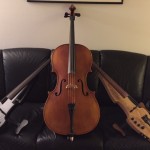
My classical mother and her two kids…The Black Widow and The Brown Bomber. Those kids may look and sound a little different than their mother, but they’re all related! www.reverbnation.com/pureprice

Country:United States

Posted in Uncategorized and tagged

NEW Grant Presentation Video helps Outstanding Causes & Artists of all styles obtain vital funding!

grants

The Jazz for Peace Foundation Empowerment Grant Program rose from the ashes of the horrifying tragedy of 9/11 starting with a poem that was written witnessing those very events on a rooftop less than a quarter of a mile away from Ground Zero on that fateful morning. Since then they have provided a Helpful Step Forward to over 850 Outstanding Causes and Artists of all styles through their acclaimed Empowerment Grant program.

FOR COMPLETE FUNDING DETAILS WATCH THIS VIDEO:

And contact the Grant Administration Dept. at [email protected]

Country:United States

Posted in Uncategorized and tagged , , , ,

A life of music loving recounted and found to be unattributable.

2011 Symposium2

Amid the frequent pronouncements of doom over classical music, and the unenthusiastic attitude of many of my general music students toward it, I sometimes ask myself what drew me to classical music. I never became a great musician, yet my love for music has always been great. That’s important because when a child is raised in a music rich environment, he can become a life-long music lover, even if he never plays at Boston’s Symphony Hall, or New York’s Carnegie all or….(you fill in your prestigious concert hall). Here’s how I became the music lover and the musician/teacher I am today.

My parents told me that I enjoyed music from a very early age, but many children do. My earliest memories are discovering the two classical recordings had in their record collection, and delighting in playing them on their phonograph. At some point, I also discovered Leonard Bernstein’s Young Peoples Concerts on television. The whole family waited for them to end before we could have dinner on those precious afternoons when they were broadcast. I soon began imagining that I was the conductor of a symphony orchestra.

At that time, the Hartford (CT) Symphony Orchestra periodically broadcast a concert on television. The broadcast had a theme song, it was “Getting To Know You” from the musical “The King and I.” I soon began starting my classical music listening sessions by playing “Getting To Know You,” and then switching over to one of the classical records. I would stand in front of the phonograph conducting the music, dreaming of becoming the next Leonard Bernstein or Arthur Winograd (former cellist of the Julliard Quartet, and then conductor of the Hartford Symphony Orchestra.)

As I grew into my teens, I got to go to Tanglewood, summer home of the Boston Symphony, to see that great orchestra play. My mother took me, and we had memorable days together enjoying the music and the cool Massachusetts Berkshire air that is so refreshing and welcome compared to the hotter more humid air we so often left behind in Connecticut. When I got my driver’s license, I subscribed to the Springfield Symphony Orchestra, and drove myself to Symphony Hall in Springfield to hear orchestra concerts. It never occurred to me to object to going alone. I just couldn’t wait until the next concert.

By this time, my clarinet playing (I had started when I was ten years old) had progressed so that I was active in regional festivals, musical theater pits, and the school concert and jazz bands. The more I played, the more exciting life got. I began conducting while still in high school, and was able to conduct a composition I wrote for band. A classmate in music theory class got me interested in composing, and though I never formally studied music composition, I have dappled in it ever since, having several works performed over the years.

I entered college as a music education major so that I would be assured of making a living in music. There were frequent delights in a music conservatory-chamber music ensembles, wind ensembles, an opera orchestra, solo playing with piano-these were more varied and more fun than ever. Four years at a music conservatory were filled with music, though a few performances still stand out in my memory. Playing clarinet and bass clarinet for Pierrot Lunaire, playing on WGBH radio’s “Morning Pro Musica” with Robert J. Lurtsema and singing in a performance of Walton’s “Belshazzar’s Feast” were among the standouts.

And then there was a concert I attended given by the Hartford Symphony. Philip Entremont played the Beethoven Fourth Piano Concerto. I was fascinated. How could a piano concerto start with just the piano? How could the work begin without the orchestra playing the exposition? Yet there it was, only the pianist playing those four repeated chords, and then another four, and then the end of the first phrase. How curious that so much expression could be found in repeated chords, yet it was expressive. By the time the orchestra came in I was both annoyed and relieved. Annoyed that the spell had been broken, and relieved that Beethoven hadn’t left the orchestra out of the first movement! With all the classical music I had heard, I still had the thrill and excitement of being in wonder. That was it. The old music always sounded fresh and was capable of inspiring my inner being.

At some point, it was no longer works that were new to me that brought out that wonder, but new interpretations of familiar ones. Lori Maazel conducting Tchaikovsky’s Fifth symphony with the bell tones of the brass brought to the fore. Copland’s Clarinet Concerto played as I never knew a clarinet could be played, sublime, by Harold Wright. Leonard Bernstein Conducting Tchaikovsky’s Fifth and a few years later, Brahms first symphony. I met Mr. Bernstein after that concert, and it is to this day among the most precious two minutes of my life.

The delights, both remembered and ongoing, are seemingly endless. They started somewhere in my childhood, and snowballed into a life-long delight. How it all started, I am still not sure, but I do know this: I have always surrounded myself and been surrounded by music. I found pleasure and fulfillment in it that others did not. For the past 30 years it has been my privilege to teach young people music, and for some, to move other life-long love affairs with music along. Whether it is the turning of a phrase in the ear, or a lovely body in motion to the music, or the images of a video helping my imagination take flight along with the music, it is a joy that for me has never been matched. Musicians, fill the lives of others with your music, your art. It is an ennobling and necessary part of human life.

By the way, the two recordings were Gaite Parisienne by Offenbach, performed by Arthur Fiedler and the Boston Pops, and Rachmaninoff’s Second Piano Concerto.


Country:USA

Posted in Piano and tagged , , , , , , , , , ,