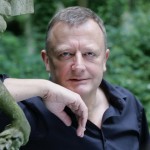
Paul White believes that classical music is moving away from intellectualism of the late 20th century towards a more direct form of expression which appeals to a wider audience.
I would agree that most of my music is about fantasy, and many of my pieces have a “Fairytale” atmosphere, as though telling a story. The piece which you are learning is different, as it is about harsh reality ! (“Procession” A.S.)
If you were not a professional musician, would would you have been?
If I had not been a musician, I would have been a scientist. I loved chemistry as a child, and used to make my own fireworks ! Recently I invented a new type of swimming goggle and have made a prototype, although I have not yet found a way of developing this commercially. Most of my life I was a music teacher, but retired from this a few years ago in order to concentrate on composing and playing the piano. I have also written a book about piano technique, which is a free download on the internet.
What do you envision the role of classical music to be in the 21 century? Do you see that there is a transformation of this role?
I believe that Classical music is moving away from the intellectualism of the late 20th century towards a more direct form of expression which appeals to a wider audience. This includes influences from many popular forms of music, including pop, folk, jazz and new age. There is a great deal of piano music now which comes somewhere between classical and popular styles, and is quite widely listened to. I see my own music as part of this.
Tell us about your creative process.
Although I went through a rigorous academic musical training, I now compose in a largely intuitive way, sitting at the piano with a pencil and paper. Often musical ideas come to me when I am doing something else, for example walking in the countryside. As a result, I have literally hundreds of short sketches for pieces, many of which will probably never be written. Sources of inspiration come from Nature and from human experience. I am influenced by a wide variety of styles, including classical, folk and jazz, all of which I have been involved in at various times. Mediaeval music is also a source of inspiration. I am particularly influenced by the earlier twentieth century composers, including Debussy, Ravel, Messiaen and Bartok. Some of the main characteristics of my style include using uneven and changing time signatures, for example, 5/8, 7/8, 11/8. These offer a wonderful variety of opportunities for rhythmic invention. Another feature is the use of unusual and exotic modes and scales, particularly symmetrical scales as used by Messiaen, and folkloric scales as found in Bartok.
What projects are coming up? Do you experiment in your projects?
My newest project, which I am currently practicing, is inspired by Eastern European music. The main theme has echoes reminiscent of a traditional Polish folk song called River Wisla. The middle section is strongly influenced by the style of Bartok, with its changing rhythms and exotic scales.
For me, music is all about how it affects my emotions. I love haunting melodies and beautiful melodies. I love how the music can tell a story through emotions. For me, this is everything.
Do you agree that music is all about fantasy?
I think music can be an escapism and take you to another world, maybe relaxation,contemplation,sadness or happiness. So, whatever style of music we choose to get lost in, it’s up to the individual upon how it makes them feel. Feelings and emotions are what its all about. What feels good to someone, may not feel good to another. It’s all about personal preference.
If you were not a professional musician, what would you have been?
I would have been a teacher. I love to help others learn.
The classical music audience is getting old, are you worried about your future?
Not really, no. The way I write is through touching pieces and my melodies really have a way of bringing emotions or thoughts out. So, I don’t think anyone will be too old for that.
What do you envision the role of classical music to be in the 21st century? Do you see that there is a transformation of this role?
I feel that sometimes people are not always interested in heavy duty works, music that sounds all over the place. I feel that modern classical music has so much to offer and it’s something a lot of people are drawn to. I’ve heard many modern pieces over the past few years and I think composers are leaning towards that way of writing. I’ve been writing modern classical since 2012.
When I say that classical music is searching for new ways or that the classical music is getting a new face, what would come to your mind?
For me, like I said previously, it’s about stepping away from heavy works and having a more lighter feel to the music. So it becomes more enjoyable to play and easier listening. Sometimes, it’s also about the silence between the notes and the anticipation of what note is coming next and drifting into a beautiful melody.
Do you think that the classical musician today needs to be more creative? Whats the role of creativity in the musical process for you?
I think so yes. Mainly because it’s not so much about creating dissonant music, that’s easy. But to create something that flows and sounds touching, is much harder I feel. For me, harmony and melody are one. I sit down and start to create something I would want to hear and play and then build on that. It doesn’t take long for me to create a beautiful melody.
Do you think we musicians can do something to attract young generation into the classical music concerts? How will you proceed?
I think as long as music affects ones feelings, I think it would be very easy to attract a younger audience. When I’ve played to younger children in my family and I ask them how did my music make them feel, they would say either happy or sad. So, I think right there is the answer. Music has a massive impact on our emotions and that is the way forward with any age.
Tell us about your creative process. Do you have your favourite piece (written by you) How did you start working on it?
My creative process is based on thoughts and feelings and what emotions would best suit what key. My favourite piece I have written is called A Shadow, in Ab Major. Very often, I know exactly what to write and where to take the melody. I just knew I wanted to write in this key and to make it feel very sombre, but with hope coming through. A little bit of light shining through the darkness, hence why I called it ‘A Shadow’ It took about 3 months to complete.
We, Moving Classics TV, love the combination of classical music with different disciplines: music and painting, music and cinematography, music and digital art, music and poetry. What do you think about these combinations?
Well, music can evoke any kind of emotion when one is watching film, looking at a painting or some other kind of art work and poetry. Music is a powerful thing to have alongside other arts. It can make words and pictures come to life so much more.
Can you give some advice for young people who want to discover classical music for themselves?
I always think go with what you personally love to listen to. What the next person likes, may not always be for you. So find something you love and that will in turn help you discover more of that music you’ve come to love. That’s what I done and i’ve come across so many amazing pieces.
Now it is common practice in the media to talk that the classical music is getting into the consumption business, do you agree? We are speaking about the supply and demand rules and how to sell your ”product” in your case your compositions. How do you see it?
There is a demand out there for pianists to want to play modern classical, as I have seen with my work that I sell online. I have many many prints worldwide and I’ve had some amazing feedback from a musician and composer from America who enjoys my pieces.
Do you have expectations what regards your listeners, your audience?
Only that they enjoy what i’ve written. To have prints on my music is a great feeling. To know other pianists feel the same with regards to wanting to learn modern classical, relaxing music is brilliant. And to know that so many pianists are looking for what i’ve written makes it all worth while.
What projects are coming up? Do you experiment in your projects?
I’ve just written a Prelude, my first one, which took me just a couple of days to write as I knew how I wanted it. I’ve written a Waltz too. Altogether i’ve written 36 pieces. For me, I know what I want to write and what emotions I want to portray in my music and I’m thrilled that other pianists who play my pieces feel the same.
Music means freedom; freedom to live inside solitudinous processes and do with that freedom what you will.
Do you agree that music is all about fantasy?
No I don’t agree. Much music is elusive but there’s also music with specific roles that has come into being in response, for example, to social movements, and that music is about reality, not fantasy.
If you were not a professional musician, would would you have been?
A biologist. I absolutely loved biology at school, and again, at this stage in my life I’m finding that I’m reconnecting with biology - in a way that’s through my music composition.
The classical music audience is getting old, are you worried about your future?
No, there’s other more important things to worry about. Specifically how we are going to stop the things that are leading to catastrophic temperature rise.
What do you envision the role of classical music to be in the 21 century? Do you see that there is a transformation of this role?
It would be good to see musicians return to playing in the salon, playing music in their communities with neighbours who also play, and perhaps reading some prose and poems, and having discussions. People would start to talk to each other again, without a screen between them. This would transform communities for the better, the bonding would be exponentially beneficial.
When I say that classical music is searching for new ways or that the classical music is getting a new face, what would come to your mind?
Youtube
Do you think we musicians can do something to attract young generation into the classical music concerts? How will you proceed?
Talk to promoters, tell them the ticket prices are often too expensive for younger people.
Tell us about your creative process. Do you have your favourite piece (written by you) How did you start working on it?
I’m proud of my piece for two pianos ‘Let’s start at the end’. I was trying to engage with climate change and immediately became stuck. For a few weeks I could not get a single idea to lead anywhere. Finally one day I just shouted, “if you can’t start, let’s start at the end” and ran to the piano and played chords as if something huge was ending. And that’s how I found my beginning, and my storyline – a world that was winding backwards from the tipping point. It only took three weeks to compose, but they were three weeks of absolute hell. Such is a composer’s life.
We, Moving Classics TV, love the combination of classical music with different disciplines: music and painting, music and cinematography, music and digital art, music and poetry. What do you think about these combinations?
The more, the merrier.
Can you give some advice for young people who want to discover classical music for themselves?
An interesting way in is to choose a time in history you may already be interested in and use the internet find out who the composers were at the time, what kind of houses they lived in, what their food was like, what were the wars at the time, what sort of things were they experiencing. And when you find the names of composers, try to get some details about how they lived. Were they ill all their life? Were they scandalous? What kind of person was that composer? And when you finally choose a piece to listen to, find out the stories behind or inside the music. All of this can really help the process of getting into classical music.
Now it is a common practice in the media to talk that the classical music is getting into the consumption business, do you agree? We are speaking about the supply and demand rules and how to sell your “product” in your case your compositions. How do you see it?
Personally, I‘m more focused on composing and touring my works. I am very lucky to have a wonderful distributor for my published works.
Do you have expectations what regards your listeners, your audience?
No, I don’t think so
What projects are coming up? Do you experiment in your projects?
I’m touring Significantus, a keyboard conversation about climate change. The audience has a conversation with an invited guest speaker as part of my ninth piano suite, their spoken words are a movement within the suite. Each performance is an experiment and I’m learning how much we are all living the climate change story in our heads. It’s a wonderful experience, but I get little satisfaction because these are very urgent times and we need to be much more ambitious if we are going to keep the temperature down to a safe level.
I’ve recently founded ClimateKeys to inspire concerts pianists all over the world to do the same work I’m doing in my concerts, to work with their own guest speakers and have conversations with their audience. This way more and more people will talk about climate change issues and we will all be the better for it.
Lucas talks about why we should not label the music and how to avoid the negative connotations that come with classical music and how to write exciting emotionally appealing music.
What does music mean to you personally?
It’s a huge part of my life, saying it means everything wouldn’t be an exaggeration. It’s the ultimate form of communication, I can convey thoughts and ideas that I couldn’t with words. It gives a voice to a part of me that very rarely gets to speak.
Do you agree that music is all about fantasy? Yes. We listen to music to escape and dream, to transport us to worlds that we can’t go to. I write music for that reason, I want to show you other worlds.
If you were not a professional musician, would would you have been?
I was making plans to become a police officer, I did my work experience with the metropolitan police at school and was applying for Hendon Police College when I decided to take a chance on piano.
The classical music audience is getting old, are you worried about your future?
Not at all, the audience is still there the medium has just changed, people still love hearing classical music but now we hear it in films. John Williams, Danny Elfman, Joe Hisaishi. With the ever growing popularity of TV shows, YouTube and Netflix the audience is growing if anything. Also with YouTube and digital recording techniques there are now so many ways for people to try their hand at composing their own music without necessarily needing a traditional classical background. It’s all so much more accessible now.
What do you envision the role of classical music to be in the 21 century? Do you see that there is a transformation of this role? I would say from the way things are now classical music’s role will be in TV and film.
Do you think that the classical musician today needs to be more creative? What’s the role of creativity in the musical process for you? Creativity is important but I don’t think there’s any need to try and reinvent the wheel. I think a lot of musicians waste time trying too hard to be original.
Do you think we musicians can do something to attract young generation into the classical music concerts? How will you proceed? By associating classical music with things the young generation know and like. For instance, if there was a concert “greatest classical pieces of the 21th century” I would bet hardly any young people would go to it. But if we named the concert “The Music of Star Wars” then you would get a lot more attention from that demographic. They would be listening to classical music, but to them it’s just “That music I heard in Star Wars” and they would love it.
Tell us about your creative process. Do you have your favourite piece (written by you) How did you start working on it? I usually start by deciding what emotion I want to evoke. Then I select instrumentation according to what I think best represents that emotion. E.g. sadness I think solo piano. Happiness I think Xylophone, pizzicato strings, clarinets, bassoon. Fear, detuned piano, music box, SFX.
Then I lay the foundations for the pieces with what I call “Base” instruments which are generally pieces that can cover a wide note range and work well as solo instruments (Harp, guitar, piano). Then I find the melody for it. Once that’s done I add bass instruments. I sometimes like to have artwork on my desktop open when finding the melody.
My personal favourite pieces of mine hold sentimental value, some of them aren’t special or different from a composition standpoint or even difficult to play, but I wrote and recorded them to convey a particular thought, when I listen to them again I remember exactly what that abstract thought was. The best example of this that I can think of is “Remember”, when I wrote and recorded it I was moving house the next day, now whenever I listen to it I’m back in that room at the piano looking out of the window I looked out of a thousand times.
A lot of my pieces are improvised, I prefer it when I’m trying to capture a moment or thought, that way it’s still fresh. Instead of sitting and constructing the piece as the idea and original thought fades I can just get it recorded there and then. It’s similar to a diary.
I’m not sure if this is true for other composers, others may rate their pieces on difficultly and complexity but for me it’s all about… fantasy.
We, Moving Classics TV, love the combination of classical music with different disciplines: music and painting, music and cinematography, music and digital art, music and poetry. What do you think about these combinations? It’s the future of music, some things just go together and music goes with almost anything. Combining two artforms usually makes for a beautiful combination. I always think to myself imagine if the great classical composers were alive today, if Beethoven had wrote the score for Lord of The Rings?
I have collaborated with poets and artists, what I find is we tend to inspire each other, their work inspires the music and in turn the music gets their creativity flowing.
Can you give some advice for young people who want to discover classical music for themselves? Try not to label it as classical music, there are a lot of negative connotations that come with classical music, snobbery, boring, old are just a few. We had it drilled into us from a young age, being forced to listen to it at school. But it doesn’t have to be like that. If you looked at my iTunes, I have Liszt next to Snoop Dogg, Shostakovich next to The Rolling Stones. It’s just music don’t feel threatened by it. Incorporate it into your regular listening.
What projects are coming up? Do you experiment in your projects? I don’t usually experiment in projects, I experiment during practice and sometimes on my YouTube channel, I then decide if I want to include the results in projects. It would really depend on the project, projects usually involve other people. If I’m working with somebody who I don’t know I wouldn’t experiment, but if it was with somebody who I know and am comfortable with I would possibly offer some new experimental ideas. If it’s a solo project I would experiment.
I’m planning a large collaboration with composer Peter Gundry. I’m also planning on recording orchestral arrangements of the music from the Harry Potter series.
Patrick Hawes is an English composer who has made his mark as a torchbearer of the English musical tradition. He is best known for writing the Highgrove Suite for HRH Prince Charles, the Prince of Wales, for being Composer-in-Residence at the UK’s largest biggest classical music station, Classic FM, and for the Number One album Angel. Patrick Hawes kindly consented to answer the questions for MOVING CLASSICS TV
Music is everything to me. I have music in my head all day long and it is even there if I wake up at night. When I’m not writing music, I am listening to it, particularly music from the Renaissance and Baroque.
Do you agree that music is all about fantasy?
Absolutely not! Music is an expression of very real human emotions.
If you were not a professional musician, what would you have been?
I spent sixteen years teaching both music and English – I actually enjoyed teaching English more than music since I was learning with the students! So, if my musical career had not gone the way it has, I would teach English.
The classical music audience is getting old, are you worried about your future?
In England, classical music is popular throughout the generations. Classic FM (the UKs largest classical radio station) has as many requests from youngsters as old – particularly from students who enjoy classical music while working and preparing for exams. More and more youngsters are coming to classical music via video game and film sound tracks so the future is bright!
What do you envision the role of classical music to be in the 21 century? Do you see that there is a transformation of this role?
Classical Music provides the same role it has always provided, which is to nourish people’s hearts and minds in a way that no other art form can. In an ever-changing world, classical music needs to hold firm to its key principles of harmony and beauty.
In this way classical music will continue to lead the listener into deeply spiritual realms which means we are always going to need classical music to ‘feed’ the soul in a way which other art forms can not.
When I say that classical music is searching for new ways, what would come to your mind?
I think it is a mistake to think that classical music has to be innovative for innovation’s sake. All art forms reflect the spirit of the current age, and this in itself means art will become innovative by nature. It is far more important that composers of classical music remain true to themselves and to the feelings they are aiming to express. Innovation is a product of the mind – beauty and truth are products of the soul.
Do you think we musicians can do something to attract the younger generation into the classical music concerts? How will you proceed?
This question has to a large extent been answered above. What is important is that classical music is not ‘watered down’ purely to attract a specific audience.
Tell us about your creative process. How did you start working on Towards the Light?
The creative process needs an initial impetus – this can be a feeling, a mental image, or an outside starting point such as a text, a painting, a beautiful landscape and so on. This is the first of two components which make up a composition. The second component is the careful development of one of the initial seeds mentioned above. Towards the Light was inspired by my move to Norfolk in England and feeling inspired to write abut the beautiful landscapes and seascapes of that region, as well as being inspired by key events in the Christian year.
We, Moving Classics TV, love the combination of classical music with different disciplines: music and painting, music and cinematography, music and digital art, music and poetry. What do you think about these combinations?
Many composers have been involved with other art forms. Wagner, for instance, was an author of note. When I was younger I wrote poetry and often sense poetry in my head when I am composing. I commend Moving Classic TV’s philosophy of combining music with other art forms and disciplines, since this means the overall experience for the listener / observer will be much richer. The ultimate example of this of course is opera which Wagner described as “the complete art form”. Its fusion of music, choreography and stage drama, all set within the beautiful architecture of an opera house, create an unbeatable experience.
Can you give some advice for young people who want to discover classical music for themselves?
The only way to discover classical music as a young person is to consciously immerse yourself in recordings, live performance and, best of all, by learning a musical instrument.
Now it is a common practice in the media to talk that the classical music is getting into the consumption business, do you agree? We are speaking about the supply and demand rules and how to sell your “product” in your case your compositions. How do you see it?
Any composer wants his/her music to be heard. Mozart, for instance, would have been thrilled to hear his symphonies and concertos performed throughout the courts of Europe, and Elgar would have been deeply encouraged by the recording of music for gramophone. Similarly, a composer today will, by nature, advocate the distribution of their music through digital platforms. Nobody writes music to be denied an audience – we all want our music to be heard.
Do you have expectations what regards your listeners, your audience?
I would like as many people as possible to hear my music regardless of their age, nationality or religion. It is my hope that a collection like Towards the Light will appeal as much to musical connoisseurs as it will to newcomers to classical music.
What projects are coming up? Do you experiment in your projects?
I never see the composition process as an experiment. I simply follow my heart and my deepest spiritual instincts. Of course, the genres of the music I write are dictated by the commissions I receive. For instance, I am currently working on The Great War Symphony to be premiered in 2018, and I have just completed a clarinet concerto which grew out of a meeting on Twitter with the wonderful clarinetist Emma Johnson. My latest choral work Revelation has just been premiered and recorded by the Elora Festival Singers in Canada and will be released on the Naxos label in March 2017.
The 32 Piano Sonatas of Beethoven are ranked amongst the highest Himalayan peaks of the pianist's repertoire. This article explores the enduring fascination of these works for musicians, scholars and listeners
There are many series, suites and cycles of pieces which can be considered “up there” in the pianist’s standard repertoire: Bach’s ’48′, Schubert’s Impromptus and Moments Musicaux, Schuman’s Carnaval and Kreisleriana, Chopin’s Etudes and Preludes, Liszt’s Annèes or the Transcendental Studies, but none can quite come close to Beethoven’s 32 Piano Sonatas, usually referred to as the ‘New Testament’ of piano music (the WTC is the ‘Old Testament’!). Perhaps the primary appeal of these pieces, aside from the sheer Herculean effort of learning and absorbing them, is that they offer both a far-reaching overview of Beethoven’s musical style and a glimpse into the inner workings of his compositional life and personality. Urban legend has it that Beethoven was a rough, irascible, grumpy and unapproachable sod, but this does not tell us much about his music. Living with his music, spending time with it to understand what makes it special, allows a more honest, rounded view of him, and, perhaps of all his music, the piano sonatas offer a really candid autobiography.
As pianists, whether amateur or professional, advanced or intermediate, or even just beginning on the great journey of exploration, we have all come across Beethoven’s piano music, and many of us have played at least one of his sonatas during our years of study. As an early student, a taster of a proper sonata in the form of one of his Sonatinas (something my father is grappling with at the moment - and refusing any helpful advice from me!). Later on, we might encounter one of the “easier” piano sonatas, such as the pair of two-movement sonatas that form the Opus 49 (nos. 19 and 20), which are roughly Grade 5-6 standard (but don’t be fooled by the comparatively “easy” notes!). As part of my Grade 8 repertoire, I learnt the No. 5 (Opus 10, No. 1, in C minor), which prefigures the far more well-known and well-loved Pathétique in the flourish of its opening measures, the “beautiful melody” of its slow movement, and its febrile final movement. A quick glance through the Diploma repertoire lists for any of the exam boards (Trinity, ABRSM, RAM etc) and there is a generous handful of sonatas to choose from, from well-known to less popular, to suit each level of Diploma right up to Fellow.
It is generally accepted pianistic wisdom that Beethoven composed the piano sonatas during three distinct periods of his life, and as such, like the Duo Sonatas for Piano and ‘Cello (read my earlier post here), offer a fascinating overview of his compositional development. Setting aside the three “Electoral” sonatas, which are not usually included in the traditional cycle of 32 (though Beethoven authority, Professor Barry Cooper, who has edited new the ABRSM edition of the sonatas, argues that there is a case for including the three sonatas that Beethoven wrote when he was 12 in a complete edition), the early sonatas are, like the early duo sonatas (for violin and for ‘cello), virtuosic works, reminding us that Beethoven was a fine pianist. While the faster movements may nod back to his teacher, Haydn (though Beethoven would strenuously deny any influence!), it is the slow movements which demonstrate Beethoven’s deep understanding of the capabilities of the piano, and its ability, through textures and colours, moods and contrasts, to transform into any instrument he wishes it to be. Some of the writing could be for string quartet (Op. 2 No. 2). In the early sonatas, Beethoven’s mastery of the form is already clear, and many look forward to the greater, more complex, and more revolutionary sonatas of his ‘middle’ period. His distinctive musical personality is already stamped very firmly on these early works.
The sonatas from the middle period are some of the most famous:
The ‘Tempest’ and ‘La Chasse’ (Op. 31, Nos. 2 and 3). The first with its stormy, passionate opening movement, the second of the opus rollicking and somewhat tongue-in-cheek.
The ‘Moonlight’ (Op. 27, No. 2): the first of his piano sonatas to open with a slow movement. Too often the subject of clichéd, lugubriously romantic renderings, this twilight first movement shimmers and shifts. An amazing gesture, created by a composer poised on the threshold of change.
The ‘Waldstein’ (Op. 53). Throbbing quavers signal the opening of one of the greatest of all of Beethoven’s piano sonatas, while the final movement begins with a sweetly consoling melody which quickly transforms into daring octave scales in the left hand and a continuous trill in the right hand. This is Beethoven at his most heroic.
‘Les Adieux’ (Op. 81a). Suggested to be early ‘programme’ music in its telling of a story (Napoleon’s attack on the city of Vienna which forced Beethoven’s patron, Archduke Rudolph, to leave the city, though this remains the subject of some discussion still). It is true that Beethoven himself named the three movements “Lebewohl,” “Abwesenheit,” and “Wiedersehen”. One of the most challenging sonatas because of its mature emotions and technical difficulties, it bridges the gap between Beethoven’s middle and late periods.
Late period:
The ‘Hammerklavier’ (Op. 106), with its infamous and perilously daring grand leap of an octave and a half at the opening (which, of course, should be played with one hand!); its slow movement of infinite sadness and great suffering; its finale, a finger-twisting fugue, the cumulative effect of which is overwhelming: an expression of huge power and logic.
The Last Sonatas (Opp. 109, 110, 111). I have written about these sonatas previously. They are considered to be some of the most profoundly philosophical music, music which “puts us in touch with something we know about ourselves that we might otherwise struggle to find words to describe” (Paul Lewis), which speaks of shared values, and what it is to be a sentient, thinking human being. From the memorable, lyrical opening of the Op. 109 to the final fugue, that most life-affirming and solid of musical devices, of the Op 110, that peaen of praise, to the “ethereal halo” that is contained in some of the writing of the Arietta of the Op 111, the message and intent of this music is clear. And this is Beethoven’s great skill throughout the entire cycle of his piano sonatas.
So, what is the perennial attraction of performing a Beethoven Sonata Cycle? Glance through concert programmes around the world and it is clear that these sonatas continue to fascinate performers and audiences alike, and no sooner has one series ended than another begins, or overlaps with another. Playing the Sonatas in a cycle is the pianistic equivalent of reading Shakespeare, Plato, or Dante, and for the performer, it offers the chance to get right to the heart of the music, peeling back the layers on a continuous journey of discovery, always finding something new behind the familiar. One does not have favourites; just as when one has children, one should never have favourites, though certain sonatas will have a special resonance. The sonatas are like a family, they all belong together - and they are needed, ready to be rediscovered by each new generation. You can play the sonatas for over a quarter of a century, half a century, and yet there are still many things in these wonderful works to be explored and understood, things which still have the power to surprise and fascinate.
Every pianist worth his or her salt knows that presenting a Beethoven sonata cycle represents a pinnacle in one’s artistic career (ditto the five Piano Concertos) and an important stepping stone to other great cycles (Schubert’s sonatas, for example, which are, perhaps, less satisfying to play than Beethoven’s because of problems such as incomplete or different versions of the same work), but once a cycle is complete, one cannot truly say one has conquered the highest Himalayan peak. And that is what is so special about this music: you can never truly say you have “arrived” with it, while its endless scope continues to reward, inspire and fulfil.
I have never heard a complete Beethoven cycle performed by a single performer, but I have heard plenty of concerts which form part of the whole: in the 1980s, it was John Lill, now one of the “elder statesmen” of British pianism; before him, my parents would have heard Brendel and Barenboim. Following in their footsteps, I heard some of Barenboim’s concerts when he played a complete cycle at the Festival Hall three year’s ago. At the same time, Paul Lewis was just finishing his own cycle at the Wigmore Hall (and beyond). I heard him play Nos. 15-18, some of the early sonatas, and the Last Sonatas. Then there was Till Fellner, a young Austrian with a clean, fresh approach, whose cycle began in 2008. On LP, I had Lill’s complete cycle, released the same year as I heard him at RFH. On CD I have Arrau, whose account is hard to match. But I also have recordings of favourites, such as the Opus 10′s, played by Angela Hewitt, or the Opus 110 (my absolute favourite), played by Glenn Gould and Mitsuko Uchida (whose Mozart playing I adore).
In concert, the sonatas are presented in halls large and small, famous and lesser known. The size of the hall can affect one’s appreciation and understanding of the works. For example, sometimes the earlier sonatas, which were written for the salon, can be lost in a venue as big as the Royal Festival Hall. One’s connection to the music is also affected, of course, by the performer. Lill, I remember, brought an extraordinary closeness and intimacy, something I have never forgotten, a sense that it was an entirely shared experience; while with Barenboim it felt as if an invisible barrier had been erected between us, the audience, and him the performer (I suspect he neither intended nor engineered this; rather, the over-awed audience brought it upon themselves!).
Further reading
Playing the Beethoven Piano Sonatas - Robert Taub. “Offers the insights of a passionate musician who performs all 32 of Beethoven’s well-loved piano sonatas in concert worldwide. This book presents his intimate understanding of these works with listeners and players alike.” (Amazon)
The Beethoven Sonatas and the Creative Experience - Kenneth Drake. “Drake groups the Beethoven piano sonatas according to their musical qualities, rather than their chronology. He explores the interpretive implications of rhythm, dynamics, slurs, harmonic effects, and melodic development and identifies specific measures where Beethoven skillfully employs these compositional devices.” (Amazon)
Beethoven’s Piano Sonatas: A Short Companion - Charles Rosen. A very readable analysis of all 32 sonatas by respected pianist and writer.
New York Times article about Professor Barry Cooper’s study of all 35 sonatas
In the furore following the final of the piano section of this year's International Tchaikovsky Competition, some thoughts on why young artists need to be allowed to develop at their own pace.
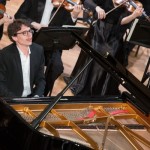
Much has been written about the young French pianist Lucas Debargue, a finalist in the 2015 edition of the prestigious International Tchaikovsky Competition. The concept of him being “self-taught” (until relatively recently) has been debated across a number of articles, together with his rather unusual technique (“Scales played with only the thumb and index finger and his pinkie sticking up as daintily as Hyacinth Bucket’s” - The Spectator, 18/7/15) and glorious sound. He’s not out of the traditional mold of the international competition winner (commences piano studies at a young age, undertakes rigorous study with a master teacher and progresses to the “Three C’s” of Conservatoire, Competition and Concerto) - and he didn’t even wear a tie during the final! In an honest and touching interview with Ismene Brown of The Arts Desk, Debargue comes across as a sensitive and intellectual young man for whom music is profoundly important, not just in terms of beautiful sound, but also as a “a place to live in. It’s about real emotions, real sensations”.
Let’s just clear up a few inaccuracies. In ‘The Spectator’ article quoted above, he is described as “the man who came last”. He didn’t come last. He achieved what most can only dream of: he reached the final of the most prestigious piano competition in the world. That he did this following only four years professional study with a Russian master teacher (Rena Shereshevskaya) is remarkable. (And by the way, it doesn’t really matter that his scale fingering is unusual: there is no “one size fits all” fingering scheme, because hands and fingers come in different sizes.) Now everyone is asking what next for this extraordinary young man?
It is at this point that I start to worry for a talented and obviously sensitive young man like Lucas Debargue. He is not the first, and certainly won’t be the last, young artist to be thrust into the limelight before he is ready. Unlike the other competition finalists, he has not undergone the long and rigorous traditional professional training which would prepare him for the concert platform: he still needs to hone his stagecraft and, more importantly, learn how to deal with the journalists, agents, promoters, and fans who besieged him as the competition progressed - and continue to. The classical music industry is not a particularly pleasant place, and the world of international pianism is highly competitive, almost ruthlessly so. At the big competitions, representatives from the big artist agencies are waiting to scoop up the winners and runners up, offering tempting contracts, a slew of international engagements, recording deals and more (look how much Martin James Bartlett, winner of the BBC Young Musician of the Year 2014, has done since his win, including several performances at the Proms, and he’s only just 19; he has, however, undergone a professional training in specialist music school and conservatoire). It’s true that success in an international competition can make an artist - but it can break one too. From the moment one chooses the life of the international concert pianist, one lives in the public eye: every performance and recording is held up for scrutiny, and one is under almost continual pressure to meet the expectations of agents, promoters, fickle audiences, critics and fans. The life of the concert pianist is tough, restrictive and lonely. In addition to the many hours of solitary practise, there is the traveling, nights spent in faceless hotels, fine historic cities viewed through a fog of fatigue, never having the option to be less than perfect, even if one is ill or tired, knowing that one is judged on one’s last performance (here I recall the unpleasant hoopla surrounding Ivo Pogorelich’s London concert in February). The pressure can be unbearable if one is not equipped to handle it. (Read Charles Beauclerk’s excellent and sympathetic biography of John Ogdon for some brutal insights into the life of the international concert pianist. For Ogdon, the piano was his saviour and his tormentor, and there is no question that the pressure of so much traveling to perform around the world contributed to his breakdown.)
Add to this that peculiarly British fascination with the maverick, the eccentric, the tortured genius with the unconventional “backstory”. We risk endangering Debargue further by holding him up as curiosity, instead of allowing him to develop and mature in his own time. There is something very authentic about his playing, his particular soundworld and his special and personal connection to the music which has clearly touched people.
In his interview with Ismene Brown, Debargue talks of having few friends and little support from his family. His teacher was his mentor and supporter, encouraging him to take a tilt at the Tchaikovsky Competition and saying when he got through the first round “It doesn’t matter when you pass or not, it’s really good that you are here to play and I am grateful and proud of you.” He has yet to develop the necessarily resilience, thick skin and artistic temperament to survive the “wild west” of the international concert circuit, and I only hope that whoever he chooses to manage him, should he decide to go down that route, is sympathetic and puts his well-being before all else. Otherwise, I dread to think what might happen….
So please let’s allow him - and others like him - to develop at his own pace to emerge onto the international circuit, should he choose that path, when he is truly ready. To conclude this article, I think it is worth quoting a comment on Peter Donohoe’s piece for Slipped Disc about the competition (Peter was a juror this year):
Aside from all of this, what happens to each of these young artists remains to be seen. How will they carry on with their studies as musicians? Which repertoire will they cultivate? Will they develop chamber music careers, teaching, new works, recordings? This is what is most important as they begin to soul search and decipher how and what they will contribute to the world of music outside of the usual parameters. (Jeffrey Biegel)
Read Peter Donohoe’s thoughtful and intelligent article here
Invitation to take part to an online survey: investigation of the prevalence of issues correlated with the mastication muscles activity among piano players.
I am a PhD student researcher in Music Technology at the University of York and I earned a diploma in Piano and a diploma in Musicology from the Conservatory of Milan, and an MA in Psychology of Music at The University of Sheffield (UK).
I am currently working on a project study that aims to investigate the prevalence of pains and symptoms related to the mastication muscles among piano players. If you are an amateur or semi-professional or professional piano players (age +18 years old), I would appreciate if you could take part to the following survey, which will take approximately 10 minutes. All information will be kept strictly confidential.
Please, click on the following link to start the questionnaires:
I would also appreciate if you could circulate this survey among your piano students/colleagues (age +18 years old) to maximize the final output.
Although there are no immediate benefits to you, I hope that the insight I gain from this research will lead improvements in musicians well-being and hence help them in the future.
This survey has been approved and received Ethics clearance (005900) by The University of Sheffield. If you have any concerns regarding this research or your participation, you may contact the project’s supervisor Dr. Renee Timmers [email protected], or myself at [email protected].
Jennifer Pike, violin; Craig Leon, Moog synthesizers and conductor; Sinfonietta Cracovia. Sony 88875052612.
Turn back the clock; we're all young again.
In the mid Sixties Dr. Robert Moog invented the Moog music synthesizer. A couple of years later, American composer and electronic musician Wendy Carlos (photo) put the instrument on the map with the ….. read more (http://classicalcandor.blogspot.de/)