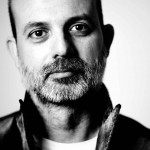
Rossano Pinelli talks about why we should carefully listen to music pieces and why communication with the audience is the main purpose for a composer

rosanno bild

What does music mean to you personally?

Music, for me, means the research of the Truth. When I listen to the best composers I always feel the truth, and this should be the mean purpose of a Composer. Music is also a discipline that allow reaching unconscious worlds, worlds that words can’t nor express neither describe. Music is the kingdom of the Essence.

Do you agree that music is all about fantasy?

No doubt, Music is about fantasy: but it’s also about rationality, language, architecture, deep organization of the thought.

If you were not a professional musician, would would you have been?

If I wasn’t a professional musician I would like to be a linguist.

The classical music audience is getting old, are you worried about your future?

I’m not worried about my future, because classical music audience will exist forever. I’m a music teacher in secondary school, and I can affirm that there are young (and very young too) people that are interested in classical music, when you allow them to listen to and know classical masterpieces: if you are able to explain classical pieces to young people and allow them to understand, you can enlarge the audience. I think music teachers have a huge responsibility in this process.

What do you envision the role of classical music to be in the 21 century? Do you see that there is a transformation of this role?

The role of classical music in 21st century could be central. Since the world is risking a total destruction, I think people will come back to the Beauty, or I hope so. The world needs beauty and Classical Music (but also Art, Literature, and any higher form of expression) could be the means to save the World. The School - as an Institution - must work in this direction.

When I say that classical music is searching for new ways or that the classical music is getting a new face, what would come to your mind?

It depends on the meaning of the word “new”. If i think to something “New” in strictly musical language, it’s very hard to imagine something new in music, anyway a composer has a duty to search for something new, or original or personal; if we are talking about new ways to propose a new public face for classical music I say to be careful, in order to avoid an excessive “commercialization” of the message. But the matter is really complicated, it’s impossible to exhaust it in a short answer.

Do you think that the classical musician today needs to be more creative? Whats the role of creativity in the musical process for you?

Creativity is indispensable. A composer doesn’t exist without creativity, and creativity must be cultivated with a a hard training, every day, with a lot of discipline.

Do you think we musicians can do something to attract young generation into the classical music concerts? How will you proceed?

Musicians should be more able to speak personally to the audience before the concerts and, why not? during the same concerts too, stimulating questions and conversations with the listeners. Musicians should use youtube (and other channels) too for making classical music more popular, explaining it to young people, with examples and chat with young people. But I think also Television should be more involved in dissemination. TV has a duty to educate people, it’s always a strong medium. But also in this case, the matter is so complicated..

Tell us about your creative process. Do you have your favourite piece (written by you) How did you start working on it?

I have 2 or 3 favorite pieces of mine, Umore for sax soprano and orchestra, Modanature for Wind Orchestra and Opodeldok for solo voice (reciter), piano and percussion. The method is always the same: I look for the chords or sounds conglomerates at the piano, choosing intervals and scales with great attention and then, when I have decided my materials (rhythmic, melodic, harmonic etc.), I begin to compose: but I already have an idea of the whole structure of the piece, so I know what happens in every part of my pieces - anyway, during the process something can change, so I can also change the path (and the whole structure, even if can’t change so much, the mean key points are decided)

We, Moving Classics TV, love the combination of classical music with different disciplines: music and painting, music and cinematography, music and digital art, music and poetry. What do you think about these combinations?

I think combination of Music with different disciplines are good, even if the highlight is pure music. Nevertheless, combinations help people to approach classical music in a easier way.

Can you give some advice for young people who want to discover classical music for themselves?

Be patient. Searching for A LOT of different pieces on youtube, listening to them very carefully and more times, and reading a lot of biographies of main composers, and comparing music with History, Art, Literature, Philosophy of the same period of the composers they are discovering. Studying is a work in progress, all the life.

Now it is a common practice in the media to talk that the classical music is getting into the consumption business, do you agree? We are speaking about the supply and demand rules and how to sell your “product” in your case your compositions. How do you see it?

I think, regarding classical music, it has always been a matter of “selling” a product. Let’s think to Michelangelo, or Giotto, or Beethoven, or Rossini, or Verdi, Liszt, Brahms, Stravinsky and many others: they were really able to sell their “products”. An artist has to be able to live deeply in reality, if (s)he wants to live only earning money from his (her) art (without doing other jobs to live; there is some singular cases of pureness, like f.i. Charles Ives, who considered Music too important to mix it with a stuff so “vulgar” like money. For this reason, he founded the best Insurance Society in New York earning money with this job and composing only during the night).

Do you have expectations what regards your listeners, your audience?

I hope audience like my music, of course. But I haven’t any particular expectations regarding my listeners (hoping they exist!:-). Rather, I have particular expectations regarding my skill in communication with an audience, trying to write music able to create a link between my listeners and my music. I think communication is the main purpose for a composer (without falling into easy and “commercial” ways). I think that when you write a piece in which form, articulation, harmony, timbre, in short, every musical parameter is well organized, the communication is clear and works.
What projects are coming up? Do you experiment in your projects?

In this period I’m working on a small opera (30 min.), on a piece for small wind orchestra (20 instruments) and projecting some different pieces for orchestra and for piano solo. Generally, I don’t experiment too much in my music (it depends on what “experiment” does mean. If we are speaking about dissonances or complex polyrhythms or special combinations of timbres isn’t an experiment anymore, it’s the normal knowledge in my music). Sometimes I experiment something “different” in my way of thinking music, but only when necessary, for expressive purposes.

Country:

Posted in Uncategorized and tagged ,

Chak talks about how to enhance the message of the music and add very personal feeling.

What does music mean to you personally?

I think Music is the expression of the human race Spirit: we listen, play and create music essentially because we need to pull out this Spirit and to rejoice in It!

Do you agree that music is all about fantasy?

Of course I agree! But what would be the Music without the Math Spirit? I think the Fantasy Spirit needs to ride a strong horse to reach the Infinity …

If you were not a professional musician, would would you have been?

There’s no doubt about that: a doctor! After all, I think that playing and healing can be the same thing …

The classical music audience is getting old, are you worried about your future?

No, because my music is just an attempt to mix together a classical and modern approach: I’m an Alchemist in that sense …

What do you envision the role of classical music to be in the 21 century? Do you see that there is a transformation of this role?

I strong believe that the meanings and the emotional senses of classical music remain the same (and mustn’t vary!) in all ages, and the transformation consists in finding new ways to present that music to allow ‘changing’ people to understand and deeply feel what they are listen to.

When I say that classical music is searching for new ways or that the classical music is getting a new face, what would come to your mind?

I think I’ve answered in the previous point …

Do you think that the classical musician today needs to be more creative? Whats the role of creativity in the musical process for you?

It’s my greatest doubt: why a musician is so creative and productive when he make silence inside him (it happens also to me!)? The creativity is a matter of ‘abandonment’, not a voluntary act … and today a classical musician needs to be more creative also in the presentation phase, as I told before …

Do you think we musicians can do something to attract young generation into the classical music concerts? How will you proceed?

I agree that the musicians MUST do something to attract the young generation, but the biggest obstacle to overcome is our fear that the classic music will result contaminated by a modern (and often ‘easy’ considered) taste! I repeat what has been said before, namely we MUST find new ways to perform classic music: a person who lived during XVIII century didn’t feel as any modern one! If I need to create a surprise effect, I think today I must work hardly than in the past!!!

Tell us about your creative process. Do you have your favourite piece (written by you) How did you start working on it?

My favourite piece is Nocturne Solitude’s … I won the Akademia Awards in 2015 for the best Instrumental/Piano song, and I was very happy about that! This is an improvisation (my first step in every creative approach to a new composition) and I made it after a few days of my Daddy’s death … He was an accordion’s child prodigy and taught me mostly to be humble and passionate in every aspect of life, especially in music …

We, Moving Classics TV, love the combination of classical music with different disciplines: music and painting, music and cinematography, music and digital art, music and poetry. What do you think about these combinations?

It’s exactly what I try to do! I noticed that I pay so much attention that the resulting mix is not so confused, and to avoid that I think it’s necessary to smartly synchronize the different artistic expressions! My daily effort is especially this …

Can you give some advice for young people who want to discover classical music for themselves?

If I should recommend a composer, I strongly suggest to know and listen that with the same Zodiac sign: I’m firmly convinced that the musical expression in any zodiac period has something universal … I think also that this affinity can be healing, and it can reveal some part that are hidden and not well known to us; from this point onwards, anyone can proceed to listen other composers and find other affinities or not.
Generally speaking, I’d recommend to know WHY a particular piece of music was composed, in WHAT PERIOD of the composer was written and WHICH was the emotional state in that moment, and if there is some symbolism hidden in the composition.

Now it is a common practice in the media to talk that the classical music is getting into the consumption business, do you agree? We are speaking about the supply and demand rules and how to sell your “product” in your case your compositions. How do you see it?

When I think of what you did in the past, every composer made music ‚on commission‘, and wonderful masterpiece were born because someone was searching for some business, do you agree? So I think the situation compared tot he past is not really changed; I don’t judge what is happening today: I think it is a natural evolution (for better or worse!), and, perhaps, a return to the past!

Do you have expectations what regards your listeners, your audience?

Experience has taught me that if I forget the audience, the public responds positively, so I think we mustn’t have expectations to satisfy our listeners! So, I say: forget, play, listen to the atmosphere at the end of execution, and if it is all ok, you’ll continue to listen to your just played music … and the audience too!

What projects are coming up? Do you experiment in your projects?

I’m preparing a new prototype of piano, just to enhance the message of the music; I’ll publish my first video into which I’ll explain, in some artistic way (I hope …), my very personal feel about the music.
If you like, stay in touch … Chak! (The Alchemist …)

Country:

Posted in Piano and tagged ,

What does music mean to you personally?

Music has always played for me a double meaning: on the one hand, since I am a composer, he was and is a great tool for self-knowledge and autosciplina and the other was and is a valuable opportunity to communicate with the people that I surround.

Do you agree that music is all about fantasy?

“Music” can mean many things, even conflicting. Everyone is different and therefore has a diversified approach to the world and what belongs to the world, including music. Fantasy can only be one of the tools available to the composer: I personally think that the imagination is very important but it alone is not enough … you need a good technical preparation, self-discipline, patience and a strong motivation combined with a love unconditional in respect of their musical work.

If you were not a professional musician, would you have been?

Maybe I would be a film director. I love cinema as much as I love music.

The classical music audience is getting old, are you worried about your future?

Rarely I think about my future. I am personally more attracted by the present and fascinated by the great masterpieces of the past.

Do you think we musicians can do something to attract young generation into the classical music concerts? How will you proceed?

I think musicians should only continue to be honest with yourself really going to explore their feelings. You can not please everyone and, in my experience, I see that many young people are attracted by contemporary music (or classical) that really something genuine to communicate.

Tell us about your creative process. Do you have your favourite piece (written by you) How did you start working on it?

The creative process of a piece can be different each time. Personally I am a very instinctive musician … as a child I always had a very instinctive and immediate approach to making music … both in composition and improvisation. I rarely had a crisis of creativity, and I almost never had the fear of the blank page. For me it is really very natural make music and, if anything, I have to hold off the ideas and select them carefully.

We, Moving Classics TV, love the combination of classical music with different disciplines: music and painting, music and cinematography, music and digital art, music and poetry. What do you think about these combinations?

I see with great interest this type of combination of music and other art forms, and frankly, I would have more opportunity to work in this way.

Can you give some advice for young people who want to discover classical music for themselves?

Everyone can have very different approaches to the music and then find it difficult to give advice. The only really important thing I think is to educate their listening skills, for example experimenting with different ways of listening and then have faith in a deeper and sophisticated approach to all types of music.

Do you have expectations what regards your listeners, your audience?

The only expectation that I can have with regard to the listeners of my music is to listen to it with a non-superficial approach and are willing to listen to it several times.

What projects are coming up? Do you experiment in your projects?

What I really want is to have the opportunity to record all my choral music flawlessly. I would also like to write more music for voices and even a small work of musical theater for children.


Country:

Posted in Piano and tagged ,

Fabrizio explains why there will be always a compromise between composing and "music business". He tells why it is exciting to experiment and let the pure creativity thrive.

18049799_10155040333266421_873431534_o

What does music mean to you personally?

Music is something always in my mind, in my thoughts, in my body. I can’t imagine (and I can’t remember either) a single day in my life so far without music being a part of it.

Do you agree that music is all about fantasy?

Fantasy is a big part for sure, but then you need to be creative to give shape to what you have imagined. But this is from a composer side perspective, I understand that.

If you were not a professional musician, would would you have been?

Well, I was an accountant before than being a professional musician, not so charming, huh? But in my “previous life” I had a degree in economics and so this is what I would probably be right now.

The classical music audience is getting old, are you worried about your future?

I am not worried at all, since what I compose is not strictly “classical”. I am composing a more mixed music, which certainly has some “classical” imprint but also mix contemporary sounds and soundscapes as well.

What do you envision the role of classical music to be in the 21 century? Do you see that there is a transformation of this role?

It will all depends on how this new forms of “classical” music will be adopted both by public and by the strictly “classical” musicians. The fact that this neo-classical music gets more popular will surely benefits the traditional classical music, since someone maybe will be curious and will go deeper in discovering the great Classics. On the other hand, Classical musician and critics could welcome this new way of composing by giving it space in Music Academies.

When I say that classical music is searching for new ways or that the classical music is getting a new face, what would come to your mind?

First thing that come to my mind is the “Recomposed” album by Max Richter – an excellent way to mix contemporary taste with a great Classic.

Do you think that the classical musician today needs to be more creative? Whats the role of creativity in the musical process for you?

Being a composer, creativity is everything and must be continuously supported. I couldn’t imagine composing music without pure creativity, the risk of being repetitive is too high.

Do you think we musicians can do something to attract young generation into the classical music concerts? How will you proceed?

Unfortunately I have no particular clever advice for this – is difficult enough to attract people to attend to concerts in general!

Tell us about your creative process. Do you have your favourite piece (written by you) How did you start working on it?

It always starts with the piano. And, mostly, it’s an improvisation that leads to a finished composition. Sometime it remains a piano solo piece, sometimes strings jumps in, or electronics start a dialogue with the piano itself.
I usually compose in my little studio and I immediately track it down being with a computer, with the iPhone or with a tape… whenever I have an inspiration I won’t let it go.

We, Moving Classics TV, love the combination of classical music with different disciplines: music and painting, music and cinematography, music and digital art, music and poetry. What do you think about these combinations?

I think they are a great way to give value to all this form of art! Music and poetry or music and cinematography are something I’ve worked in the past and I’ll continue to work in as long as I’ll be requested to.

Can you give some advice for young people who want to discover classical music for themselves?

Start with Bach – it all starts from there.

Now it is a common practice in the media to talk that the classical music is getting into the consumption business, do you agree? We are speaking about the supply and demand rules and how to sell your “product” in your case your compositions. How do you see it?

Well, I think that there will be always a compromise between what we are composing and how the “music business” will use our work. The best way to manage this is to keep control of our compositions, so that we can always chose what is the best solution.

Do you have expectations what regards your listeners, your audience?

As everyone of us, bringing our music live to an always increasing audience is what we aim for.

What projects are coming up? Do you experiment in your projects?

On May 12th I’ll be releasing my new studio work, “Secret Book”. This album is the result of more than 2 years of composing, experimenting and recording so I am quite excited about it.
I’ll be playing it wherever I can: I’ll start with Berlin on May 13th, then Milan is coming up on May 18th and then we’ll see what happens next.


Country:

Posted in Piano and tagged ,

Silvio talks about his creative process and the role of the classical music today

What does music mean to you personally?

Such a huge topic!
Music has been a harsh emotional path that made me suffer for decades and at the same time alleviated that same pain. It was like an acid air: you need it to live but every breath was like a bite.
Then, in 2016, I realized that it was a mean to share universes that live and are in my mind and my heart, and the best shortcut I know to connect with my deep nature.

Do you agree that music is all about fantasy?

If by fantasy we also include and mean transcendental aspects, yes! It is all about the fantasy of a lifetime, for sure.

If you were not a professional musician, would would you have been?

This question is a real challenge for me to answer in a simple manner…
As many other artists, music does not allow me to live. I need to work. In that regard, I cannot consider myself as a professional musician.
Moreover, because I do not want to wonder anymore to know what I would be if…, I decided to do I want and become what I am. And neither time nor difficulty does matter because I am motivated. It’s a philosophy that forces one to be protagonist of her/his own life instead of being a simple spectator. And I also think that without it, life does not worth it to be lived.
And that’s precisely because of that philosophy that I started to compose music and was somehow convinced to share it publicly…

The classical music audience is getting old, are you worried about your future?

No, I am neither worried about the artists’ future nor myself as an artist whereas all difficulties. The reason is simple: artists are messengers and sometimes also message originators. So, they are aware of what they need to communicate to the audience. The latter is not.
And that’s precisely where I am concerned as an artist: if the society does not allow artists to live by practicing their art, how could people hope to evolve and have that precious enrichment? This is a real question that should interest everyone, that is to say from the single consumers to the economists, politicians and not only the legal experts or artists themselves.

What do you envision the role of classical music to be in the 21 century? Do you see that there is a transformation of this role?

Allow me to answer the second question first. All genres have their intrinsic features and history. On the top of emotions, classic music is, together with jazz music, the only genre that requires a certain level of intelligence, awareness, culture and/or knowledge, to understand it. In the past centuries, composers could express technicality without paying too much attention to emotions if they did not want to, because on the one hand, only a few could play, compose music and on the other hand one could only listen it during a live performance. So, I can easily imagine that every occasion to listen to musicians was an opportunity to be entertained. On the other side, those same listeners were also and somehow forced to make an understanding effort because the offer was not so widespread.
But, thanks to the evolution of technology, music invaded our lives, for our greatest pleasure. When a pop star sings, for example, lyrics (messages) can be easily understood and/or translated on the Internet. The question is: how many people are taught about what a symphonic orchestra plays? In our modern societies where people are systematically running out of time, how many read an explanation/analysis about the underlying messages or meaning of a work to know the finest shades of the music?
I do not have time myself…

And that leads us to the first question. I do not think that the role of classical music must change: what genre can pretend to enhance the general level of listeners awareness ?
Instead, the form should change and be consistent with our times. Some composers such as Messrs. Zimmer, Einaudi, Bergersen for example are all successful masters at different levels and in their own style. But as far as I may know they are all modern composers of classical music. And the public answers the call because their talent allows them to produce a deep emotion and to be understood by a majority of people.

When I say that classical music is searching for new ways or that the classical music is getting a new face, what would come to your mind?

Challenges. And at different levels.
Without being exhaustive, I think that the dichotomy between old classical music and contemporary music is a controversial and sterile illusion, if not for historical or other constructive purpose.
Arrogant elitism should be abandoned. People and youth are clever.
Classical musicians should never be afraid of breaking classical codes (i.e. Mr. David Garrett) or magnify them with elegance (i.e. Mr. André Rieu) if it complies with their own style.
But there is another important aspect that concerns unknown artists (that is a majority). If it is true that the Internet allows more freedom to broadcast music and to be known, the quantity of produced music seemed to explode. And traditional actors that are still key in the industry - whatever we say - seem to have hard time to be exhaustive. And in that perspective, I do understand that they focus more likely on the most popular genres such as rock, pop etc. That’s precisely why your initiative and project are so interesting and make so much sense in the present context.

Do you think that the classical musician today needs to be more creative? Whats the role of creativity in the musical process for you?

Yes and no. Creativity lives inside musicians otherwise they wouldn’t be what they are. Asking them to be more creative is a non-sense. Helping them overcoming some of their difficulties and/or weaknesses is more constructive.
That said, and on the other side, classical musicians must realize that Respect (for a work, a composer…) does not mean trying to better imitate what other already did. They should also avoid confusing working technique - to acquire more freedom- and stick to it in a scholar approach.
Once a musician has acquired the technical freedom and consider having a good knowledge of the workpiece, her/his duty is to interpret the music, perform it, let her/his emotions be publicly revealed in order to connect with the public and bring it in her/his universe. As a composer, I do not see a better and true honor than having a performer mixing some of her/himself, her/his emotions with myself/ my work in a unique and same time. I think it is the ultimate gift for everyone. That is magic!

Do you think we musicians can do something to attract young generation into the classical music concerts?

Around the music itself, of course, plenty. If an artist wishes to reach out young generation, they must speak a language youth understands and likes. The question is: do classical musicians have the courage to go beyond the stereotypes (and if yes how far?) or do they rather feel better to stand in their comfort area even if they do not reach younger generations and go on feeding the same stereotypes?
The paradox is that by essence classical musician are among the best quality performers but at the same time that quality seems to enclose them in obsolete artistic schemes.
As far as I can see, rock, jazz, pop musicians seem not to have that kind of issue. They are master of making great business out of their own limits and stereotypes…
But in the end, the influence process will take time and have a marginal influence if the trend in tastes does not evolve.

How will you proceed?
Unfortunately, I do not have a general magic solution but a few considerations: use fantasy and/or humour to surprise, be inspired by other artist, do something unexpected during a (live) performance, in all cases give more than what you did the previous time and consider all ideas without exception. In the end, decide according to your own feeling.

Tell us about your creative process. Do you have your favorite piece (written by you) How did you start working on it?

I do not have a creative process. I would say that my inspiration is a complex, fragile and unstable mix of feeling waves that must be caught and recorded immediately in order to not forget them.
If I think how John Cudlow came out… I remember I sat in front of the piano and started playing until I found the right grammar and orthography. But it was not the case for La Passione where inspiration came from my whole body and a source I could not define.
That said, I can isolate permanent features: feeling and fantasy (as per the previous definition) generating images, colors, perfumes… in my head.

My favorite piece is always the next composition I work on…
To be more transparent, I have a soft spot for Prayer of a Man - Gloria al Padre (op.3 n.3) that I haven’t yet published and finished to compose…

We, Moving Classics TV, love the combination of classical music with different disciplines: music and painting, music and cinematography, music and digital art, music and poetry. What do you think about these combinations?

Not doing it would be a huge and terrible mistake. I like to be consistent with our times. We have so many opportunities to live new experiences, explore new paths, elude problems… We live wonderful times if we see all the opportunities it offers. Artists are meant to influence people and make other evolve. If this can be done by entertaining them in the best possible way, why not doing it?

Can you give some advice for young people who want to discover classical music for themselves?

I do not know if I am wise enough to advise them all…
Be curious, trust yourself and listen to your heart. No one on earth has The truth. Older people have more experience but it is not always for the best. Fresh opinions and ideas are more important than what they may think. Youth should be aware that in the end, what matters is what they really like not what others could think about what they like.

Now it is a common practice in the media to talk that the classical music is getting into the consumption business, do you agree?

If that is the case, I would only say… At last!
We are speaking about the supply and demand rules and how to sell your “product” in your case your compositions. How do you see it?
If that time should ever come, the first question would rather be with whom…

Do you have expectations what regards your listeners, your audience?

No, no expectations. Only general advice. When you listen, think what you want but do not stop wondering and asking questions… I hope they will make you evolve and be of help.

What projects are coming up? Do you experiment in your projects?

Yes, indeed. I would say that every composition is a new experiment and journey. But to be more concrete, for example, concerning a composition in progress, blues genre is going to tickle classical arrangement. But at the moment, I haven’t the slightest idea of how much satisfying the output will/could be as the song is only half written. I can only confirm that, if I do not find what must be said, I will not produce it.

Country:

Posted in Uncategorized and tagged ,

Marco Mandurrino talks about the importance of enjoying the music, about the metamorphosis between mind and art and why music is the most universal language.

What does music mean to you personally?

Music for me is a language. The most powerful and universal language. Nobody invented Music, since its capability to translate emotions into sounds is connoted with human essence, so for me Music is the best way through which I can express my feelings and my point of view about life. To the audience, but especially to myself. I learned so much about myself thanks to the Music.

Do you agree that music is all about fantasy?

Not at all. This is rather true if we refer to its evocative sphere, but Music can eventually be real and tangible, when it celebrates people or facts. I think it is just a matter of art tools you are using to transmit your message through the Music. This makes the difference between fantasy and real life, like it usually occurs in a spoken language. The specific touch of a performer, or the effects required by an author reproduce the efforts to make appearing the idea standing behind a simple page of music.

If you were not a professional musician, would would you have been?

Probably a novelist. I’m fascinated by all kinds of metamorphosis between mind and Art. In my opinion Music, being a temporary art, is more intriguing (as a composer, you may play with time…) but also a good book can dilate or contract your time perception. And this is an extremely powerful advantage, if you have a message to convey.

What do you envision the role of classical music to be in the 21 century? Do you see that there is a transformation of this role?

For sure our time is “rhythm-ed” by travel, work and facilities that would like to ameliorate our lives and that were absent when ‘classical music’ - strictly speaking - was conceived. This makes evident that today’s composers and performers must adapt themselves to their environment. This is a challenge. But the intrinsic meaning of classical music and, thus, its role in the present and future centuries should be the same as 200 years ago: create emotions by means of art and educate people to have patience, respect and cooperation.

When I say that classical music is searching for new ways or that the classical music is getting a new face, what would come to your mind?

I think that, along the challenge just mentioned before, one important aspect is the appearance of Music in the present era. What I’m thinking now is the way to catch the attention of a specific (or, in other cases, of a wide) audience. Probably one of the most difficult activities to account for before perform a concert or, as in my case, before conceiving a piece, a theme, or simply choosing which instruments I’ll be writing for. The important fact, in my personal view, is to not denaturing the true essence of Music with artifacts or deviant messages that prelude to something different from what classical music actually is. How can we recognize the good intentions of an artist? If he/she sincerely enjoys his/her work.

Tell us about your creative process. Do you have your favourite piece (written by you) How did you start working on it?

I don’t have a favourite piece. All of them are different by intention and realization and each one has its own characteristic that makes it somehow unique. In general the creative idea starts from a given theme, if under commission, or from my personal inspiration. In the first period I tend to be isolated from the environment and other music in order to avoid any contamination. In this way I find my real intentions as artist and then the ideas usually come in a quite straightforward process. When the production begins to be rather copious then I use my scientific method to catalog and organize all the ideas and it is in this phase that I start to shape the general structure of a piece. Then the rest of the work is only a matter of handicraft while, at the very end, I start the last two or more reviews. I’m highly demanding with myself.

We, Moving Classics TV, love the combination of classical music with different disciplines: music and painting, music and cinematography, music and digital art, music and poetry. What do you think about these combinations?

This is one of the best ways to make clear and effective the message transmitted by classical music, in my opinion. I had some proficient experiences with art mixing (theater, opera, dance, music and reading, …) and each time I found my work really stimulating and exciting.

Can you give some advice for young people who want to discover classical music for themselves?

Simply do not hesitate to listen to music you never listened to before!

Do you have expectations what regards your listeners, your audience?

My (possible) audience is always part of my creation process. According to it I choose certain instruments or particular effects. I could say that it constitutes an essential part. Also important for me is the reaction of performers. A piece is finished only after the first performance since I usually take care of the instrumentalists’ opinion.

What projects are coming up? Do you experiment in your projects?

Now I’m thinking to two big orchestral works. One of them should be for piano soloist. There’s no commission behind them. It is just an old project that I would like to finalize once I realized I’ve reached a sufficient degree of maturity… I like, for once, to have the opportunity of composing leisurely


Country:

Posted in Uncategorized and tagged , ,

Vincenzo Silvestris talks about how to avoid prejudice against style and musical genre and why the task of the musician should be to call the audience’s attention to the beauty that the music itself has inside.

What does music mean to you personally?

Music has been my life since I was young. At the age of five/six years old I was blown away by listening the 5th Symphony by Beethoven. Like in the movie Immortal Beloved, I flew high in the black starry sky for a few seconds and soon after I fell down on the earth. At the parish youth club a nun ( the piano teacher) asked my mother if I wanted to study the piano because I liked listening to her lessons when I walked around. I said “yes!“

Do you agree that music is all about fantasy?

Music is all about fantasy but to feed fantasy it is necessary to study hard, too!

If you were not a professional musician, what would you have been?

At the age of fifteen I wanted to become an electronic engineer. Orazio Svelto was my father’s friend. He is one of the pioneers in the international field of laser physics and its application. I told him I wanted to study engineering. But he told me:“ music or engineering, you choose !“. I chose music! Electronic engineering is still in my heart but only like a hobby!

The classical music audience is getting old, are you worried about your future?

I am worried about the future but I hope that school will let know the new generations the beauty of classical music and the work that there is behind.

What do you envision the role of classical music to be in the 21 century? Do you see that there is a transformation of this role?

I can‘t see a transformation of the role of classical music because I think that the power of this kind of music is the no-transformation. I think that the role of the classical musicians is in transformation.

When I say that classical music is searching for new ways or that the classical music is getting a new face, what would come to your mind?

I think the attitude of the classical musicians is a change (not for everybody). They are closer to the people, but this was what happened in the past. Lots of classical musicians forgot this or they want to forget it… I was thinking of singers and violin soloists in a concert with orchestra when the Opera was born.

Do you think that the classical musician today needs to be more creative? What’s the role of creativity in the musical process for you?

I don’t think that the classical musicians have to be more creative, because creativity is a personal skill and it depends on the culture of the musicians.

Do you think we musicians can do something to attract young generation into the classical music concerts? How will you proceed?

In my opinion young people don’t need to be persuaded into classical concerts. I usually think the guys have no prejudices. Maybe musicians have prejudices against music. However I think it’s better to select a musical program suitable for them, which contains some samples of different styles of music; but this is a personal choice.

Tell us about your creative process. Do you have your favourite piece (written by you) How did you start working on it?

I started my career by writing a composition for piano, looking for an emotion: through it I found a melody, a rythm, a dynamism , a colour. When it began to take shape, I put it on the staff. Looking at the notes on the staff again and again, I came up with the idea to develop the composition. This is not the first time that it happens in the history of composition. Before 1750 and after 1900, looking for the “pleasing to the ears“ was not a priority for the composers. Then I continued looking for a development. Now I do this with the help of the parameters of the music grammar and always under control of my feelings.

We, Moving Classics TV, love the combination of classical music with different disciplines: music and painting, music and cinematography, music and digital art, music and poetry. What do you think about these combinations?

The combination of classical music with different disciplines is very stimulating but every language (every discipline has its own language) must be its grammar in this process. Common meanings can be found in the specific parameters of each discipline but it is important to point out to the “signifier“ of the ideas you want to develop

Can you give some advice for young people who want to discover classical music for themselves?

I can give young people some advice: listening to classical music and going to concerts of classical music. Then, if they want to study music, it should be better to tell them that talented people are almost always the result of a daily and very hard study!

Now it is a common practice in the media to talk that the classical music is getting into the consumption business, do you agree? We are speaking about the supply and demand rules and how to sell your “product” in your case your compositions. How do you see it?

I think that it’s important to be in this system. If I want to change something, I can’t do it from outside but from inside…

Do you have expectations what regards your listeners, your audience?

I’d like my listeners had the same passion for music like mine. I think that the task of the musician must be to call the audience’s attention to the beauty that the music itself has inside. For example, if there is a beatiful moon in the sky, I tell my son: “Lorenzo! !There is the moon!!!Look!!“ This is more than enough and the moon is beautiful for itself!

What projects are coming up? Do you experiment in your projects?

My next project is a new album with music for piano solo but….. I’m not sure it’ll be for piano solo…
In my projects I try to find always something new . I go to any direction, without any prejudice against style and musical genre.


Country:

Posted in Uncategorized and tagged , ,

Neo-Classical Composer Gaby Kapps talks about how she is searching for musical nuances, what it means to work with the light and shades and how she creates musical moments of beauty

What does music mean to you personally?
My heart has always beat along with music, ever since I was a small child. My mother had a very beautiful soprano voice and often sang italian opera in the house while doing her housework. My father was a musically sensitive man who often listened to his vinyl records, while reading or taking a nap. His taste was various. From the classics to the great old jazz ballad singers, like Nat King Cole. I grew up with music surrounding me. I would stop in my steps when I heard some sort of melody or musical sound, and I would listen to it dreamily.

Do you agree that music is all about fantasy?
I think fantasy has a lot to do with it. It is the spurt towards creativity that animates a composer or artist. Emotion, inclination, sensitivity, a sense of rhythm and acoustic architecture, plus culture and education is the recipe that makes each composer or artist what he/she is. Talent constitutes a good 70% of the picture, but it is not enough.

If you were not a professional musician, would would you have been?
A journalist, author, professor or writer perhaps. I love history, philosophy, I like to analyse current events and facts, I read a lot. And literature is my other passion. I have always loved teaching and mentoring too.

The classical music audience is getting old, are you worried about your future?
I wouldn’t say it’s getting old. It is getting ‘different’, both in good ways and bad. Perhaps the aggressively visual world is interfering with classical music, and the purely utilitarian also. The international crisis is not helping the situation, since the classical world is under subsidized and needs more financial support, which is being denied daily. We are beset with problems. But there are many, many youths in the world of classical music. Who flag a completely different ‘style’ or approach to it.

What do you envision the role of classical music to be in the 21 century? Do you see that there is a transformation of this role?
Oh yes, and my precedent reply mentions this strongly. Great transformation. First of all, a concert now stands on less ideal legs. It must be commercially viable. It must be visually enticing. And we are wrestling with the sceptre-holding virtual world, where everything is obtainable with a click of an app or the pressing of a keyboard.

When I say that classical music is searching for new ways or that the classical music is getting a new face, what would come to your mind.
Ah! Perhaps Cameron Carpenter first, then Yuja Wang and Khatia Butianshvili.
Even Eric Whitacre with his Virtual Choir, an international choral experiment using the web which I find to be a brilliant initiative with an even more brilliant result.

Do you think that the classical musician today needs to be more creative? What’s the role of creativity in the musical process for you?
Classical music is already incorporating what it would never have in the past. Electronic music, collaborations with other music genres, unions of ethnic and classical, and the video dimension, with more and more classical musicians appearing in music videos, a thing which was exclusive territory of pop and rock music.

Do you think we musicians can do something to attract young generations into the classical music concerts? How will you proceed?
Well, as I said, visuals seem to be of great importance nowadays. Perhaps less sterile academicism would help? Classical music should not look down on her audience, nor make it so very difficult for listeners to appreciate its inherent beauty.

Tell us about your creative process. Do you have your favourite piece (written by you) How did you start working on it?
Well, I find all my compositions to be diverse facets of myself, so I like (sometimes, in a fit of self-doubt, I may even hate them) them in general. But my favourites are My Obsessive Fantasy for String Quartet in three movements, and my Nocturne Nr. 2 in B flat Minor called ‘A Dialogue in the Night’ for piano solo. They represent me quite well.
We, Moving Classics TV, love the combination of classical music with different disciplines: music and painting, music and cinematography, music and digital art, music and poetry. What do you think about these combinations?
I am not a purist in music. I love all these forms of art and I tend to accost my music-making to images and ideas. The arts enhance EACH OTHER, with stunning results. I have embarked on a task of writing some piano preludes inspired by Poets or Poetry. Hoping I can get some contemporary poets to participate in my venture. Poetic Preludes. I think it sounds promising. The first exists already. I called it ‘Remembrance Prelude’. There are two which a lady well-known to you will be playing soon, inspired by the ancient Greek Poet Sappho.

Can you give some advice for young people who want to discover classical music for themselves?
Every new discovery must start from a simple premise I think. First they must begin by discovering the music inside them. Through their voice. The very first instrument of music that humanity has been endowed with. For me, singing is an indispensable starting point to approach instrumental music. Singing in a good choir refines the ear and musical taste. After which you can start to learn an instrument which inspires you, but I would strongly insist that youth music schools be welcoming and mentors be sensitive and charismatic people that guide young learners along with passion and creativity.
The family’s choice and taste in music helps also.

Now it is a common practice in the media to talk about classical music getting into the consumption business, do you agree? We are speaking about the supply and demand rules and how to sell your “product” in your case your compositions. How do you see it?
Alas, it is so. Idealism is vanishing and utilitarianism is predominating. And this is a contradiction in terms you see, because art is quite the contrary of anything utilitarian. Music especially is an evanescent thing that appeals directly to our emotional spectrum; it does not produce, it not corporeal. It is recorded of course and then rendered commercial, but it continues to be something immaterial that needs a means-either human or artificial-to come alive and audible. Music was the main means of worship in the past (it still is in a way) so its scope was that of imploring a deity who would be moved by our beautiful petition through song and music.
Now we must ‘sell’ ourselves. Doesn’t it sound…sad? We must recur to marketing or milk an aspect of ourselves that will attract attention. We women fall easily into the rhetoric of sex appeal in this case. Our physical aspect is a factor that is easily speculated upon.

Do you have expectations what regards your listeners, your audience?
That they can relate and appreciate my music, and want to listen to it again.
And again. That they can understand and comprehend it. And feel ultimately attracted to it.
Music is, after all, communication. Not of concepts, but of emotions. Of sheer living and sentience. Of moments of beauty. It accompanies us in all times of our life.

What projects are coming up? Do you experiment in your projects?
Projects? Well, each and every one of my new compositional ventures is a project and an experiment. I like to work with light and shades, and search for musical nuances.
I like to paraphrase my passion through my notes. I need my heart to beat strongly when I compose, and my mind to wander.


Country:

Posted in Piano and tagged , ,

The Tempest saw a strict collaboration between Shakespeare and musician Robert Johnson which gave birth to something unique, getting very close to Opera

The Tempest

As we all know, 2016 marks the 400th anniversary of Shakespeare’s death. After four centuries Shakespeare still remains at the top of the list as the most loved, copied, performed, stolen from writer in history. The New Grove Dictionary of Opera lists some 400 stage-works (operas for the most part) based on plays by Shakespeare. The Shakespeare-idolatry began in 1769, with a Stratford-upon-Avon becoming a place of pilgrimage: everyone who was someone, traveled to that small market town that had given birth to a genius, happy to dance around in the muddy streets with their courtly shoes. Music was part of the service, with composer Thomas Arne. Arne was not however the first one to toy with Shakespeare’s works: there seems to be evidence of a quite strict collaboration between the Bard and court composer Robert Johnson, on at least one of Shakespeare’s most famous works: The Tempest.

Music was a family tradition for Robert Johnson, his father having been a lutenist to Elizabeth I. After his father’s death, Robert became, in 1596, an apprentice to George Carey, 2nd Baron Hunsdon, and his wife Elizabeth Spencer, patrons of the famous lutenist and composer John Dowland.

Carey was a great art supporter and, among other things, a patron of the theater company to which William Shakespeare belonged, known as the “Baron Hunsdon’s Men” first, then as the “Lord Chamberlain’s Men” and finally as the “King’s men”. His compositions connected to the King’s men theater have been dated to the years 1610-1617, which means he worked with Shakespeare on his latest works, including the Tempest. What’s fascinating here, is the fact that we are assisting to the birth of opera barely a decade after the “official” birth of opera in Italy: a combination of theater and music to reach the zenith of drama. Now, there is no direct evidence of it, and the idea that the entire play was conceived only to be sung is far fetched. It was by no means a libretto. However, there are at least two songs that Johnson wrote for the play – “Where the bee sucks” and “Full fathom five” – as well as stage directions (either written by Shakespeare or by someone who had seen the show in its early performances) indicating that the music had a special role within the work. Musicians where hidden by a silk curtain: silk was effectively hiding the musicians, while offering very little obstruction to those strains of magic melodies. In The Tempest They played all the incidental “solemn and strange music”, “marvelous sweet music”, “heavenly music”. But they also accompanied the lyrics of Ariel’s songs.

That Shakespeare loved music is quite a known fact. That he held it into high consideration can be assumed by his writings. For example:

The man that bath no music in himself
Nor is not mov’d with concord of sweet sounds
Is fit for treasons, stratagems and spoils,
The motions of his spirit are dull as night
And his affections dark as Erebus.
[The Merchant of Venice (V, I, 83-85)]

Maybe The tempest was written with music in mind as intermezzo or maybe it was more like a film soundtrack, with music playing a fundamental character in the plot. An absolutely modern way of conceiving the theater.

But, after all, what’s not modern even to this day when it comes to Shakespeare?

The tempest has frequently been described as Shakespeare’s most lyrical play. It comes to no surprise that it inspired famous composers like Tchaikovsky (with his symphonic fantasia) or Sibelius (with his incidental music for the Copenhagen Theater). More recently, it was also turned into an opera by English composer Thomas Ades. No matter the era in which one lives, it seems like Shakespeare is an endless source of inspiration for composers and artists in general, from Purcell to Verdi, Bernstein and Elvis Costello.

An immortal mirror on our loves, our flaws, our hopes.

For links and more material please visit:

http://www.gianmariagriglio.it/en_US/tempest-shakespeare-johnson/

Country:Italy

Posted in Uncategorized and tagged , ,

A Mass of Life is based upon Also sprach Zarathustra, discovered by Delius on a trip to Norway: is a purely humanistic liturgy.

mass-of-life-min

A mass of life – Delius meets Nietzsche

Frederick Delius composed A Mass of Life in 1904-05, the same period in which he saw the birth of splendid works like Appalachia or his Piano Concerto. The texts come from Also sprach Zarathustra, discovered by Delius on a trip to Norway, and for such reason A Mass of Life is a purely humanistic liturgy; one in which mankind’s joyful thoughts and actions have replaced a heavenly Paradise.

In the words of Eric Fenby, a close friend of Delius: “When, one wet day . . . he was looking for something to read in the library of a Norwegian friend with whom he was staying during a walking tour, and had taken down a book, Thus Spake Zarathustra . . . he was ripe for it. It was the very book he had been seeking all along.”

Delius is commonly defined as an impressionist composer, in light of the innovations introduced by composers such as Claude Debussy after passing the romantic and late romantic model; his work, substantially meditative and introverted, melancholic and evocative, naturally inclined to a non-trivial form of musical descriptive style, is influenced by Edvard Grieg, who was a friend of Delius.
The discovery of the work of Delius is mainly due to the great conductor Sir Thomas Beecham, who in 1907, during a London visit by Delius, was impressed by his music, and soon after recorded and played great part of his production, bringing it to public attention.

Beecham himself conducted the full premiere of A Mass of Life in London, in 1909.
Written for a massive ensemble – Soprano, Contralto, Tenor and Baritone Soloists, Double Chorus and Orchestra: 3 flutes with piccolo, 3 oboes, English horn, bass oboe; 3 clarinets, bass clarinet; 3 bassoons, double bassoon; 6 horns; 4 trumpets; 3 tenor trombones; bass tuba; 2 harps; percussion and strings – A Mass of Life is constituted by two blocks of respectively 5 and 6 sections.

It’s a massive humanistic liturgy, a masterpiece among secular choral works, well worth of the spotlight in today’s season programming.

To dig deeper into int and listen to Sir Thomas Beecham talking about Delius and this work, take a look at this article:

http://www.gianmariagriglio.it/mass-of-life

Country:Italy

Posted in Uncategorized and tagged , ,