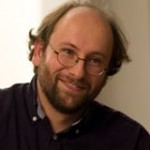
French composer talks about his dreams and he sees a good way of attracting young generation into classical music concerts through humoristic music videos on the Internet.

What does music mean to you personally?

Music is one of the more important joys in my life. Without music, the world would be so sad ! Music can express the full range of emotions of the human being. Music can make me laugh and music can make me cry. It’s the power of the music: to play with the emotions of the listener, to interact with him. For me, composing music is a way to express myself and to be fulfilled in what a love to do.

Do you agree that music is all about fantasy?

Music is a good way for dreaming, it has the power to reach our mind to a higher place. Also, it has this concrete aspect that often impress us when we see the musican offer to us the result of his work.

If you were not a professional musician, what would you have been?

I would have loved to be an entomologist, climbing in the amazonian canopy to discover new insects species!

The classical music audience is getting old, are you worried about your future?

If it is about attending classical music concerts, yes it’s a reality that most of the people are not so young. For me, listen to classical music is not a question of age. It’s a question of education. Children’s ears must be educated and it’s the task of the parents to learn their children to listen to classical music among the huge diversity of music styles. I think it is more affordable for young people now to attend classical concerts, discounted rates are made for them and it’s a very good thing. If young people are used to listen to classical music, they are most likely to attend concerts or to buy a CD of this music style. From my composer’s point of view, I’m most worried about the way the people consummate music. Music is so easy to hack.

What do you envision the role of classical music to be in the 21 century? Do you see that there is a transformation of this role?

I think classical music will never disappear. As far as orchestras and conductors will exist and will play it, it will not disappear. We are the guardians of the excellent past things and are responsible to pass them on to the next generations. Also, I think the concert programmers should program more living composers music in addition to the secular and very respected classical composers. It’s a good way to show new 21st century music to the audience.

When I say that classical music is searching for new ways or that the classical music is getting a new face, what would come to your mind?

Classical masterpieces can’t be changed regarding to the music, I think that the only way to add something is the visual aspect. The ballet music, or operas are perfect for revisiting the music visually.

Do you think that the classical musician today needs to be more creative? Whats the role of creativity in the musical process for you?

My creativity results from the amount of music I have listened in my whole life. My music is certainly a kind of hybrid between all that I have listened before, and obviously with my soul in it. The risk when composing is not to realize that the music you have just found is from another composer, Haha !! It happened to me years ago and what a disappointment when I realized that this amazing new theme wasn’t from me ! When I compose, my main fear is that the listener could be bored when listening to my music. So, I try to be inventive. I think that we can feel the heart of a composer in her/his music. Personally, I think that I unveil a part of myself in my music. I like to say that my music speaks better than myself. So, if you want to better know me, I invite you to listen to what I do.

Do you think we musicians can do something to attract young generation into the classical music concerts? How will you proceed?

We see numerous humoristic classical music videos on the internet. I think all the ways are good to draw the attention of the young generation. The way to reach them is where they are: on the social networks. Share videos on these platforms. Using classical music in the movies is the best way to make it appreciated too. After that they may want to attend classical concerts.

Tell us about your creative process. Do you have your favorite piece (written by you) How did you start working on it?

My compositions often start when I try to play something on my keyboard. Many times, I wondered if it was worth it to record a musical idea that I’ve just found. Happily, I do the good choice to record anyway and sometimes it becomes the start point of a very interesting composition. Other times, and it is rarer: I wake up in the morning with a music directly in my head. When it happens, I take my cellphone to record for not loose anything of what I have received in my dream ! I composed the piece ‘World of Life’ in 2012, I tried something on my keyboard and found the first melody. The whole framework of a piece isn’t found in one moment. There are some steps. When the inspiration stops, I often need to leave the piece, and to go back to it the next day or later to have my ideas clearer and find a development. When I found the ‘chorus’, I knew that adding an orchestra will emphasis the piano part. So, the piece ‘World of Life’ was completed in its final form. I remember that I said, after having just completed my piano solo piece ‘Le Piano Suspendu’, that I didn’t thought to make another piano piece because of the difficulty I had to complete it. But finally, inspiration have come back and since this piece, 4 other piano works have been released : Berceuse, World of Life and Prélude N°1 and Prélude N°2 (08/2017).

We, Moving Classics TV, love the combination of classical music with different disciplines: music and painting, music and cinematography, music and digital art, music and poetry. What do you think about these combinations?

Sometimes, several kind of art can coexist in one single life : see the very gifted Paul Barton who admirably plays the piano and also paints so realistic portraits. Regarding to your videos Anna, it’s very pleasant to watch them. I love your pianist skills as well as your actress ones. So original !!;)

Can you give some advice for young people who want to discover classical music for themselves?

Listen to the whole music of Chopin but especially its two piano concertos, Elgar’s Enigma variations, Rachmaninov’s piano concertos, Puccini and Verdi’s choir works, Malher’s 2nd Symphony “Resurrection, and so many more.

Do you have expectations what regards your listeners, your audience?

To get more audience on my music, I know that I need to be more prolific in my music works. A lot of time is needed to promote my music to the interested persons, share onto the forums, etc. This is asking a lot of time and we never get enough!

What projects are coming up? Do you experiment in your projects?

One of my choral works untitled ‘Psaume 42′ should be sung in Oklahoma soon for its premiere. It is dedicated to my grandmother, she’s getting old now, so, I hope she can listen to her piece during her lifetime. I also plan to release very soon the orchestra version score of my ‘Libera Me’ and also a new piece for soprano, choir and orchestra ‘Agnus Dei’ (by the way written in a very classical style). It will be available on my digital sheet music website : ASTURIA MUSIC. I have three pieces : Libera Me, Agnus Dei and Lacrimosa. I would dream to compose a requiem. I think it’s a good start ! I have a lot of piano compositions to complete too.

Country:

Posted in Uncategorized and tagged ,

Efisio talks about why composers should find the right balance and why music must always stay noble

What does music mean to you personally?

Music became an existential need. It is a consolation, a preview of what Heaven is. It colors life, it emphasizes things, transcends everything, feeds our souls, hearts and imaginations. It is one of the most powerful gift God has given to humanity. Seven notes which can express more than a million things, coherently.

If you were not a professional musician, would would you have been?

I really don’t know. I love theology, philosophy, science and all kind of Arts. Maybe a film maker or an author of books. (Even tho I doubt my values in those).

The classical music audience is getting old, are you worried about your future?

Certainly not. Classical music is coming back and strongly. We just need to see on YouTube, how popular classical music is! Mozart, Beethoven, Bach, Haydn and so many more are very liked by all kind of different people. If you look at the comment section, most of them are students that need this music to focus on their homework. To me it speaks volume and encourages me.

What do you envision the role of classical music to be in the 21 century? Do you see that there is a transformation of this role?

I think it is relevant to get close to it. Classical music is a solid base for new orchestral directions. It would be a terrible mistake to not have it near to us, in our century — both for the music maker and the listener. J-S Bach learned from Buxtehude and Vivaldi, creating something new, as well as Mozart assimilated the complex counter points from Bach, with his own style. Beethoven studied Mozart and opened the door of the Romantic area. I think that a real transformation is happening since the apparition of Movies, and it will continue to evolve, I hope!

When I say that classical music is searching for new ways or that the classical music is getting a new face, what would come to your mind?

I would say, Cinema, Video games, TVs shows/ Series, those medias are helping a lot the orchestral field to expand and get known in a new way.

Do you think that the classical musician today needs to be more creative? Whats the role of creativity in the musical process for you?

I think it needs to be honest. If one wants to make something new, just for making something new, It will die rapidly. It’s while being honest that something new, consistent, can come and stay. Most of the time, we don’t even realize it. I guess Beethoven did not notice that he was bringing a new musical expression to the world, as well as Mozart and Bach. Regarding my role about creativity, well, it can sound weird but I will be fully honest. As said earlier, according to my convictions, music is one of God’s mighty creation, given to mankind. I’m very impressed and respectful to this art. So, before to try to compose anything, I sit down and pray Christ to give me a fair inspiration in order to honor Him and humanity.

Do you think we musicians can do something to attract young generation into the classical music concerts? How will you proceed?

It’s a very difficult question. Somehow, our hearts reacts more to simple melodies. It can be really relevant to play some famous movies’s score that everyone like to listen to. It could be interesting to bring also pieces from Mozart, Vivaldi and others that are more or less easy to understand at a first listen.

Tell us about your creative process. Do you have your favourite piece (written by you) How did you start working on it?

It depends on the contemplation I have. I put my hands on the piano and let them go. It is strange to pick one over all, I see them as musical children made by Christ. To me, He is the maker of those orchestrations, so I love all of them.

We, Moving Classics TV, love the combination of classical music with different disciplines: music and painting, music and cinematography, music and digital art, music and poetry. What do you think about these combinations?

It is a wonderful thing. Music has no barriers. I fully support that desire of combination.

Can you give some advice for young people who want to discover classical music for themselves?

I would recommend Hans Zimmer’s work at first. His composition «Time» reached so many different people!

The Adagio from Albinoni can be a great introduction as well!

Now it is a common practice in the media to talk that the classical music is getting into the consumption business, do you agree? We are speaking about the supply and demand rules and how to sell your “product” in your case your compositions. How do you see it?

When Franz de Walsegg commanded a Requiem to Mozart, it’s fair to say it was business, As long as it does not contradicts your ethic, as long as your are doing it with all your heart, and for great causes it’s not bad. I have to add that there are different levels. Selling your music and rights, even your name is not a good thing, One needs the find the right balance, music must always stay noble.

Do you have expectations what regards your listeners, your audience?

I want them to be happy, they mean the world to me. It’s like a big family. A composer is nothing without his audience. I’m grateful to have them in my life!

What projects are coming up? Do you experiment in your projects?

I’m working on my second album for the moment!

Thank you so much for reaching out, it truly touches my heart.


Country:

Posted in Piano and tagged ,

French composer talks about honesty and impartiality in music and that everybody should follow their path, be it rocky or heavy, without an alternative plan.

What does music mean to you personally?

Music is the best means of expression for me. Maybe even the only way to recognize my true self.

Do you agree that music is all about fantasy?

I agree insofar that music fantasy needs. However, the music should always grow beyond your imagination beyond.

If you were not a professional musician, what would you like to be?

I think I have to be no other place than a composer. Any other profession would mean for me to live in misery.

The classical music audience is getting old, are you worried about your future?

Not the audience worries me. It is the lack of interest of many organizers and institutions against the contemporary art, which makes concern.

What do you envision the role of classical music to be in the 21 century? Do you see that there is a transformation of this role?

We, who live today, have a responsibility to write the ancient music of the future. What today’s traditional sounds are, were new sounds in the past. We are also committed to composing the music of our time and expanding the spectrum around our sounds.

When I say that classical music is searching for new ways or that the classical music is getting a new face, what would come to your mind?

I would say that searching was always the driving force of progress. Nevertheless, music should primarily touch. It is often forgotten that music is an entertaining art.

Do you think that the classical musician today needs to be more creative? Whats the role of creativity in the musical process for you?

Yes of course! Making music creatively, should go beyond borders. Sometimes that means even to take a step back in the tradition.

Do you think we musicians can do something to attract young generation into the classical music concerts? How will you proceed?

Music is vital! I try to take the audience to my sound journey. Sometimes it is also necessary to talk enthusiastically about it, to tell people how much beautiful and interesting things can be found in contemporary music.


Tell us about your creative process. Do you have your favourite piece (written by you) How did you start working on it?

Often, at the beginning, there is a desire to compose something for a specially cast. How will be the actual sound, this will be highly dependent on my current mood and state of my mind. Very often there is only a short motive or a rhythmic structure that I would like to pursue. Favorite pieces are mostly the last ones. However, there are “Five Concert Pieces for Cello” who accompany me twenty years and whose origin goes back to a car accident.

We, Moving Classics TV, love the combination of classical music with different disciplines: music and painting, music and cinematography, music and digital art, music and poetry. What do you think about these combinations?

I believe it is important that there is cooperation between the arts. Several years before, I have initiated a project “Color and Music”. And any synergy between artists is worthwhile for art.

Can you give some advice for young people who want to discover classical music for themselves?

Follow your path, whether it is rocky or heavy. And, do not make an alternative plan.

Now it is a common practice in the media to talk that the classical music is getting into the consumption business, do you agree? We are speaking about the supply and demand rules and how to sell your “product” in your case your compositions. How do you see it?

Unfortunately, it is what is common practice. Music, which is commercially oriented, is often uninspired and flat. This is especially clear when you look at programs from theaters, orchestras and CD productions. And this ignorance is what strengthens the crisis in classical music. The audience develops interest when our own enthusiasm for our music is honest.

Do you have expectations what regards your listeners, your audience?

Impartiality, I do not expect more!

What projects are coming up? Do you experiment in your projects?

Several works are planned for various larger ensembles. As a composer, you can only experiment in a very small way and it is only possible during the development process. But I always hope that my performers take the time, even at the performance, for experimental and creative handling.

Country:

Posted in Piano and tagged ,

Matthias tells about why composers are asked to make new music and not to repeat it and why it is important to listen to music with fun and caring mindset.

matthias kadar

What does music mean to you personally?

A Language, a medium between me and what I want to say. A color in (my) life that I can paint or listen to. An emotion, love.

Do you agree that music is all about fantasy?

I don’t know: it could be also all around emotion, love, feelings. It seems handy to need fantasy to make any. I believe anyway that fantasy makes us accept sometimes the craziest things in life. Not all, surely not, and that is also good and important. Fantasy may help sometimes understand things. Do you need fantasy to listen to music? At least you may need a pair of ears and patience to listen!

If you were not a professional musician, would would you have been?

something in mechanical physics or an actor.

The classical music audience is getting old, are you worried about your future?

No! You can make everybody happy! Old people too! Then their families may see it and get themselves interested in classical music. To look into future is not my speciality anyway… Often and I’d say nearly always, mankind was wrong about predicting anything, beginning with the weather forecast. :) optimistic as I am we can be happy, that the audience -is- getting old. At least we have an audience! The younger audience is also getting old..that’s also a good news. Next to this I have the believe that you can touch everybody if you are alive,honest, approachable and communicative with and about your work.
What do you envision the role of classical music to be in the 21 century? Do you see that there is a transformation of this role?

It may depend on different things : education and interest, mentality of a country, possibility of getting to a concert and the development of archiving and documenting music. What I hope is that music may invite the listener to take time, breathe, listen, enjoy and having a good moment. This I hope will be its role in all the next centuries.

When I say that classical music is searching for new ways or that the classical music is getting a new face, what would come to your mind?

A mask. Classical music is not searching. People who want to sell tickets are often searching for new ways to sell them. They may try to sell a at least century old programm. It s like going to a museum. I believe we should be more attend not to be too afraid of good new pieces of music and program them together with the older ones. Then the circle of time may go on. The ‘new face’ would be anyway the music of yesterday. And not like now the new interpretation of the music of long before the industrial revolution. I m pretty sure that your question was also asked earlier and answered too:Mendelssohn incorporated pieces of his time with older ones: In these days Bach was an unknown composer. Mendelssohn made him the known composer we know all. Next to this, for example, we still don’t know half of the music of Schubert: his operas. Its all a crazy territory full of paradoxes. We need music to keep calm!:) and we need to make music. Also listening to a classical concert is a vague Idea anyway: is it an orchestral concert, so a performance of an old dinosaur of the past century? Or a concert of an ensemble? maybe time and space will give the answer.

Do you think that the classical musician today needs to be more creative? Whats the role of creativity in the musical process for you?

Can one have more creativity today then Monteverdi, Bach, Mozart, Haydn, Beethoven, Schubert and so many others? In some ways we do need to stay up to the level. Because otherwise in 100 years, we won’t see much music of our Century. We need to continue to draw and write the face of our time and civilization.
My creativity is nourished by my intuition.

Do you think we musicians can do something to attract young generation into the classical music concerts? How will you proceed?

We need to be reaching out. Performing and….always have fun:
Having fun and playing well is an addictive and inviting elixir of love of music for everybody.

Tell us about your creative process. Do you have your favourite piece (written by you) How did you start working on it?

Every composition is for me like a moment in my life, a photograph. Now I assume I ‘d pick a piece I ve written next to my children. My favorite piece may very well also be my next composition.
I’m always reluctant looking back and feeding my ears with my own pieces.
How do I start writing? I love to study about the theme and the instrument I will write for, then I digest every minut of my life to make a kind of synthesis of it in sounds. But at the end, I take my pencil and my paper, I sit down somewhere - I love to sit at my piano-and I write. Like writing a letter to a friend.

We, Moving Classics TV, love the combination of classical music with different disciplines: music and painting, music and cinematography, music and digital art, music and poetry. What do you think about these combinations?

Great! I love the Idea of working with cinematography, digital art, theater, poetry, dance, puppetry. I did it already and can’t wait do do more!

Can you give some advice for young people who want to discover classical music for themselves?

Listen to Schubert’s string quintet. Listen to music with the mindset that that music comes from people who were having lots of fun in their lives, were loving and caring living people with sometimes grrrrreat humor!

Now it is a common practice in the media to talk that the classical music is getting into the consumption business, do you agree? We are speaking about the supply and demand rules and how to sell your “product” in your case your compositions. How do you see it?

a big misunderstanding: as a composer, your compositions may be the worst of the worst business plan. Anyone who makes a business needs to make money with the possibility of being able to repeat his product: a soap manufacturer will create one sort of soap and sell this one same soap millions of times. As a composer, you love repetitions, but you find them boring too, you need variation: that may be already a problem business-wise. Then you can’t be a composer and live from just writing one piece and repeat that one piece the rest of your life: you create more. And this is the real problem. You are not created to repeat music but to make new one. That makes it very difficult in the short term of your lifespan to make big money with your compositions… as a composer, you may try to sell an unwritten project with the hope that you’ll write it. then you look for unwalked ground. That makes it difficult to look for demand…you look for organisations and performers. When you say ‘consumption business’, I feel like wanting a cup of music with a milk cloud of drama peppered with not too much invention..:)

Do you have expectations what regards your listeners, your audience?

to listen and to trust me. I am not going to give them a bad time. And when they know me, they know it. Maybe this could be the repeating element of your question before…

What projects are coming up? Do you experiment in your projects?

I am going to compose a cello concerto for the first cellist of the Budapest Festival Orchestra, Peter Szabo. Next to this I will compose a piece for cimbalom and saxophone quartet for the Aurelia Saxophone Quartet. And also a composition for the first flutist of the Budapest Festival Orchestra, Gabi Pivon. And I am planning an’oratorium’ based on the poems by Paul Celan. The biggest experiment for me now is to make the pieces go organically well. It may depend also how you define the experiment itself: as I define it as something you try without knowing what it will become, I may see the taking of a commission to compose a new experiment. Not its writing: i always want to know and hear in myself what I do. The hope is for me, that the things I imagined, the form, the length , the coloring, the atmosphere are indeed the same as I wanted. With all the freedom of interpretation to the performers! To let them experiment with hopefully a composition that can have one and 1000 other meanings!

Country:

Posted in Piano and tagged ,

Maxime Raynal tells about incredible music experience of composing a piece of music with two pianos with low lighting with small lamps and some scented candles and why creative process can remain a mystery.

What does music mean to you personally?

First music is my life. Music is the purest form of expression between the soul and the heart

Do you agree that music is all about fantasy?

Yes, it takes fantasy to listen and to create it. It is a form of freedom

If you were not a professional musician, would would you have been?

Probably a poet

The classical music audience is getting old, are you worried about your future?

Yes and I think that the role of each musician is to demonstrate in what it is magic

What do you envision the role of classical music to be in the 21 century? Do you see that there is a transformation of this role?

In an uncertain century, classical music should play a major role in reassuring people and conveying hope

Do you think that the classical musician today needs to be more creative? Whats the role of creativity in the musical process for you?

Yes I think it must be creative without breaking with what makes the essence of music. Dissonance and chaos excite because harmony and order also exist. Do not forget to speak first to the soul then speak to the brain.

Do you think we musicians can do something to attract young generation into the classical music concerts? How will you proceed?

Use a common gateway between the younger generation and the classical generation. For example, putting music on the piano pieces of video games like Final Fantasy, Zelda, Castelvani, Wow …

Tell us about your creative process. Do you have your favourite piece (written by you) How did you start working on it?

The creative process remains a mystery. I believe that emotions are accumulated during life experiences and that they then emerge in a large spontaneous and disorderly spray. Then we have to put things in order to write. My favorite piece remains my piece of music with my two pianos with low lighting with small lamps and some scented candles.

We, Moving Classics TV, love the combination of classical music with different disciplines: music and painting, music and cinematography, music and digital art, music and poetry. What do you think about these combinations?

I love these combinations and I have always explored these mixes. First of all poetry and music with Baudelaire and Verlaine, then music and painting with the planets then music and image or video.

Can you give some advice for young people who want to discover classical music for themselves?

Again, find the right front door. You do not have to start with Baroque music and Bach. Use classical music that they would have heard in a film or an advertisement and start to reveal little things about their life, to make them discover other music. Then show them who inspired them in turn. For example one can use the music of Star Wars by John Williams that everyone knows and explain that Georges Lucas wanted him to be inspired by musician like Gustav Holst or Richard Wagner and to make discover them.

Now it is a common practice in the media to talk that the classical music is getting into the consumption business, do you agree? We are speaking about the supply and demand rules and how to sell your “product” in your case your compositions. How do you see it?

That’s not what I prefer, but I do not think we can avoid that.

Do you have expectations what regards your listeners, your audience?

Just be open-minded, curious and caring

What projects are coming up? Do you experiment in your projects?

I’m creating a repertory of my compositions so that I can play them in concert at a music festival. I also have to record an album in August with also my compositions


Country:

Posted in Piano and tagged ,

Dominique Dupraz in interview with Moving Classics TV: Dominique talks about his creative process, why music is the indescribable, the unutterable and the most profound and faraway “inner spaces” of the soul, and what Belgian artistic movement "New Consonant music" means to the listeners.

1. What does music mean to you personally?

Music, like other arts, expresses the indescribable, the unutterable and the most profound and faraway “inner spaces” of the soul.

La musique, comme d’autres Arts, exprime l’indicible, l’ineffable et les « Espaces du Dedans » les plus profonds et lointains de l’âme.

2. Do you agree that music is all about fantasy?

Music is an art which can take many and various forms : it can be entertaining, descriptive, contemplative, spiritual, mystic etc.. It concerns everyone, and each of us when listening, can take what he wants and above all what he can, irrespective of his or her cultural level but according to one’s perception of often very complex sounds requiring an effort of concentration, which is missing in our 21st century, notably with young audiences.

La musique est un art aux formes multiples et variées : elle peut être divertissante, descriptive, contemplative, spirituelle, mystique, etc…Mais elle s’adresse à tous et chacun à son écoute, peut en prendre ce qu’il veut et surtout ce qu’il peut, non pas suivant son niveau de culture, mais suivant son degré de perception d’univers sonores souvent complexes qui demandent un effort de concentration ayant malheureusement disparu en ce début de 21èmesiècle, notamment en grande partie chez le jeune public.

3. If you were not a professional musician, would would you have been?

I think that since I was a teenager I was destined to compose music. Later on, I devoted my time to the elaboration of a musical work. The encounter with my mentor, Jean Catoire, professor of music composition at the Sergei Rachmaninoff Russian Conservatory of Paris was a deciding factor in the early seventies.

Je crois que ma vie devait être tournée vers la composition musicale, déjà à l’âge de l’adolescence. Puis bien plus tard, je me suis consacré à la construction d’une œuvre personnelle. La rencontre avec mon Maître Jean Catoire, professeur de composition au Conservatoire Russe de Paris Serge Rachmaninov, fut à ce titre, décisive dans le tout début des années 1970.

4. The classical music audience is getting old, are you worried about the future?

Classical music does not receive the same media coverage as pop music, rock or others…Generally speaking, the human mind prefers the easy option to that not immediately perceptible. 3 guitar chords of a song are easier to hear and understand than the harmony of a composer like Scriabine, for instance, or the sounds of the dodecaphonists!

La musique classique ne bénéficie pas de la même couverture médiatique, que celles dites de variétés, rock ou autres…Et l’esprit humain en général a toujours préféré la facilité à ce qui n’est pas immédiatement perceptible: 3 accords de guitare d’une chanson sont toujours plus faciles à entendre et à comprendre, que l’harmonie d’un compositeur comme Scriabine par exemple, ou l’univers sonore des dodécaphonistes !

5. What do you envision the role of classical music to be in the 21 century? Do you see that there is a transformation of his role?

So-called “contemporary” music was not well accepted by the general public in the second half of the 20th century, because it was considered too elitist, abstract, and meaningless. Baroque, classical and romantic music have become popular, because they are charged with universal and timeless emotions which are immediately perceptible.

La musique classique, dite « contemporaine » s’est coupée du grand public, dans la 2ème moitié du 20ème siècle, parce que trop élitiste, abstraite, et vide de sens. Les musiques baroque, classique, romantique sont devenues populaires parce qu’elles sont chargées d’une émotion universelle et intemporelle, donc immédiatement perceptible.

6. When I say that classical music is searching for new ways or that the classical music is getting a new face, what would come to your mind ?

Now, some classical music seeks to reconnect with the public using emotion and not a technical, artificial musical language. The Belgian musical movement ”New consonant music” is a striking example! For almost 30 years, it has brought together composers using various musical forms but all aiming at reconnecting with the public.

Une certaine musique classique de notre temps, cherche à renouer avec le public au travers de l’Emotion et non, par le vecteur d’un langage musical technique, artificiel. Le mouvement musical belge « New Consonant Music » en est un exemple frappant ! Depuis bientôt 30 ans il réunit des compositeurs aux esthétiques certes différentes, mais tous animés par la même nécessité de communiquer à nouveau, avec le public…

7. Do you think that the classical musicians today need to be more creative? What is the role of creativity in the musical process for you?

No, contemporary classical music does not need more creativity. Creativity is everywhere. The composer simply needs better media coverage to (almost) compete on a level playing field with pop singers. Moreover, creativity at all costs does not mean originality: creativity is not only to do what you want but above all to want what you do.

Non, la musique classique contemporaine n’a pas besoin de plus de créativité. Celle-ci est en effet partout et multiple. Le compositeur a tout simplement besoin d’être médiatisé, pour lutter à (presque !) armes égales avec le chanteur de variétés. Par ailleurs, créativité à tout prix ne signifie pas originalité : la créativité, ce n’est pas faire uniquement ce que l’on veut, mais c’est d’abord et aussi vouloir ce que l’on fait.

8. Do you think we musicians can do something to attract young generation into the classical music concerts? How will you proceed?

My opinion is that live music concert is a very good means to attract young audiences. It is the same relationship between a match on the central Roland Garros court, and a televised tennis match! Personal experience is the key of pedagogy for adults as well as for children.

Je crois que la musique-live du concert, est un excellent moyen d’y attirer le jeune public. C’est la même chose que le rapport qu’il peut y avoir, entre le court central de Roland Garros, et l’écran de télévision retransmettant le même match de tennis ! Le VECU est la clé de la pédagogie, aussi bien pour les adultes que pour les enfants.

9. Tell us about your creative process. Do you have your favorite piece (written by you), how did you start working on it?

My creative process uses a technical classical language (consonant harmonies), major or minor, strong melodic structure, simple and various rhythms, often using an atonal music system (ex: “Sous un ciel étoilé” for piano). Other music pieces are definitely tonal (“24 préludes”) and convey what is essential to me: the Idea, whether existential, emotional, descriptive, mystic or other….

Ma démarche créatrice utilise un langage technique classique (harmonies consonantes, majeures ou mineures, structure mélodique affirmée et rythmes simples différenciés) tout en l’utilisant dans un système souvent a-tonal (ex : « Sous un ciel étoilé » pour piano). D’autres compositions sont résolument tonales (« 24 Préludes ») et au service de ce qui est, à mes yeux, primordial : l’Idée, qu’elle soit existentielle, émotionnelle, descriptive, mystique, ou autre…

10.We, Moving Classics TV, love the combination of classical music with different disciplines: music and painting and cinematography, music and digital art, music and poetry. What do you think about these combinations?

I do like the association of music and poetry - cf “Leopoldine” for piano and soprano based on the verses of Victor Hugo, music and littérature - cf “Les lettres de Vincent Van Gogh à son frère Theo” for actor and piano, music and architecture - cf « Un vaisseau de lumière » for trio, about Le Corbusier’s Ronchamp chapel, music and painting - cf my opera « Vincent Van Gogh » on his life. These links between all the arts are very enriching for my creativity !

J’aime également l’association de la musique avec la poésie (« Léopoldine » pour piano et soprano sur les vers de Victor Hugo), la littérature (« Les lettres de Vincent Van Gogh à son frère Theo », pour comédien et piano), l’architecture (« Un Vaisseau de lumière » pour trio, sur la Chapelle de Ronchamp de Le Corbusier), la peinture (opéra « Vincent Van Gogh » sur la vie du peintre). Ces ponts jetés entre tous les Arts sont très enrichissants pour ma créativité…!

11.Can you give some advice for young people who wants to discover classical music for themselves?

It’s not Art which has to seek out the audience, it is the audience which has to come to Art! If the artistic “carthasis” - i.e. the effect of work of art on the public - can be guided by an more enlightened spirit (teacher, speaker, art critic and others), this catharsis must take place in the most personal and individual manner as possible deep within the listener/ spectator.

Ce n’est pas l’Art qui doit aller au public, mais c’est le public qui doit aller vers l’Art ! Si la catharsis artistique, c’est à dire l’effet de l’œuvre d’art sur le public, peut être guidée par un esprit plus éclairé (professeur, conférencier, critique, et autres), cette catharsis doit naître et se révéler de la façon la plus personnelle et autonome qui soit, et dans l’intériorité la plus secrète de son récepteur (auditeur, spectateur)

12. Now it is common practice in the media to talk that the classical music is getting into the consumption business, do you agree? We are speaking about the supply and demand rules and how to sell your “product” in your case your compositions. How do you see it?

For the composer, it’s all about the question of his musical career. The career must be the consequence of his work. The use of music by businesses can be beneficial (CD, movies) as well as detrimental (advertising). In this regard, French copyright is well protected by the SACEM (Société des Auteurs Compositeurs et Editeurs de Musique). The composer is free to choose among the various vectors to commercialize his work.

Il s’agit ici pour le compositeur, du problème de la carrière. Celle-ci ne doit être que la conséquence matérielle de son œuvre. La récupération de sa musique par le business, peut être aussi bien bénéfique (CD, cinéma), que destructrice (publicité). Le copyright français est à ce titre, très bien protégé et le droit d’auteur très bien défendu par la Sacem (Société des Auteurs Compositeurs et Editeurs de Musique). Le compositeur est ainsi parfaitement libre de choisir les meilleurs vecteurs pour commercialiser son œuvre.

13. Do you have expectations what regards your listeners, your audience?

I consider that writing music is not primarily intended for the audience. It is the composer’s inner need to address himself to his Muse, music! A composer worthy of the name must not use the music but serve it as closely as possible through his work. Unfortunately, the listener most often does not judge the music score but rather the musician who is performing it. The composer who does not play his own music is practically unknown to the general public….!

Je pense que l’acte d’écrire de la musique ne s’adresse pas en premier lieu, au public…Il s’agit d’une nécessité intérieure du compositeur qui s’adresse d’abord à cette grande Dame qu’est la Musique ! Un compositeur digne de ce nom, ne doit pas se servir de la Musique, mais il doit la servir le plus fidèlement possible, au travers de ses créations. Malheureusement l’auditeur porte le plus souvent un jugement, non pas sur la partition elle-même, mais plutôt sur le jeu de l’interprète qui se trouve sous le feu de la rampe. Le compositeur, qui ne joue pas sa propre musique, existe peu pour le grand public…!

14.What projects are coming up? Do you experiment in your projects?

My upcoming projects are the creation in Paris of my 13 pieces for piano, called “les Vitraux de Saint Maximin de Metz” on stained glass windows by Jean Cocteau and if possible, the creation of my 3 act opera “ Vincent Van Gogh”.

Mes projets à venir, sont : la création à Paris de mes 13 pièces pour piano, intitulées « Les Vitraux de Saint Maximin de Metz » sur les vitraux dessinés et peints par Jean Cocteau, puis si possible, la création de mon opéra en 3 actes « Vincent Van Gogh”.

.

Moving Classics TV – Copyright © 12th 03 2017


Country:

Posted in Uncategorized and tagged

Interview with a French composer Sylvain Guinet - "to compose is to reveal oneself, to define oneself, to be exposed and vulnerable". He thinks music is a very powerful art. Read more about Sylvain thoughts about artistic inspiration, about emotions in music, why one smile counts more than a dollar and about his new project!

What does music mean to you personally?

Nowadays we understand the world we live in as made up of oscillatory vibrations covering a wide range of frequencies and various physical phenomena. Sound waves are an example of such vibrations that can deeply affect us through the different emotions they convey to us while perceived as a single entity, music. Some music pieces have therapeutic qualities, others can make us cry, allow us to escape, others make us dance or relax. As a composer I consider music more as a need for my own well-being rather than just a simple passion or craft. Sensing the pleasure and emotions people feel when listening to my music is what makes me remember why I enjoy writing music in the first place.

If you were not a professional musician, would would you have been?

What matters to me is to create, everything boils down to that. If not a composer I probably would have been a writer or a draftsman, two professions that share the same process of creation and the same reward, the feeling that one gets back when people are pleased by this creation.

The classical music audience is getting old, are you worried about your future?

No, I am not worried. It is true that the audience of classical music is often on the older side. Young people like to differentiate themselves and I guess music styles are a way to do it just like fashion is. However note that the artist who sold the most albums in 2016 is still … Mozart! Classical music is timeless and will always be present in 1000 years from now. Fashionable music I am not so sure.

Do you think we musicians can do something to attract young generation into the classical music concerts? How will you proceed?

Have you ever heard in more expressive music like rap the use of classical music? The result is wonderful. In that same spirit I think that to attract younger people, classical music must be modernized in some way, live with its time, adapt to different styles. Even though that would make purists rebuke at first. “If classical music is timeless, to attract young generation into the classical music concerts it must also evolve to the evolutions of each epoch to be understood by a wide audience.”

Tell us about your creative process. Do you have your favourite piece (written by you) How did you start working on it?

As many composers, I write music when I feel “inspired”, this is what I call the “writing of the heart” as opposed to writing music based on the rules of solfeggio only, which represents more the “writing of the brain”. I have spent many years trying to understand what is called “inspiration”. And I finally found the answer and this is very subtle because today I still do not know how to provoke it but can only wait for it. Inspiration is a “connection to oneself”, it seems easy to say and yet so difficult to understand. When one is connected, the music seems to come from itself, everything seems lucid, easier, and wonderful. This is the astonishing result of an “unconscious meditation”. In this state one is usually cut off from the outside world.

On the other hand, I am not judge of my own music, the feedback you get from listeners is what allows you to judge the level of your work. So my favorite pieces are the ones that bring the most happiness to people, and in particular a piece I called “Dragonice”. Writing this piece opened a lot of doors for me, and brought a lot of recognition. The title is related to the spirit in which I was at the time (Buddhism, martial art).

Sometimes some compositions are a cathartic reflection method. As far as I am concerned, to compose is to reveal oneself, to define oneself, to be exposed and vulnerable. That’s why criticism can affect you … I also wrote a tribute piece that is very important in my life as a composer. The piece is called “Yuko Takamatsu” and relates to the story of a Japanese man named Mr. Takamatsu who decided to learn how to dive to search the sea in the desperate hope to find his wife’s body, who died in the Tsunami of March 11, 2011. His wife’s name was Yuko, she disappeared after she took refuge on the roof of a bank of the Onagawa small fishing harbor on the east coast of the country. The whole harbor got devastated by a 20 meter wall of water. Mr Takamatsu had never listened to music since the tragedy and yet, this piece written as a tribute to his wife enormously helped him, and reconciled him with music. Mr Takamatsu told me “this music helps my heart to heal, this piece is my treasure”. That’s why I write music…

We, Moving Classics TV, love the combination of classical music with different disciplines: music and painting, music and cinematography, music and digital art, music and poetry. What do you think about these combinations?

Music is a very powerful art. But when you pair it with another art form, you multiply the feelings and emotions it can convey. I think cinematography and music are the perfect fusion. When we are moved at the same time by what we see and what we hear, the emotional impact can be very intense.

Do you have expectations what regards your listeners, your audience?

I decided a few years ago to offer all my music sheets and mp3 formats for free. I’m not crazy though ! The best reward for me is that my music is played and listened to. Money does not matter, but the listener who appreciates your work is a form of recognition, for my part one smile is better than a dollar. I always ask musicians who make money with my music to give to charities (not to me). “Giving without expecting anything in return” means opening one’s heart to people. My audience increases every year: new listeners, performers, music schools and radio stations, I am very happy with that and ask for nothing else !

What projects are coming up? Do you experiment in your projects?

I have a project that I care very much about, but that will require a lot of work. I would like to put together a piano piece written by many composers from different countries. This piece will be called “Around the world”. Each movement written by a different composer will carry the spirit of a nation. I am imagining a piece that starts in France, and goes through Spain, to go to Africa, and then to India, then Asia, crosses the oceans and goes to the USA and finishes in South America. A music that unites all races of men with a universal language. I already made contact with a few composers who would like to take part in this project, but I still have to find a publisher who would accept to make an edition and a CD from which all benefits would be donated to a charity.

Link of Sylvain’s Free Sheet and mp3: http://www.free-scores.com/Download-PDF-Sheet-Music-sylvain-guinet.htm Youtube Chanel: https://www.youtube.com/user/sylsof Contact mail: [email protected]

Country:

Posted in Piano and tagged , , ,

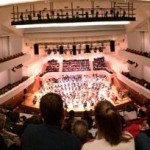
No more classical music in Pleyel Hall in Paris

Salle Pleyel

Vaudeville show, Chanson, Jazz, One-man-show, dance, musical comedy: these entertainment activities will replace the classical concerts in future in the Pleyel Hall in Paris. Because classical music is according to one of the men who decided this, all over the world dependent of sponsors or public subsidies.
The Pleyel Hall is one of the famous concert halls in Paris with almost 2000 seats that was built in 1927 by Pleyel et Cie, the French piano manufacturing firm that has been founded by Ignace Pleyel in 1807.
It is possible to fill the Pleyel Hall with audience through one-man-shows but no more with classical concerts. Unbelievable!
It seems to me that classical musiciens as well as music promotors have run out of inspiration. If the pure classical concert does not fill any more concert halls than one has to combine the concerts with entertainment elements instead of giving it up completely.
My impression is that the old boys network in classical music and the promotor giants who dominate the big concert halls need urgently a big bucket of cold water and new ideas.

Country:France

Posted in Uncategorized and tagged , ,

“The Little Sparrow whose Singing Enchanted the World.”

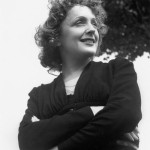
Edith Piaf

This French born star of international acclaim is famous for her love ballad, Non je ne regrette rien (No Regrets). When she sang it, accompanied only by a pianist, her body language and expression screamed the opposite. A tortured soul, Edith Gassion was constantly haunted and embittered by life and lost loves.
In most respects Edith was a waif. Her father was a circus performer, her mother an alcoholic street singer who cared nothing for her. The chanteuse was, so she claimed, born on a gendarme’s cape under a street lamp. The teenage Edith Gassion was to follow both her parents’ careers into entertainment.
As a street singer Gassion was partnered by her life-long friend Simone Berteaut, who worked for a pimp. There is no suggestion that she herself was ever a prostitute. When the couple’s relationship ended he tried to shoot the melodic singer; fortunately the attempt failed. Not so fortunate, Edith Gassion’s tiny daughter, Marcelle, who died from meningitis when just two-years old.
This was at a pivotal point in Edith’s life. Whilst she was trying her luck as a club singer, calling at restaurants along the Champs-Elysées, the young chanteuse was approached by Louis Leplée. Handing her a scrap of paper upon which was scrawled his name, address and also ten francs, he invited her to meet him that she might audition at his club, Le Gerny’s which was situated on Rue Pierre Charron.
Louis loved her voice but he was not so enamoured of the young singer’s family name, Gassion. After giving it much thought he changed the singer’s name to Piaf, which is Parisian slang for sparrow. Edith from there on became known as the Little Sparrow.
The salon singer’s opening night at this watering hole for the well-heeled was for her a terrifying affair. Picture her in her black knitted dress with a casually flung scarf to hide its missing sleeve. Edith that magical night sang her Parisian love melodies from the heart. The chanteuse sang with passion as she breathed raw emotion from each of the unknown song’s sentimental words.
At first the audience was indifferent. Then, gradually the diners chatter died and heads began to turn. Soon one could have heard a pin drop. During her performance that night the sparrow turned into a nightingale. The audience, instinctively mesmerized by her distinctive passion, was entranced. That night the Little Sparrow left the stage to riotous applause. Her growing popularity was to bring her international fame.
Paris being Paris, Piaf was often in the company of France’s most illustrious stars of cinema and theatre whilst also rubbing shoulders with its most notorious gangsters. All came crashing down when Louis, her mentor, was murdered. Although Edith was not involved in his violent death it was thought she was in some way implicated. The club closed, her performing contracts dried up and her friends deserted her. The Little Sparrow was now back to where it all began. It was to be 1939 before she recovered her fame.
During the 1940 – 1945 years of German occupation she entertained her country’s occupiers who adored her. It has been claimed she had more lovers than songs but it was her voice that made her fortune and fame, which is just as it should be.
Edith died in 1963 as a consequence of high-living with the low life. Over 100,000 mourners attended her funeral. The solemn occasion brought Paris to a standstill. The Parisian street singer had once been the most highly paid star in the world yet she died in debt. Regrets? Yes, there are a few.

Country:Spain

Posted in Singer and tagged , , ,