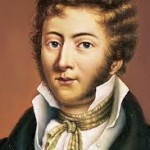
Wie bereits angekündigt, freue ich mich nun endlich, interessierten Musikliebhabern unter euch den gesamten Zyklus “Vergessene Weisen Op. 38″ von Nikolai Medtner präsentieren zu dürfen - aufgenommen letzte Woche auf einem C-Bechstein-Flügel. Kurz noch einmal ein paar generelle Informationen zum Komponisten und Werk:
Nikolai Medtner, geboren 1880, war russischer Komponist und Pianist, wobei er oft eigene Werke aufführte. Seine Kompositionen sind inspiriert von deutscher und russischer Tradition, halten sich aber an den romantischen Stil. Rachmaninoff und Medtner, welche befreundet waren, hielten jeder den anderen für den bedeutendsten Komponisten seiner Zeit.
Medtner schafft mit seinen Werken und seiner unglaublich bildhaften und erzählerischen Tonsprache eine ganz eigene, individuelle Atmosphäre.
Der Zyklus besteht aus 8 lose zusammenhängenden Stücken. Das erste und umfangreichste ist gleichzeitig seine 10. Klaviersonate mit dem Namen “Sonata Reminiscenza”, bestehend aus einer musikalischen Erzählung in einem einzigen 14-minütigen Satz, welcher in bedrückendem a-moll geschrieben steht. Trotz der Einsätzigkeit ist noch eine gewisse Sonatenform zu erkennen (Exposition, Durchführung, Reprise), wobei zusätzlich Zwischenmotive eingebaut werden und z.B. bei der wiederholten Exposition ein neues Seitenthema erklingt.
In den folgenden 7 Stücken werden immer wieder Motive aus der Sonate verarbeitet. Speziell das eingängige melancholische, immer wiederkehrende Intro- und Schlussthema der Sonate ist z.B. bei „Canzona Serenata“ und „Alla Reminiszenza“ deutlich wahrnehmbar. Aber auch die Stücke untereinander zeigen Parallelen auf. Das einleitende Glockenmotiv des „Danza Festiva“ erklingt z.B. im danach folgenden „Canzona Fluviala“ ebenfalls als einleitendes Motiv, geht dann aber in ein ruhigeres, fließenderes Stück über. Das letzte Stück „Alla Reminiszenza“ kann auf Grund der engen Themenverwandschaft mit der Sonate, als eine Art Coda des gesamten Zyklus gesehen werden. Zum Abschluss klingen hier ebenfalls laute Glocken im befreiendem A-Dur.
Hier geht es zur Playlist:
1. Sonata Reminiscenza
2. Danza Graziosa
3. Danza Festiva
4. Canzona Fluviala
5. Danza Rustica
6. Canzona Serenata
7. Danza Silvestra
8. Alla Reminiscenza
Ich wünsche viel Spaß bei dieser tollen Musik und hoffe, es gibt für euch dabei viel zu entdecken.
Hope this one is good enough to show you…
Live it is no problem, if a beamer is there, but to record the visualisation is difficult…
Maybe someone knows something about recording the screen with a better resolution…
Have you ever relaxed on your balcony or patio listening to the dreamiest piano music imaginable? Such an experience is to enjoy the world’s most sensual massage of the senses by the world’s most gifted masseur and it costs little or nothing. If you have done so then the chances are you have been listening to a recording of a little known composer’s nocturnes. Perhaps a piece composed by a musician such as Chopin who was influenced by him.
Most of us are familiar with the names of Friedrich Chopin, Schubert, Franz Liszt, and Josef Haydn. Sadly fewer music lovers have heard of the Irish composer, John Field. Of him, Franz Liszt said: “None have quite attained to these vague Aeolian harmonies, these half-formed sighs floating through the air, softly lamenting and dissolved in delicious melancholy.”
Exhausted after a day’s activities our thoughts will usually turn to our favourite bedtime drink. One’s favourite tipple will help one to relax but do take my advice; purchase or download John Field’s piano music. I promise you will be enchanted and a restful night’s sleep will assuredly follow.
Born in 1782 to Irish parents in Dublin his was a musical family. Through his father’s connections the youngster progressed under the masters of his day. As so often happens with prodigies the young John Field was soon to exceed his tutors’ abilities and quickly the boy earned their respect. Field was soon to be regarded as the Father of the Nocturne.
A nocturne is a gentle undemanding piano piece perfectly suited to relaxing. It is often played during romantic scenes in television or movie dramas. There is a pathos about a nocturne: the melody’s soft whimsical notes never quite leave you.
I recall watching a movie that ended with the betrayal and shooting down of the outlaw, Billy the Kid. Some sixty years later I have forgotten the drama of the outlaw’s troubled life. All I do recall is the soothing piano melody that formed the backdrop of the final moments of the tragedy at his violent end.
John Field’s family moved to London when he was eleven years old. When twenty-years old the pianist went to Saint Petersburg via Paris and Vienna. His preferred choice was the then great Russian capital, the city of Tsar Peter the Great. A regular visitor to Moscow too he also played in the neighbouring Baltic States, Estonia, Latvia and Lithuania and England and Italy too.
It was in St Petersburg that John Field composed most of his enchanting melodies. These soon caught the ear of Polish born contemporary pianist Friedrich Chopin. He enthusiastically adopted Field’s style and made it his own. John Field was to present his final concert in March 1836 and the world lost him in Moscow a year later.
You are familiar with the sublime sensations that relax you as you soak in a hot bath. Do give your wearied mind the same treatment by relaxing to a John Field nocturne, etude or sonata. Failing that, smile as you listen to the melodies of those far better known than the obscure John Field but whose fame rested on the shoulders and inspiration of a melodious Irishman who gave the world its very own lullabies.