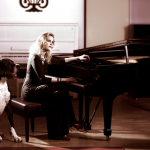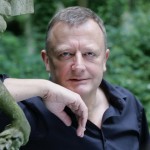
Patrick Hawes is an English composer who has made his mark as a torchbearer of the English musical tradition. He is best known for writing the Highgrove Suite for HRH Prince Charles, the Prince of Wales, for being Composer-in-Residence at the UK’s largest biggest classical music station, Classic FM, and for the Number One album Angel. Patrick Hawes kindly consented to answer the questions for MOVING CLASSICS TV

MM7D8124_2_2

What does music mean to you personally?

Music is everything to me. I have music in my head all day long and it is even there if I wake up at night. When I’m not writing music, I am listening to it, particularly music from the Renaissance and Baroque.

Do you agree that music is all about fantasy?

Absolutely not! Music is an expression of very real human emotions.

If you were not a professional musician, what would you have been?

I spent sixteen years teaching both music and English – I actually enjoyed teaching English more than music since I was learning with the students! So, if my musical career had not gone the way it has, I would teach English.

The classical music audience is getting old, are you worried about your future?

In England, classical music is popular throughout the generations. Classic FM (the UKs largest classical radio station) has as many requests from youngsters as old – particularly from students who enjoy classical music while working and preparing for exams. More and more youngsters are coming to classical music via video game and film sound tracks so the future is bright!

What do you envision the role of classical music to be in the 21 century? Do you see that there is a transformation of this role?

Classical Music provides the same role it has always provided, which is to nourish people’s hearts and minds in a way that no other art form can. In an ever-changing world, classical music needs to hold firm to its key principles of harmony and beauty.
In this way classical music will continue to lead the listener into deeply spiritual realms which means we are always going to need classical music to ‘feed’ the soul in a way which other art forms can not.

When I say that classical music is searching for new ways, what would come to your mind?

I think it is a mistake to think that classical music has to be innovative for innovation’s sake. All art forms reflect the spirit of the current age, and this in itself means art will become innovative by nature. It is far more important that composers of classical music remain true to themselves and to the feelings they are aiming to express. Innovation is a product of the mind – beauty and truth are products of the soul.

Do you think we musicians can do something to attract the younger generation into the classical music concerts? How will you proceed?

This question has to a large extent been answered above. What is important is that classical music is not ‘watered down’ purely to attract a specific audience.

Tell us about your creative process. How did you start working on Towards the Light?

The creative process needs an initial impetus – this can be a feeling, a mental image, or an outside starting point such as a text, a painting, a beautiful landscape and so on. This is the first of two components which make up a composition. The second component is the careful development of one of the initial seeds mentioned above. Towards the Light was inspired by my move to Norfolk in England and feeling inspired to write abut the beautiful landscapes and seascapes of that region, as well as being inspired by key events in the Christian year.

We, Moving Classics TV, love the combination of classical music with different disciplines: music and painting, music and cinematography, music and digital art, music and poetry. What do you think about these combinations?

Many composers have been involved with other art forms. Wagner, for instance, was an author of note. When I was younger I wrote poetry and often sense poetry in my head when I am composing. I commend Moving Classic TV’s philosophy of combining music with other art forms and disciplines, since this means the overall experience for the listener / observer will be much richer. The ultimate example of this of course is opera which Wagner described as “the complete art form”. Its fusion of music, choreography and stage drama, all set within the beautiful architecture of an opera house, create an unbeatable experience.

Can you give some advice for young people who want to discover classical music for themselves?

The only way to discover classical music as a young person is to consciously immerse yourself in recordings, live performance and, best of all, by learning a musical instrument.

Now it is a common practice in the media to talk that the classical music is getting into the consumption business, do you agree? We are speaking about the supply and demand rules and how to sell your “product” in your case your compositions. How do you see it?

Any composer wants his/her music to be heard. Mozart, for instance, would have been thrilled to hear his symphonies and concertos performed throughout the courts of Europe, and Elgar would have been deeply encouraged by the recording of music for gramophone. Similarly, a composer today will, by nature, advocate the distribution of their music through digital platforms. Nobody writes music to be denied an audience – we all want our music to be heard.

Do you have expectations what regards your listeners, your audience?

I would like as many people as possible to hear my music regardless of their age, nationality or religion. It is my hope that a collection like Towards the Light will appeal as much to musical connoisseurs as it will to newcomers to classical music.

What projects are coming up? Do you experiment in your projects?

I never see the composition process as an experiment. I simply follow my heart and my deepest spiritual instincts. Of course, the genres of the music I write are dictated by the commissions I receive. For instance, I am currently working on The Great War Symphony to be premiered in 2018, and I have just completed a clarinet concerto which grew out of a meeting on Twitter with the wonderful clarinetist Emma Johnson. My latest choral work Revelation has just been premiered and recorded by the Elora Festival Singers in Canada and will be released on the Naxos label in March 2017.

www.patrickhawes.com


Country:Germany

Posted in Uncategorized and tagged

Blog about why classical music can be viewed as a sign of social distinction

02f

Do you think that the classical music can be viewed as a sign of social distinction? The opening question will be left unseen by many people; the blog statistics might give me an answer by itself. This question might irritate the real classical music fans as for many people classical music is passion; it is a part of life style and for some even their purpose in life. However, let us think about it with a clear mind.

I would like to give you an introductory example. End of 2015 there was a heated debate in Munich about building a new concert hall to replace Gasteig, a relatively new (1985) cultural center with a philharmonic hall with an interesting wood seashell form but apparently poor acoustics. The government has been ruminating about the building plans for over decade. The classical music enthusiasts started their own initiative of collecting the “pro new music hall” signatures and got an approval from the government. The total investment costs for a new concert would be around 300 Mio Euro according to a leading German newspaper Süddeutsche Zeitung. (A newly built Hamburg Elbe Philharmonic Hall is nearly 800 Mio Euro) A big victory for Munich concertgoers.

You do not need to study sociology to see that the audience of the philharmonic halls is mostly 65 plus. The journalist Christian Krügel describes the Munich cultural audience as very spoilt and highly demanding. They are expecting the best and hoping to see the innovations but there are hardly any experiments. According to him, the reason for this attitude is that there is more behind the real value of the art. There are personal interests of the small group of people who dominate the classical music landscape. Can you imagine all teenagers of Munich collecting signatures for a new arena for their pop and rock concerts? I am sure the reaction would be immediate: How can these young people expect that so much money be spent on their music! Perhaps we could express it in the language of Brexit. Similar to the results of “no to Brexit” of politically active population with 38% of votes in the age group 65 plus and 66% for “no” in the group 18 to 24 years, the small group of older generation overvoted the younger one.

How can it be possible? 300 Mio Euro is a huge amount of money. The alternative use of this amount of money might sound very idealistic: new schools with the new music instruments for everybody, highly trained educational specialists, new smaller concert venues, innovative locations, bigger budget for the cultural sponsoring, support for creative innovation projects. You name it. The arguments “pro” a new concert hall would be to build a new attraction in Munich city that would bring new tourists and new visitors and would surely be a point of distinction for Munich. This reasoning comes from a thought that classical music often serves as a sign for status and privilege. Julian Johnson writes in his book “Who Needs Classical Music?: Cultural Choice and Musical Value” that the classical music has a very long and entrenched tradition of social distinction that it is very rooted in our society. The tradition of classical music comes from the Enlightment philosophical debates where it was a humanistic aspiration that the classical music would understand itself. It was seen as a way of self-expression and knowledge. I remember from my school years that our teachers were telling that Sergey Rachmaninov’s etude tableau in E-Flat minor was the depiction of the humanity and the composer was trying to show the human race in the noble light. Definitely very ambitious goal – surely the reason why it is fiendishly difficult to play too.

When one studies the history of classical music, one sees clearly that the classical music was searching for the distinction itself and it got it back from the small group whose goal is to find a social distinction through the classical music. A famous French philosopher Didier Eribon who comes from a poor family and faces hard times because of his homosexuality writes in his autobiography “Comeback to Reims” some thought-provoking lines about social distinction. “Interest in art is a question of upbringing. I had to learn it first. It was a part of my “re-upbringing” that I had to do for myself so that I could enter into a new social class and leave the old one behind. Interest in music, art or literature always lies in the revaluation of “self”, consciously or subconsciously. This revaluation leaves behind others who do not have access to it. It is a so-called social distinction, a difference between oneself and others whom one sees as not “belonging to the class” and lower in social standing. This superior feeling speaks from the subtle smile, body language, expert jargon, ostentatious wellbeing…This posturing has intimidated me but I did everything possible to become like these people who behaved with ease and to show them that I was born like this.”

The example of China is extremely eloquent. Millions of Chinese kids are learning piano to move along a social ladder. India has a musical education for the kids from rich families. The opposite was true in the Soviet culture where the government wanted to bring the excellent musical performance to all workers in factories. Svjatoslav Richter could tell many stories of his experiences playing literally everywhere. Surely, his refusal to play in the chosen venues would have put a stop to his career. But it is not the point I would like to make. Svjatoslav Richter played because he truly loved playing and it did not matter for him where to play and for whom to play. He played for the beauty of music.

The beauty of music cannot be measured in terms of social status or prestige. The true art has an ability to truly transcend itself where the music would transgress the borders and free itself from inhibitions put by the classical music managers, career-minded performers and prestige-seeking audience. Bach, Berlioz and Beethoven will continue being played and stay alive despite the age of the works and the number of times they were performed. The high ideals of romantic aesthetics will live on….

Country:Germany

Posted in Uncategorized and tagged , , ,