Posted in Uncategorized and tagged mandolin piano original
Robert Adams of MrAMusicPlace.net discusses a common misunderstanding of creative thinking, aspects of creative thought and work, and how to go about teaching creative thinking in music.
I consider developing creative thinking to be at the heart and soul of music education. Creative thinking, and expressive thinking too, are included in the arts standards, curricula, and in most defenses of supporting the arts in education. Yet being creative is often misunderstood, and misleading and even harmful teaching sometimes results when even music teachers don’t fully understand what being creative entails, and how one uses creativeness to be successful.
Teaching a child to be creative does not involve letting him or her do whatever they want, or placing them in a completely unrestricted environment, free to choose anything that randomly comes to mind. This is because even people would generally consider to be a highly creative idea must be of some benefit to those affected. Scissors with sensors on them so they can remotely move according to my jaw motions would be extremely creative, but highly unusable because they would take the cutting motions away from the object being cut, making it extremely difficult to be accurate. If a person invented such a pair of scissors, they would have done so without a specific need they were trying to fill, or a specific problem they were trying to solve. There is I’m sure a need for scissors that people with a disability in their hands could use by some other method than manipulating them manually, but my jaw controlled scissors aren’t a helpful solution to that problem or contribution to that need. Creative thought must be directed toward a goal if it is to be accepted, beneficial or even just considered a good idea.
With that in mind, let us now consider music. The great musical innovators in Western art music were not all inventors of something totally new. J. S. Bach was an innovator whose influence reaches over the centuries to the present time. His creative thought, or perhaps restlessness, lead him to incorporate into his music rhythms and textures from abroad at time when composers were provincial and not aware of what was going on elsewhere. Bach was also creative in that he did what he was doing at such a high level, that his music has been the prototype for great composers that followed, including Mozart.
Stravinsky caused not only a riot in the concert hall with his premiere of The Rite of Spring, but also introduced a level and use of dissonance not known before, and that would become highly influential, especially to film composers of the 20th century. Jimi Hendrix thought of a way to use feedback, and Louis Armstrong though of using his distinctive voice even though he was known for his trumpet playing. In each case, these creative musicians found new ways to use old forms or instruments to create a new sound, and even a new way of thinking about music.
It wasn’t just the ideas that made these musicians’ innovations influential. Nobody would Dance-and-Movementhave cared or taken any of them seriously if they had been just average or just competent musicians. But each of these musicians had his craft down solid. Each had complete command of his art. There are plenty of forgotten musical compositions that use dissonance, plenty of unknown guitarists who use distortion, and plenty of trumpet players that also sing in a jazz band. These things in and of themselves were not what made Stravinsky, Hendrix, and Armstrong great. They could deliver the goods better than most. And because they were so good at what they did, and so respected in their musical genre, people followed them, and recognized that here was something worth noticing.
So what does this mean for music educators? If we are going to train our students to think and make music creatively, first we must develop musicianship to high level. As we have seen, creative ideas aren’t worth much if they can’t be implemented. Teach musicianship first. At every step of the way, allow children to explore and improvise with the ability and skill they have attained so far. Playing one pitch songs comprised entirely of whole notes and whole rests may be efficient for teaching notes, but it is not creative. Let children play other rhythms on that one pitch. It’s not necessary for them to read in notation everything they play. Think of all the great music that has been written by musicians who could not read music and what our culture would be like if we had forbidden them from making music because they couldn’t read notes. This list includes all of the Beatles, Robert Johnson, Eric Clapton, Jimi Hendrix, and Van Halen. Always let children go as far as they can go with what they have to work with. That said, there must always be a purpose to the creative activity; the activity can never be random. That purpose can be personal satisfaction as when a child is searching for or enjoying rhythms or sounds he or she has discovered, or it can be to write music in a particular form, for a particular occasion, or to express a particular intent. Remember, creativity needs direction.
Country:USAPosted in Uncategorized and tagged creative thinking, musical innovator, purpose of creativity
2016 it's the 100th birthday of Henri Dutilleaux. What I've always admired about this composer is the fact that he never abide to the conformism of the mainstream but always stayed true to himself, drawing inspiration from Van Gogh, Baudelaire and Anne Frank.
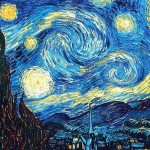
Diving into contemporary music, Dutilleux is one of those figures that attract the most, not just for the quality of his music, but for his relentless aversion to compromise it. Dutilleux grew up with the avant-garde as the only accepted way to compose, and yet he refused to bow to it. His long life rejection for Boulez’s dogmas, especially the necessity of serialism, is common knowledge. That way of composing never coped with his sensibility as a musician.
In his own words:
“I don’t speak about him, and he doesn’t speak about me. I admire his work for the Ensemble Intercontemporain. He has made his choices and he has the right to make his choices. But there are things I cannot accept, and I don’t like people who are never in doubt.”
Dutilleux’s approach was by far the most anti-ideological of his generation: where most composers would fall into the classical refusal of the past and the “tabula rasa” way, he refused to be contained into the strict rules of this school of composition, despite his decades of teaching at the Paris Conservatoire.
His music breathes of French tradition, from Debussy to Ravel to Stravinsky with the addition of some Bartok. He drew inspiration from all form of arts: “Timbres, espaces, mouvements” is based on Van Gogh‘s immortal Starry Night; the “Shadows of Time” is a gloomy meditation on loss, written for the 50th anniversary of the end of WWII and catalysed by the discovery of the deportation by the Nazis to concentration camps of an entire orphanage of Jewish children in Anne Frank’s diary.
The piece itself is dedicated to Anne Frank “and all the children, innocents of the world”.
Incidentally, this dedication reminds me of Shostakovich string quartet op.110, dedicated “to the victims of fascism and war”.
The heart of the score is a movement called “Memory of shadows” that includes music for three children’s voices: Dutilleux recounts a stroke of inspiration when he was searching for a “special color in the instrumentation” to contrast with the brass and wind timbres dominating the beginning and heard “some voices coming from a nursery school close to my studio.” The effect is shocking.
A stickler for details and revisions (something in common with Boulez), Dutilleux only cared about his world, completely independent from the mainstream, extremely refined in his orchestration, true to his heart and art.
Happy 100th anniversary!
Here are a few links to some of my favorites compositions of his:
The shadows of time: https://www.youtube.com/watch?v=9ci5E-BCxSQ
Timbres, espaces, mouvements: http://www.youtube.com/watch?v=7u3PZkISdFY
Tout un monde lontain – this cello concerto was commissioned and premiered by Rostropovich: https://www.youtube.com/watch?v=udDwrLydS_c
Posted in Uncategorized and tagged #music, composers