Beginning with a single word, Robert Adams of MrAMusicPlace.wordpress.com shares this discussion about the ways in which the arts are woven into our humanity and perception of reality.

MrA_Image

I recently became acquainted with the word, “dramaturgy.” The context in which I found the word was an article discussing the teaching of dramatization to music voice students on a path to learning opera singing. The writer argued that by comprehensively studying a whole opera, including musical, historical, compositional, and biographical aspects, and not just of the parts a given singer needs to sing, but of the entire work, the singer would learn to perform not just accurately, but dramatically. The job of a dramaturg, then, would be to assist the singer in this preparation and study.

Intrigued, I began looking into the word further. Dramaturgy is a concept developed by Sociologist Erving Goffman. Essentially, Goffman believed that all of life really is a stage. People are actors on the stage of life, acting out their assigned roles either alone or in collaboration with other people. Other people that are part of our lives are doing the same thing, acting out their roles in life as they interact with us.

This sociological theory, drawn on a metaphor of the theater, has apparently migrated into the theater, where we can now find people employed who hold theDramaturg title of “dramaturg.” There is a professional organization for them, the Literary Managers & Dramaturgs of the Americas (LMDA). From their website, I learned that dramaturgs can be involved in virtually every aspect of theater production, including those aspects I normally associate with directors & producers. Among the lengthy list are two that stood out to me, because they at least are directly related to the practicing of one’s art as opposed to seeing to legal matters. These two are “seek and present pathways into the world of the play,” and “explore and present: the world of the play.” The connection to Goffman’s theory now begins to become apparent. The dramaturg is trying to connect the fictionalized drama of the theater play with the real-world drama of the lives of the people who are watching the play and who are all themselves acting in the play of life, which, presumably, they have temporarily taken leave of just long enough to attend the theater (or else every theater play is a play within a play). The playwright, in his role as person in the world, provides an entry point for everyone else to witness part part of the life-play, or in the case of his work, perhaps his life replay in the theater play. In the process, all in the audience become emotionally invested in it, and perhaps influenced by it as they return to their own life plays when the theater play is over.

Opera adds another layer. Whereas theater plays utilize language and acting, opera adds to these music, which transcends the expressive capacity of language, save perhaps for poetry. Music provides a means and an outlet for expressing emotional realities that cannot be accommodated by words alone. If theater plays take life plays off the street and make an author’s life play community property, then music when it is performed, which I will for convenience call the music play, takes the life play and brings it beyond what is possible outside the musical experience. Music is no longer a replay or retelling of real-life drama, it is the imagining of something beyond what can physically exist, beyond what can in reality take place in the life play. When a musician learns to perform dramatically, they are stepping outside themselves, and offering something that is beyond the reach of everyone, and so to which everyone responds in a physical and emotional way that is nearly unique in the physical world, and unquestionably unique when the absence of danger and the enjoyment or even thrill of the experience is considered. There must be, I think, something quite beyond the reach of a dramaturg, once the flow of what music does is active in the performer and on course to all who will hear the music. Bringing a young performer the power of such expression is a noble profession, and if that is what a dramaturg does, then bravo to every one who succeeds. It also comes to my mind that there are a large bastion of people who also bring this musical prowess to fruition: countless music teachers whose great delight is to watch their students take of in flight through the realm of musical expression.

Country:USA

Posted in opera and tagged , , ,

A few links to a few of my tracks.

I now have five albums of instrumental music released, and I’m working on my sixth. The record company that wants to release it haven’t even heard any of the tracks yet, but I might provide a few sneak peaks here if enough people ask me to (or if Anna asks me to ).

Here are links to a couple of previous tracks from other albums. Please let me know what you think.

Ceux Qui Sont Morts (from the album Ecelctica Four)

I was asked to write some audition tracks for a proposed paranormal action/drama web series. They wanted an opening theme (with some quite specific requests), but I went over the top and also wrote them a romantic theme and end credits. When they passed on me, I stitched the pieces together into this suite.

Between the Lines (from the album Appasionato)

I’m a bit of a sucker for those big, romantic string ballads of the seventies and eighties, and this is a bit of an homage to them. Obviously, this track also has lyrics, though I’ve never recorded them.

Augustine (from the album Eclectica Three)

I wrote this music sometime in my early to mid teens. I finally got around to orchestrating and recording it a few years ago.

Finally, here’s a sneak peak to a track from my new, unreleased album. This one is a very early mix (the track hasn’t been finished yet, and still needs proper mixing and mastering), so please bear that in mind.
Peter I

The whole album has a Russian theme, which might explain this one a little. But I thought I’d share this one as it isn’t anything like the previous samples above! :-)

You can send me feedback and other messages via my Facebook page, or my SoundCloud page.!

Country:Australia

Posted in Uncategorized and tagged

Introduction speech by Vincent Corver about music and social media

11427329_605687486200649_6569672815261738634_o

In this age of instant gratification our lives from a young age are consumed by the presence of iPhones, iPads, TV-screens and other electronics that cause the decay of our own imagination, and thereby the failing desire to shape goals which may realize our dreams.

Social Media is showing us a world of lifestyle illusions, which we desperately seek to imitate and identify ourselves with. Portraying our desires on the wall as a moment in time, but not teaching us their factual realism, working hardship and the sweat and tears behind them.

Our fears of social rejection are ever-growing. We choose to advocate jealousy, negative criticism and competitiveness over kindness and our willingness to share positive thoughts. We are so desperately absorbed by our own style and image, we forget to experience what is factually around us and how we may aspire to grow as individuals with passion and vision. We forget to actually see the opportunities that are given to us on daily basis and how we may use them to open new doors and create new opportunities in our own life.

In this ‘social world’ we all share a common desire: recognition - even in the smallest of forms. Yet we often fail to realize that recognition is reflected by outreach, which in turn creates comeback, which in turn generates recognition. We forget a compliment may have a profound impact on someone’s life, thus to be kind to others who are battling for their dreams. In all sincerity, the compliment is the very ‘seed’ that grows into the tree of talent existing in all of us.

People often forget our human abilities are endless, and with the right passion and immortal determination we are granted the opportunity to achieve the impossible. Essentially, our curiosity is King. Education becomes the art form of teaching us to listen out for moments of opportunity. Often the most meaningless moments may appear the most valuable in the end, like a simple ‘knock on the door’.

Vincent Corver
© 2015

Country:

Posted in Uncategorized and tagged , ,

IMG_0337

Yesterday, I was sitting on my couch, reading a passage in Time Magazine and I was a little bored. I normally grab my electric cello or slide guitar and fool around with new ideas but I just wasn’t in that mood. I decided to pull out my classical cello and fiddle around with some classic pieces (especially the ones learned and performed during my years at Wayne State Music School with Marci Chanteaux) and I grabbed my old, worn down book of Bach’s Six Suites, began playing the famous Praeludium to the 1st Suite and felt good. Well, I went through the first three Suites, took a break to make a cup of tea, then continued to the 4th Suite. This is where it got interesting. All of these years as a cellist, I played these Bach Suites from a book interpreted and inspired by the great Pablo Casals, But, there was something that suddenly didn’t “grab” me. It was the fact that in the Praeludium to the 4th Suite, which is generally known for its classic and melodic arpeggios, had most of these arpeggios slurred. I put down my cello and bow and decided to go online and see what other legendary cellists might have done with this piece or, in other words, how they may have interpreted it. I went to YouTube and found a performance by one of the greatest cellists of all time Mstislav Rostropovich playing this 4th Suite Praeludium and, low and behold, he played almost the ENTIRE piece by single, beautifully drawn out notes and hardly any slurs. I picked my cello back up and played this piece again in Rostropovich’s style and it felt much more emotional and intriguing. So the question that I had been thinking about all evening and going into this new day is: Should music be held, examined and performed by technicalities or by true interpretation? I’d like to study this…..

Country:United States

Posted in Uncategorized and tagged

I'm a professional musician, graduating with a B.A. in Cello Performance from Wayne State and studying with the Detroit Symphony Orchestra. However, I also play guitar, bass, keys and some other instruments (and rock is my niche) so I bought an electric cello, added my electric guitar pedals and went to work. I'm the lead vocalist, composer and electric cellist/slide guitarist in an incredible rock group called 'Pure Price'. The exploration of music leads to the discovery of life.

IMG_2713

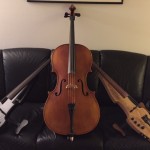
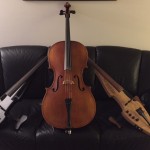
My classical mother and her two kids…The Black Widow and The Brown Bomber. Those kids may look and sound a little different than their mother, but they’re all related! www.reverbnation.com/pureprice

Country:United States

Posted in Uncategorized and tagged

An introduction to some of my music.

I now have five albums of instrumental music released, and I’m working on my sixth. The record company that wants to release it haven’t even heard any of the tracks yet, but I might provide a few sneak peaks here if enough people ask me to (or if Anna asks me to ).

Here are links to a couple of previous tracks from other albums. Please let me know what you think.

Ceux Qui Sont Morts (from the album Ecelctica Four)

I was asked to write some audition tracks for a proposed paranormal action/drama web series. They wanted an opening theme (with some quite specific requests), but I went over the top and also wrote them a romantic theme and end credits. When they passed on me, I stitched the pieces together into this suite.

Between the Lines (from the album Appasionato)

I’m a bit of a sucker for those big, romantic string ballads of the seventies and eighties, and this is a bit of an homage to them. Obviously, this track also has lyrics, though I’ve never recorded them.

Augustine (from the album Eclectica Three)

I wrote this music sometime in my early to mid teens. I finally got around to orchestrating and recording it a few years ago.

Finally, here’s a sneak peak to a track from my new, unreleased album. This one is a very early mix (the track hasn’t been finished yet, and still needs proper mixing and mastering), so please bear that in mind.
Peter I

The whole album has a Russian theme, which might explain this one a little. But I thought I’d share this one as it isn’t anything like the previous samples above! :-)

You can send me feedback and other messages via my Facebook page!

Country:Australia

Posted in Uncategorized and tagged , , ,

NEW Grant Presentation Video helps Outstanding Causes & Artists of all styles obtain vital funding!

grants

The Jazz for Peace Foundation Empowerment Grant Program rose from the ashes of the horrifying tragedy of 9/11 starting with a poem that was written witnessing those very events on a rooftop less than a quarter of a mile away from Ground Zero on that fateful morning. Since then they have provided a Helpful Step Forward to over 850 Outstanding Causes and Artists of all styles through their acclaimed Empowerment Grant program.

FOR COMPLETE FUNDING DETAILS WATCH THIS VIDEO:

And contact the Grant Administration Dept. at [email protected]

Country:United States

Posted in Uncategorized and tagged , , , ,

Though "invisible" is usually associated with things we see, aspects of music can also be invisible to our ears. Robert Adams explains how tonality can be invisible.

MrAMusicPlace Image

When we think of something being invisible, surely things that cannot be seen come to mind. The air we breathe, for example, is invisible because we cannot see it (though we can see the effects of it moving an object on which it blows). We know air is all around us because we breathe it to stay alive and because of what we see the air doing. We do not have to see air to know it is there.

A similar situation can exist with tonality. Notice I said can exist, because it does not always. In much of the Western art music repertoire, tonality is clearly heard every time we hear the stabilizing effect of the tonic chord providing respite from harmonic tension, or bringing the music to a temporary or concluding rest. While all this is so, there is also the invisible yet ever present aspect of tonality. Whether or not we are hearing the tonic chord, we nevertheless are constantly aware of what the tonic is. We know this because we audiate the tonality of the music we are listening to regardless of what chord we may be hearing at any given moment. So when the tonic chord is not being heard, the tonality is still there, invisible yet present because of our audiation.

As tonality became less explicit in the late nineteenth century, composers became more and more reliant on the listener’s ability to retain the tonic in mind while physically hearing it less and less. The whole concept of chromaticism and impressionism relies on this very thing. If we were not able to audiate the tonic amid chords stretching further and further away from the tonic, the tension, angst, and beauty of those chords and their dissonances would not be possible. As long as a composer gives listeners enough indications of a tonality, they can hear a piece as tonal and be aroused by the scarcity of physically present affirmations of that tonality. To the extent that a composer does this, he or she has created invisible tonality; tonality that is heard through audiation but not explicitly in the music itself.

Composer Piotr Lachert has written music that has invisible tonality in abundance. If you listen to his music, you will find that you rarely hear a tonic chord, yet always seem to know what it would be if you were to hear it played. He gives you just enough indication of a tonality to enable you to audiate what he has left out–the tonic. I’ve provided a link to a performance of his “Three Preludes” for solo piano. I hope you enjoy them.

Country:USA

Posted in Piano and tagged , , ,