This album is a romantic experienced journey with the music from China and Europe, a music which will force you to contemplate, to travel through time with love, peace and romance. To experience the beauties of the East and West.
Album Notes
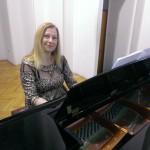
I display my own piano style which became actual for wider audience in all over the world in last 10 years, where music is experienced fully from the whole being of all aspects and not just formally, technically, and only such performance reaches the hearts and emotions of a wider circle of people and beneficial influence on the audience. I implement my piano expression in the performance of chamber music, no matter if it’s by playing works for four hands piano, playing with a singer or with other chamber music players. When I play Chinese music I feel like I travel through time, my mind passes around temples,monuments,cities and carries the energy of creation of life. When I play Chopin, I feel it as an expression of the most subtle urges of feelings from within my soul. In his nocturnes is expressed the fantasies of nature, of space, while sitting by the window, while the waltzes express the beauty of court’s glamour expressed through dance music. The piano versions for the violin compositions are master pieces, I feel them as simple, every day intimate stories expressed through the beautiful melody and harmonies in the compositions. The classical music in whole to me is happiness, joy of living.
Composing is always something of a gamble for a composer unless (s)he’s already well-established. The first thing any composer has to decide on is what idiom they are going to write in. The smart money is on very intense post-modernistic atonality and the more atonal, the better. As always, it’s a very individual thing. Some composers can adapt tonality to a slight degree but however they choose to do it, ultimately they must please the powerful men and women who rule the classical music industry with an iron fist and the first rule for any composer-hopeful is NO MELODY! Melody is sentimentality; sentimentality is gushing; gushing is too reflective of the bygone days of Romanticism and Rachmaninoff. The order of the day is always looking forward, not backward.
There’s only one problem with all this and it’s a gigantic one: to paraphrase the immortal words of lyricist, Oscar Hammerstein-”We’ve gone about as fer as we can go” and then some. Personally, I can’t envision a composer breaking any new barriers or exploring any new frontiers. They’ve already been broken; they’ve already been explored by hundreds of composers. In a nutshell, and this is my own opinion, any composing from now on is either going to be stagnant or regressive. I mean when you’ve got computers doing the composing for you and a score looks more like an electrician’s schematic than music notes I think there’s a problem.
This is not even taking into account the fact that roughly 90% of everything being written is for small ensemble of not more than 10 players. Why? The short and simple of it is expense; it’s very expensive to mount a new symphony of the grandeur of a Mahler’s “Symphony of a Thousand”-so expensive in fact that I doubt it could be done in today’s era of budgetary cuts to orchestras, even if the symphony were written by an established composer.
That’s on the one hand. On the other is what I alluded to earlier-that a group of very powerful and influential foundations, boards of directors of orchestras, musicians, etc absolutely do not want any music they premiere to smack an iota of Romanticism or sentimentality or melody.
So a budding composer has two paths before him/her. One to the atonal world, the other to the tonal. If a composer is smart they’ll go for the former to keep this powerful lobby happy. If they choose the latter they have signed their death warrant as a composer. There’s no hope they will ever succeed in their endeavors. Proof? Show me a composer today who writes neo-Romantically like Rachmaninoff and is successful.
So if I may continue my metaphor of gambling here’s how a typical scenario plays out. A gambler goes to Las Vegas (or “Lost Wages” as they not-so-affectionately call it). He can play for high stakes on the roulette wheel and bet 0/00 and walk home wearing a wine barrel. Or he can bet red/black and if he can stay consistent walk away with a few bucks in his pocket. If the reader is not following me let me spell it out. The red/black play is the composer who chooses to follow the herd and tread the territory already being tread by thousands of other post-modern composers at this very moment. The 0/00 player is the one who says, “Enough of this formless, melody-less, non-tonality. I’m going to write something I think the people want to hear, not what the establishment wants me to write!”
But composers take his path at their peril. The haute couture will stop at nothing to stop this composer from ever achieving anything remotely resembling success. Remember the golden rule: NO MELODY; FORWARD, NOT BACKWARD!
Which finally leads me to myself after a long-winded introduction:
I wrote two piano concertos in 2011 and 2013 to fulfill a promise I made to myself as a young piano student that I would write a piano concerto and then premiere it much in the same way Rachmaninoff did with his 2nd, my intention being to launch a career as a composer, pianist, & conductor. Well, fate had other plans—a severe finger injury grounded me as a pianist at 19 and I never wrote that concerto. Instead, I entered the business world for number of years. The dream eventually faded, though it apparently had been lying dormant somewhere underneath my psyche in the intervening decades. In the meantime, to keep my music skills alive and because I enjoyed it immensely I read orchestral scores as leisure reading-analyzing how great composers achieved the sounds they were after; the different combinations of instruments they used. Then one day a few years ago an innocuous tune just popped into my mind. The old dream bubbling beneath the surface of my consciousness suddenly surfaced and I finally committed myself to writing that piano concerto, which became the No.1 in F# Minor Opus 1. Although the reception was enthusiastic I later came to realize that my First Concerto was not the concerto I had always wanted to write. The Piano Concerto No 2 in C Minor Opus 2 is that concerto.
It is unabashedly romantic. It has melody. And it commits the greatest sin of all, it looks backward, not forward-to that great tradition of the late 19th century when form and melody meant something and didn’t provoke an explosion of laughter or bitter derision. Which is why the music industry will make sure it languishes. Whether or not it’s any good is irrelevant. The point is it’s carrying the classical music world in a direction the industry doesn’t want the classical music world to go.
Many listeners have been very kind to me. Here are some of the comments they have left on my various videos of the concerto. Note I didn’t solicit these nor did I make any up. I can verify every last comment as authentic:
“…the [main] theme sounds absolutely epic. I think this almost reaches the level of Rachmaninoff’s Piano Concert No. 2 ”
“…this equals if not beats the Saint-Saëns G-Minor Piano Concerto.”
“…probably one of the best “romantic” piano concertos of the XXIst century…”
” I was blown away by your piano concerto. The composition is brilliant! ”
” This is so amazing I only realized my jaw had dropped five minutes after the concerto started. ”
” I love the orchestration and the virtuosic piano passages. +5 ”
” Beautiful harmonies…The overall energy of the [last] movement is fantastic!”
” I was so enthralled by the opening movement that I just listened to the whole piece at once. ”
” A masterpiece. ”
” OMG!!! did you compose this??! It completely amazed me from the first seconds. It’s like a Rachmaninoff concerto, but it’s still your style, your creation. I loved it. Thank you”
” I could listen to it 100 times.”
“…this sounds simply brilliant. ”
“…I’m just amazed! Beautiful sir! well done! ”
“…let me thank you for this piece. ”
” I have to say I love your piano concerto!”
” A masterpiece! - beautiful work!”
” It’s a great concerto. BRAVOOOOOOOOOOO!!! ”
” Beautiful!! Bravissimo!! ”
” Your concerto is awesome!! ”
” This is really awesome! ”
” Wow!! Just Wow!! Two thumbs up!! ”
“…let me thank you for this piece. ”
Dr. Darrel Ray, a noted psychologist and author wrote me this note. I have his permission to quote it:
Joe, I am a big lover of Rachmaninoff as well. I just bought and listened to your concerto THREE TIMES in one sitting. That is what I do for a Rach #3 or #2. I don’t even do that for Grieg, Beethoven or Saint-Sans. I am just in awe of what you have done. I really hope you get a premier. As an author of 4 books I know how difficult it is to get people to pay attention to your work when you have no visibility in a particular field. I have done it twice, successfully, but it took a lot of perseverance. You have a wonderful piece that sure got my attention. I have posted my comments on Facebook and everywhere else I can. I want my classical music friends to hear this. I have no connections in the music world, but feel free to use my comments as a very well educated listener and consumer of classical music. I wish you all the best and hope when you get that premier, I will be in a position to come and hear it. Please put me on any mailing list you may have XXXX@XXXXXX. By the way I found your piece while listening and watching the Rach #2 on Youtube with Anna Fedrova. Your comments and reference to your own work got me curious. I thought to myself, “This guy has a lot of chutzpah, comparing himself to Rachmaninoff, he is either a total lunatic or has something I should at least listen to.” I am a psychologist, I doubt if you are a lunatic! but you are sure a hell of a composer.
Dr. Darrel Ray
Publically he wrote on Soundcloud:
Darrel Ray says at 7:34:
I am astounded at this piece. I only wish it could be performed by a major orchestra and pianist. I love Rachmaninoff, but Joe Townley meets him head on with this piece. Most of my life, I have wondered, “Where are the Mozarts, Beethovens, Rachmaninoff’s? They can’t all be writing Rock music and Broadway shows. I know they are out there, but in the clash of music cultures, romantic and classical has been lost. This concerto is among the best. I hope it finds its way in to the repetoire. It is just too good. It deserves to stand by the Rach 2.
So it appears to me there’s something of a market out there for this kind of music. Sadly, it will get no support or encouragement from the bigwigs at the top. And I’ve resigned myself to the fact my concerto will never have that grand premiere with Lang Lang at the keyboard and Gustav Dudamel at the helm of the Los Angeles Phil. That’s life. But I do hope that more people like Dr. Ray speak up and shout, “Enough is enough! We want something with melody. We want a composer who writes something that touches our hearts and moves us to tears.” I am not that composer, I have to admit. But I hope my concerto maybe is a catalyst that encourages another composer with real talent, even genius to take that latter path I spoke of earlier. In the end I think if enough people with influence spoke up the music Bourgeoisie would be forced to listen.
Here’s is my concerto. Judge for yourselves. If it deserves scorn definitely deliver it. But if you find yourself liking it kindly leave a comment and share on your favorite social media outlet:
Video with complete orchestra score (lower-quality audio due to screen capture degeneration)
In the furore following the final of the piano section of this year's International Tchaikovsky Competition, some thoughts on why young artists need to be allowed to develop at their own pace.
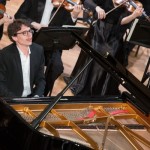
Much has been written about the young French pianist Lucas Debargue, a finalist in the 2015 edition of the prestigious International Tchaikovsky Competition. The concept of him being “self-taught” (until relatively recently) has been debated across a number of articles, together with his rather unusual technique (“Scales played with only the thumb and index finger and his pinkie sticking up as daintily as Hyacinth Bucket’s” - The Spectator, 18/7/15) and glorious sound. He’s not out of the traditional mold of the international competition winner (commences piano studies at a young age, undertakes rigorous study with a master teacher and progresses to the “Three C’s” of Conservatoire, Competition and Concerto) - and he didn’t even wear a tie during the final! In an honest and touching interview with Ismene Brown of The Arts Desk, Debargue comes across as a sensitive and intellectual young man for whom music is profoundly important, not just in terms of beautiful sound, but also as a “a place to live in. It’s about real emotions, real sensations”.
Let’s just clear up a few inaccuracies. In ‘The Spectator’ article quoted above, he is described as “the man who came last”. He didn’t come last. He achieved what most can only dream of: he reached the final of the most prestigious piano competition in the world. That he did this following only four years professional study with a Russian master teacher (Rena Shereshevskaya) is remarkable. (And by the way, it doesn’t really matter that his scale fingering is unusual: there is no “one size fits all” fingering scheme, because hands and fingers come in different sizes.) Now everyone is asking what next for this extraordinary young man?
It is at this point that I start to worry for a talented and obviously sensitive young man like Lucas Debargue. He is not the first, and certainly won’t be the last, young artist to be thrust into the limelight before he is ready. Unlike the other competition finalists, he has not undergone the long and rigorous traditional professional training which would prepare him for the concert platform: he still needs to hone his stagecraft and, more importantly, learn how to deal with the journalists, agents, promoters, and fans who besieged him as the competition progressed - and continue to. The classical music industry is not a particularly pleasant place, and the world of international pianism is highly competitive, almost ruthlessly so. At the big competitions, representatives from the big artist agencies are waiting to scoop up the winners and runners up, offering tempting contracts, a slew of international engagements, recording deals and more (look how much Martin James Bartlett, winner of the BBC Young Musician of the Year 2014, has done since his win, including several performances at the Proms, and he’s only just 19; he has, however, undergone a professional training in specialist music school and conservatoire). It’s true that success in an international competition can make an artist - but it can break one too. From the moment one chooses the life of the international concert pianist, one lives in the public eye: every performance and recording is held up for scrutiny, and one is under almost continual pressure to meet the expectations of agents, promoters, fickle audiences, critics and fans. The life of the concert pianist is tough, restrictive and lonely. In addition to the many hours of solitary practise, there is the traveling, nights spent in faceless hotels, fine historic cities viewed through a fog of fatigue, never having the option to be less than perfect, even if one is ill or tired, knowing that one is judged on one’s last performance (here I recall the unpleasant hoopla surrounding Ivo Pogorelich’s London concert in February). The pressure can be unbearable if one is not equipped to handle it. (Read Charles Beauclerk’s excellent and sympathetic biography of John Ogdon for some brutal insights into the life of the international concert pianist. For Ogdon, the piano was his saviour and his tormentor, and there is no question that the pressure of so much traveling to perform around the world contributed to his breakdown.)
Add to this that peculiarly British fascination with the maverick, the eccentric, the tortured genius with the unconventional “backstory”. We risk endangering Debargue further by holding him up as curiosity, instead of allowing him to develop and mature in his own time. There is something very authentic about his playing, his particular soundworld and his special and personal connection to the music which has clearly touched people.
In his interview with Ismene Brown, Debargue talks of having few friends and little support from his family. His teacher was his mentor and supporter, encouraging him to take a tilt at the Tchaikovsky Competition and saying when he got through the first round “It doesn’t matter when you pass or not, it’s really good that you are here to play and I am grateful and proud of you.” He has yet to develop the necessarily resilience, thick skin and artistic temperament to survive the “wild west” of the international concert circuit, and I only hope that whoever he chooses to manage him, should he decide to go down that route, is sympathetic and puts his well-being before all else. Otherwise, I dread to think what might happen….
So please let’s allow him - and others like him - to develop at his own pace to emerge onto the international circuit, should he choose that path, when he is truly ready. To conclude this article, I think it is worth quoting a comment on Peter Donohoe’s piece for Slipped Disc about the competition (Peter was a juror this year):
Aside from all of this, what happens to each of these young artists remains to be seen. How will they carry on with their studies as musicians? Which repertoire will they cultivate? Will they develop chamber music careers, teaching, new works, recordings? This is what is most important as they begin to soul search and decipher how and what they will contribute to the world of music outside of the usual parameters. (Jeffrey Biegel)
Read Peter Donohoe’s thoughtful and intelligent article here
There are many ways one could write about a musical work. There is analysis, evaluation, criticism, and narrative to name only a few. Each of these ways provides opportunities for different kinds of learning about and experiencing of music, and so each has value as a learning activity. I think that the narrative is in some ways the most natural, the most enjoyable, and even the most beneficial for many listeners. It combines expressing emotions with unleashing the imagination to create images and stories to interpret what is heard, while allowing for the more technical aspects of music such as form and structure to be set aside from conscious attention. These may surface in the narrative, but only organically, not as a dedicated task to be completed.
In listening to “La vallee des cloches,” the fifth piece in Ravel’s Miroirs, I was compelled to set down a narrative as I listened, and found my enjoyment of the piece increased during the performance, and my memory of it more enjoyable after the music had stopped. What I wrote made a decent story, and also reminded me of the music I had heard, allowing me to audiate it as I read my narrative. I would like to share it with you here. I invite you to listen to this wonderful music as you read, and then you will be able to fully share in my experience of this music.
Two delicate tones, spacious between, followed by a delicate ripple of finely tuned sounds, the delicate tones still heard in the background, at first remaining where they were and then venturing out, exploring the landscape created by the ripple. The tranquility of being gently coaxed into the image was rudely intruded upon by a boorish clang, out of place, unwelcomed, and soon joined by others similarly disagreeable. The ripple was disturbed, veering off from its recently well-accustomed path, clearly distressed at being disturbed.
The ripple then stopped where it was, just watching with trepidation the uninvited visitors move about, and wondering what they would do next. Then a solitary one, also out of place but hinting at kindness while exuding strength as a lone rescuer determined not to make too bold an entrance, appeared, and offered hope of returning to the former calm so recently enjoyed.
And so it happened: or nearly so. The tranquility returned, but tinged with an apprehension that had not been there before; an apprehension laced with the memory of what had just happened, and the realization that it could happen again. Gradually, peace increased, brought I suppose by the solitary rescuer.
There now was a confidence and even strength that bolstered the peacefulness, and worked to subtlety change the character of the ripple, which stood firm rather than gently. All became quiet, and looked around.
Darkness descended. Not an evil or fearsome darkness, but one that brings the hope for a better day. The ripple was filled with passion and love, though it knew not for what. It was a new feeling never before experienced. But it slowed the ripple, even as it stirred about pensively until at last it slumbered in the night. Dreams of longing and desire for something unnamed filled its sleep.
As the night progressed, the ripple tossed and turned. At last the dawn of the new day broke. The ripple began to move about as it had at the start of the previous day, but it was different. There was darkness, a loss of innocence and welcome naiveté that on the previous day had been lost forever.
Amid the frequent pronouncements of doom over classical music, and the unenthusiastic attitude of many of my general music students toward it, I sometimes ask myself what drew me to classical music. I never became a great musician, yet my love for music has always been great. That’s important because when a child is raised in a music rich environment, he can become a life-long music lover, even if he never plays at Boston’s Symphony Hall, or New York’s Carnegie all or….(you fill in your prestigious concert hall). Here’s how I became the music lover and the musician/teacher I am today.
My parents told me that I enjoyed music from a very early age, but many children do. My earliest memories are discovering the two classical recordings had in their record collection, and delighting in playing them on their phonograph. At some point, I also discovered Leonard Bernstein’s Young Peoples Concerts on television. The whole family waited for them to end before we could have dinner on those precious afternoons when they were broadcast. I soon began imagining that I was the conductor of a symphony orchestra.
At that time, the Hartford (CT) Symphony Orchestra periodically broadcast a concert on television. The broadcast had a theme song, it was “Getting To Know You” from the musical “The King and I.” I soon began starting my classical music listening sessions by playing “Getting To Know You,” and then switching over to one of the classical records. I would stand in front of the phonograph conducting the music, dreaming of becoming the next Leonard Bernstein or Arthur Winograd (former cellist of the Julliard Quartet, and then conductor of the Hartford Symphony Orchestra.)
As I grew into my teens, I got to go to Tanglewood, summer home of the Boston Symphony, to see that great orchestra play. My mother took me, and we had memorable days together enjoying the music and the cool Massachusetts Berkshire air that is so refreshing and welcome compared to the hotter more humid air we so often left behind in Connecticut. When I got my driver’s license, I subscribed to the Springfield Symphony Orchestra, and drove myself to Symphony Hall in Springfield to hear orchestra concerts. It never occurred to me to object to going alone. I just couldn’t wait until the next concert.
By this time, my clarinet playing (I had started when I was ten years old) had progressed so that I was active in regional festivals, musical theater pits, and the school concert and jazz bands. The more I played, the more exciting life got. I began conducting while still in high school, and was able to conduct a composition I wrote for band. A classmate in music theory class got me interested in composing, and though I never formally studied music composition, I have dappled in it ever since, having several works performed over the years.
I entered college as a music education major so that I would be assured of making a living in music. There were frequent delights in a music conservatory-chamber music ensembles, wind ensembles, an opera orchestra, solo playing with piano-these were more varied and more fun than ever. Four years at a music conservatory were filled with music, though a few performances still stand out in my memory. Playing clarinet and bass clarinet for Pierrot Lunaire, playing on WGBH radio’s “Morning Pro Musica” with Robert J. Lurtsema and singing in a performance of Walton’s “Belshazzar’s Feast” were among the standouts.
And then there was a concert I attended given by the Hartford Symphony. Philip Entremont played the Beethoven Fourth Piano Concerto. I was fascinated. How could a piano concerto start with just the piano? How could the work begin without the orchestra playing the exposition? Yet there it was, only the pianist playing those four repeated chords, and then another four, and then the end of the first phrase. How curious that so much expression could be found in repeated chords, yet it was expressive. By the time the orchestra came in I was both annoyed and relieved. Annoyed that the spell had been broken, and relieved that Beethoven hadn’t left the orchestra out of the first movement! With all the classical music I had heard, I still had the thrill and excitement of being in wonder. That was it. The old music always sounded fresh and was capable of inspiring my inner being.
At some point, it was no longer works that were new to me that brought out that wonder, but new interpretations of familiar ones. Lori Maazel conducting Tchaikovsky’s Fifth symphony with the bell tones of the brass brought to the fore. Copland’s Clarinet Concerto played as I never knew a clarinet could be played, sublime, by Harold Wright. Leonard Bernstein Conducting Tchaikovsky’s Fifth and a few years later, Brahms first symphony. I met Mr. Bernstein after that concert, and it is to this day among the most precious two minutes of my life.
The delights, both remembered and ongoing, are seemingly endless. They started somewhere in my childhood, and snowballed into a life-long delight. How it all started, I am still not sure, but I do know this: I have always surrounded myself and been surrounded by music. I found pleasure and fulfillment in it that others did not. For the past 30 years it has been my privilege to teach young people music, and for some, to move other life-long love affairs with music along. Whether it is the turning of a phrase in the ear, or a lovely body in motion to the music, or the images of a video helping my imagination take flight along with the music, it is a joy that for me has never been matched. Musicians, fill the lives of others with your music, your art. It is an ennobling and necessary part of human life.
By the way, the two recordings were Gaite Parisienne by Offenbach, performed by Arthur Fiedler and the Boston Pops, and Rachmaninoff’s Second Piano Concerto.
It is a material world or are there any other values that count higher than having a high income, a big saving account, a nice house, a prestigious car, the newest mobile phone or spending holidays in comfortable hotels?
Well, it is nice to have all this. But we also know that the efforts to afford all this are enormous. Haven’t we reached a point at which we say that it could be good for us if we focus less on the material values and more on immaterial ones? Which role is music playing in this process?
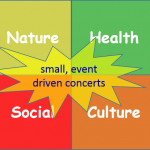
My vision is that there are four main values that are getting more important for many people.
1. Nature: Living in a healthy environment is getting important even for people in emerging countries. Pollution and feeling happy does not fit together. Nature in good order is an important factor for happiness. The large increase of classical festivals in an unusual environment, like the Verbier Festival or the Bregenzer Festspiele, shows that classical music and outstanding nature inspire each other and produce positive emotions.
2. Health: Pressure at work is getting higher and there are more and more overstressed people. But we have only one life. Steve Jobs said in his motivation speech for students: “Stay hungry, stay foolish”. I think we should add one more point: “Stay hungry, stay foolish, stay healthy”. Music helps to calm us down, to relax and to get inspired.
3. Social values: In an extremely individual society, the social responsibility is getting lost. Everybody thinks of his/her own profit. People start to feel that they can be happier if they care for their friendships and make sure that people around them are not in a dire need. One important reason to go out with friends has always been listening to music or making music together.
4. Culture: It has become extreme that almost all our activities at the back of our mind concentrate on to how to earn money with it. People discover more and more that thinking about beauty and getting inspired by unexpected and unusual performances of artists can create more wellbeing than earning money. They are in search of inspiring music, literature, theatre, dance performances.
If the assumptions about new values are right, there will be a following trend:
Classical music will be played more often in unusual locations, especially where it also gets inspired by nature. People see classical music more as a relaxation activity and consume it therefore in a relaxed environment and less in rigid and conservative concert halls. They like to hear classical music together with friends and appreciate the feeling of being close to the artists. In addition, they do not want to have a 100 % classical concert but prefer to have it mixed with other cultural activities.
Therefore my prognosis: The future of classical music is small, more intimate, event driven concert performances together with artists from other fields outside of the conventional concert environment organized and financed by private people.
Invitation to take part to an online survey: investigation of the prevalence of issues correlated with the mastication muscles activity among piano players.
I am a PhD student researcher in Music Technology at the University of York and I earned a diploma in Piano and a diploma in Musicology from the Conservatory of Milan, and an MA in Psychology of Music at The University of Sheffield (UK).
I am currently working on a project study that aims to investigate the prevalence of pains and symptoms related to the mastication muscles among piano players. If you are an amateur or semi-professional or professional piano players (age +18 years old), I would appreciate if you could take part to the following survey, which will take approximately 10 minutes. All information will be kept strictly confidential.
Please, click on the following link to start the questionnaires:
I would also appreciate if you could circulate this survey among your piano students/colleagues (age +18 years old) to maximize the final output.
Although there are no immediate benefits to you, I hope that the insight I gain from this research will lead improvements in musicians well-being and hence help them in the future.
This survey has been approved and received Ethics clearance (005900) by The University of Sheffield. If you have any concerns regarding this research or your participation, you may contact the project’s supervisor Dr. Renee Timmers [email protected], or myself at [email protected].