Jennifer Pike, violin; Craig Leon, Moog synthesizers and conductor; Sinfonietta Cracovia. Sony 88875052612.
Turn back the clock; we're all young again.
In the mid Sixties Dr. Robert Moog invented the Moog music synthesizer. A couple of years later, American composer and electronic musician Wendy Carlos (photo) put the instrument on the map with the ….. read more (http://classicalcandor.blogspot.de/)
Jennifer Pike, violin; Craig Leon, Moog synthesizers and conductor; Sinfonietta Cracovia. Sony 88875052612.
Turn back the clock; we're all young again.
In the mid Sixties Dr. Robert Moog invented the Moog music synthesizer. A couple of years later, American composer and electronic musician Wendy Carlos put the instrument on the map with the best-selling album Switched-On Bach. Now, we go back to the future with Bach to Moog ….. read more
Performing a piece of music involves cognitive and motor processes and requires extensive training to achieve a high skill level. However, even professional musicians commit errors occasionally....
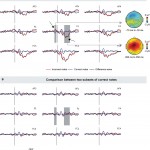
Performing a piece of music involves the interplay of several cognitive and motor processes and requires extensive training to achieve a high skill level. However, even professional musicians commit errors occasionally. Previous event-related potential (ERP) studies have investigated the neurophysiological correlates of pitch errors during piano performance, and reported pre-error negativity already occurring approximately 70–100 ms before the error had been committed and audible. It was assumed that this pre-error negativity reflects predictive control processes that compare predicted consequences with actual consequences of one’s own actions. However, in previous investigations, correct and incorrect pitch events were confounded by their different tempi. In addition, no data about the underlying movements were available. In the present study, we exploratively recorded the ERPs and 3D movement data of pianists’ fingers simultaneously while they performed fingering exercises from memory. Results showed a pre-error negativity for incorrect keystrokes when both correct and incorrect keystrokes were performed with comparable tempi. Interestingly, even correct notes immediately preceding erroneous keystrokes elicited a very similar negativity. In addition, we explored the possibility of computing ERPs time-locked to a kinematic landmark in the finger motion trajectories defined by when a finger makes initial contact with the key surface, that is, at the onset of tactile feedback. Results suggest that incorrect notes elicited a small difference after the onset of tactile feedback, whereas correct notes preceding incorrect ones elicited negativity before the onset of tactile feedback. The results tentatively suggest that tactile feedback plays an important role in error-monitoring during piano performance, because the comparison between predicted and actual sensory (tactile) feedback may provide the information necessary for the detection of an upcoming error.
Musical training can have dramatic effects on the brain. Several studies investigated the neural effects of musical training, but there is no study on the specific consequences of training musical creativity (i.e., improvisation).
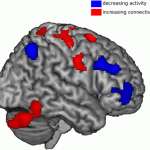
Musicians have been used extensively to study neural correlates of long-term practice, but no studies have investigated the specific effects of training musical creativity. Here, we used human functional MRI to measure brain activity during improvisation in a sample of 39 professional pianists with varying backgrounds in classical and jazz piano playing. We found total hours of improvisation experience to be negatively associated with activity in frontoparietal executive cortical areas. In contrast, improvisation training was positively associated with functional connectivity of the bilateral dorsolateral prefrontal cortices, dorsal premotor cortices, and presupplementary areas. The effects were significant when controlling for hours of classical piano practice and age. These results indicate that even neural mechanisms involved in creative behaviors, which require a flexible online generation of novel and meaningful output, can be automated by training. Second, improvisational musical training can influence functional brain properties at a network level. We show that the greater functional connectivity seen in experienced improvisers may reflect a more efficient exchange of information within associative networks of importance for musical creativity.