“The Little Sparrow whose Singing Enchanted the World.”

Edith Piaf

This French born star of international acclaim is famous for her love ballad, Non je ne regrette rien (No Regrets). When she sang it, accompanied only by a pianist, her body language and expression screamed the opposite. A tortured soul, Edith Gassion was constantly haunted and embittered by life and lost loves.
In most respects Edith was a waif. Her father was a circus performer, her mother an alcoholic street singer who cared nothing for her. The chanteuse was, so she claimed, born on a gendarme’s cape under a street lamp. The teenage Edith Gassion was to follow both her parents’ careers into entertainment.
As a street singer Gassion was partnered by her life-long friend Simone Berteaut, who worked for a pimp. There is no suggestion that she herself was ever a prostitute. When the couple’s relationship ended he tried to shoot the melodic singer; fortunately the attempt failed. Not so fortunate, Edith Gassion’s tiny daughter, Marcelle, who died from meningitis when just two-years old.
This was at a pivotal point in Edith’s life. Whilst she was trying her luck as a club singer, calling at restaurants along the Champs-Elysées, the young chanteuse was approached by Louis Leplée. Handing her a scrap of paper upon which was scrawled his name, address and also ten francs, he invited her to meet him that she might audition at his club, Le Gerny’s which was situated on Rue Pierre Charron.
Louis loved her voice but he was not so enamoured of the young singer’s family name, Gassion. After giving it much thought he changed the singer’s name to Piaf, which is Parisian slang for sparrow. Edith from there on became known as the Little Sparrow.
The salon singer’s opening night at this watering hole for the well-heeled was for her a terrifying affair. Picture her in her black knitted dress with a casually flung scarf to hide its missing sleeve. Edith that magical night sang her Parisian love melodies from the heart. The chanteuse sang with passion as she breathed raw emotion from each of the unknown song’s sentimental words.
At first the audience was indifferent. Then, gradually the diners chatter died and heads began to turn. Soon one could have heard a pin drop. During her performance that night the sparrow turned into a nightingale. The audience, instinctively mesmerized by her distinctive passion, was entranced. That night the Little Sparrow left the stage to riotous applause. Her growing popularity was to bring her international fame.
Paris being Paris, Piaf was often in the company of France’s most illustrious stars of cinema and theatre whilst also rubbing shoulders with its most notorious gangsters. All came crashing down when Louis, her mentor, was murdered. Although Edith was not involved in his violent death it was thought she was in some way implicated. The club closed, her performing contracts dried up and her friends deserted her. The Little Sparrow was now back to where it all began. It was to be 1939 before she recovered her fame.
During the 1940 – 1945 years of German occupation she entertained her country’s occupiers who adored her. It has been claimed she had more lovers than songs but it was her voice that made her fortune and fame, which is just as it should be.
Edith died in 1963 as a consequence of high-living with the low life. Over 100,000 mourners attended her funeral. The solemn occasion brought Paris to a standstill. The Parisian street singer had once been the most highly paid star in the world yet she died in debt. Regrets? Yes, there are a few.

Country:Spain

Posted in Singer and tagged , , ,

"You are my Heart's Delight."

Franz Lehar 2

The melodies and waltzes from Franz Lehar’s the Merry Widow and Wiener Frauen (Viennese Women) were familiar to me yet I was oblivious to the fact that this great musician was also a contemporary of the Beatles and Elvis Presley.
Lehár’s music was primarily associated with the blessed tranquility that reigned throughout Europe before the cataclysmic outbreak of the Great War in 1914, a cataclysmic conflict that was to change everything.
Best known as a composer of operettas the musician’s output was prodigious. During his 35 years career as a composer and conductor he wrote nearly 40 operettas. Hungarian born of German ethnicity Franz Lehár’s best known and most enduring success was The Merry Widow. This was first played at Theater-an-der-Wien in 1905. It cast its enchanting spell over more than 5,000 performances. Such was its popularity that at one time it was playing simultaneously in five different languages. In Buenos Aires it was playing simultaneously in five different theatres.
It was impossible not to admire and enjoy Franz Lehár’s operettas, marches, dances and symphonic poems. His music was very much enjoyed by Adolph Hitler. The German Chancellor awarded the composer the distinguished Goethe Medal despite the fact that the composer was married to a Jewish lady. It is one of the quirks of history that Franz Lehár was born on 30 April, the same calendar date that the German Chancellor died.
Of his many waltzes most of us find his Golden and Silver Waltz irresistible. Many a parent has spun their child around the kitchen table to its lilting melody. My mother put me through such embarrassment but I can be sure I was her heart’s delight. This happened to be the name given to one of Franz Lehár’s most famous operetta songs. Wherever You Are My Heart’s Delight is played it brings audiences to their feet.
In July 2004 the Berlin Philharmonic Orchestra held its end of the season concert at the Berlin Waldbuhne Stadium, which is one of the great parks situated just outside Berlin. On this occasion Rolando Villazon; the world famous Mexican tenor was joined by Madrid-born Placido Domingo and beautiful Russian soprano, Anna Netrebko. Together the trio sang Lehár’s You Are My Heart’s Delight ((Dein ist mein ganzes Herz). The effect on the 20,000 theatre-goers was electrifying.
Is it possible that songs written today will be bringing rapturous applause from such audiences in 90-years time? I very much doubt it. There is a saying: ‘To live in the hearts of those you leave behind is not to die.’ The music of this former military musician will live on in our hearts and our feet for centuries to come.

Country:Spain

Posted in Uncategorized and tagged , , , ,

The Irish Tenor Whose Fame and Riches Rivalled that of Bocelli and Pavarotti

John

Forgive me if some of the artistes I cover tend to belong to a previous generation or two. I do so for a reason. Many of the older generation recognise and appreciate truly great music. It is my fond hope that mentioning such names as Irish tenor John McCormack will encourage younger generations to take a step back. Perhaps they would extend their small and great pleasures of life by discovering that there is much more to music than that foisted upon them today.
John McCormack, the forth of eleven children, was born of humble Irish beginnings. He was not humble for long. Quite early on in his singing career he became a confidant of the Irish writer James Joyce. James was related to William Joyce, inaccurately described as World War Two’s Lord Haw Haw. The Irish tenor, McCormack was to become one of the 20th Century’s greatest and richest musicians.
As with many great tenors today, McCormack’s singing accomplishments were broadly based and crossed the social classes. However, he was first and foremost considered an Italian-style singer. Furthermore, he recorded French operatic arias in the Italian language. Ask your average singer how many notes he can sing in one breath: McCormack could hit 64 notes before drawing the next breath.
Up until his death in 1945 John McCormack was one of the world’s top recording stars. He broadcast regularly by radio and featured in several movies. As a child, whenever a song of his was announced by a radio presenter, my Irish mother would threaten us with an instant and very cruel death if any of her five brats uttered a word.
McCormack was not just a tenor for opera toffs: Most will remember him for the most famous of all the Great War’s songs; It’s a Long Way to Tipperary. McCormack was the first to record this ballad it. Many will remember the Forces Sweetheart Vera Lynn’s Keep the Home Fires Burning; this was another of the Irish tenor’s great singing successes.
Those were the days when great singers shaped the generation’s thinking. Such periods known as Victorian or Georgian could as easily be said to be McCormack, Beatles or Pavarotti eras. Their stamp on the nation’s psyche was as deep.
McCormack’s was an age that was evoked by songs and ballads such as The Wearing of the Green, The Minstrel Boy, and The Last Rose of Summer. There seemed to be less of a barrier between opera and the ballads so beloved by our cloth-capped forebears. The barrier is being broken down today by Andre Bocelli and Welsh diva Katherine Jenkins.
Long before the Beatles and Madonna, John McCormack, largely unknown to hundreds of millions of those born after 1945, was one of the world’s most acclaimed and richest performers.
The tenor lived internationally and owned owned race horses and stables. He splashed out as only the truly wealthy can and bought Runyon Canyon near Hollywood. He surely warmed to it when he was filming Song o’ My Heart as his earnings from the film paid for it. The world famous singer named the mansion built at Runyon Canyon San Patrizio after the patron saint of Ireland. It became a much used watering hole by the Hollywood greats of the period.
He ended his life at his home near Dublin at the age of just sixty-one. No one can follow his bright starlit curve through the first half of the 20th Century without being impressed by the career of a child born of Co. Athlone Irish mill workers.

Country:Spain

Posted in Singer and tagged , , ,

Music that evokes one's soul.

Amalia

Renewed enthusiasm for national identity expressed through music lies behind the current craze for Portugal’s Queen of Fado, Amalia Rodrigues. The blues singer’s fame once eclipsed that of French soul-singing waif Edith Piaf and Nana Mouskouri of Greece.
Amalia. The Film, a movie released ten years after the star’s tragic death in 1999 was recently released and drawing crowds wherever it was shown. As the Flamenco is primarily an Andalusia dance form backed by vocals. Portuguese Fado is a singing sensation aptly described as ‘hauntingly melancholic.’ The name fado means fate.
Amalia Rodriguez singing evokes the intensity of Portuguese soul as no other. Born in Mouraria, a poor district of Lisbon, her Billie Holiday style of delivery needed only the backing of the guitar or the Portuguese mandolin. Essentially Amalia’s voice was both the music and the backing.
During her stardom Rodriguez became an icon for tens of millions throughout Europe; especially Portugal, Spain, and the Americas too. When she died, Portugal, her homeland declared three days of national mourning and suspended an impending general election. The fado singer’s fame spanned nearly thirty years and is now being re-lived through the film portraying her life.
Amalia The Film is already attracting controversy. It tells the story of the singer’s rise from extreme poverty to international stardom. Some pundits, principally members of her family, say the movie has been ’sexed up’ to boost audience figures. Director Carlos Coelho da Silva disagrees, emphasising that the film, using original recordings, was thoroughly researched and drew on the recollections of all who knew her well.
Undoubtedly Amalia was a bewitching woman of great beauty and passion. She will be remembered best not for her lovers but for her singing which plumbed the soul depths of all who listen to her. For today’s generation, wherever the movie draws crowds, Amalia Rodriguez is both revelation and inspiration. For those of us who have adored her since the 1950s she is part of our very being.

Country:Spain

Posted in Singer and tagged , , ,

J Field

Have you ever relaxed on your balcony or patio listening to the dreamiest piano music imaginable? Such an experience is to enjoy the world’s most sensual massage of the senses by the world’s most gifted masseur and it costs little or nothing. If you have done so then the chances are you have been listening to a recording of a little known composer’s nocturnes. Perhaps a piece composed by a musician such as Chopin who was influenced by him.
Most of us are familiar with the names of Friedrich Chopin, Schubert, Franz Liszt, and Josef Haydn. Sadly fewer music lovers have heard of the Irish composer, John Field. Of him, Franz Liszt said: “None have quite attained to these vague Aeolian harmonies, these half-formed sighs floating through the air, softly lamenting and dissolved in delicious melancholy.”
Exhausted after a day’s activities our thoughts will usually turn to our favourite bedtime drink. One’s favourite tipple will help one to relax but do take my advice; purchase or download John Field’s piano music. I promise you will be enchanted and a restful night’s sleep will assuredly follow.
Born in 1782 to Irish parents in Dublin his was a musical family. Through his father’s connections the youngster progressed under the masters of his day. As so often happens with prodigies the young John Field was soon to exceed his tutors’ abilities and quickly the boy earned their respect. Field was soon to be regarded as the Father of the Nocturne.
A nocturne is a gentle undemanding piano piece perfectly suited to relaxing. It is often played during romantic scenes in television or movie dramas. There is a pathos about a nocturne: the melody’s soft whimsical notes never quite leave you.
I recall watching a movie that ended with the betrayal and shooting down of the outlaw, Billy the Kid. Some sixty years later I have forgotten the drama of the outlaw’s troubled life. All I do recall is the soothing piano melody that formed the backdrop of the final moments of the tragedy at his violent end.
John Field’s family moved to London when he was eleven years old. When twenty-years old the pianist went to Saint Petersburg via Paris and Vienna. His preferred choice was the then great Russian capital, the city of Tsar Peter the Great. A regular visitor to Moscow too he also played in the neighbouring Baltic States, Estonia, Latvia and Lithuania and England and Italy too.
It was in St Petersburg that John Field composed most of his enchanting melodies. These soon caught the ear of Polish born contemporary pianist Friedrich Chopin. He enthusiastically adopted Field’s style and made it his own. John Field was to present his final concert in March 1836 and the world lost him in Moscow a year later.
You are familiar with the sublime sensations that relax you as you soak in a hot bath. Do give your wearied mind the same treatment by relaxing to a John Field nocturne, etude or sonata. Failing that, smile as you listen to the melodies of those far better known than the obscure John Field but whose fame rested on the shoulders and inspiration of a melodious Irishman who gave the world its very own lullabies.

Country:Spain

Posted in Piano and tagged , , , , ,

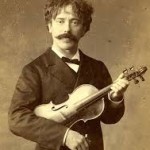
pablo de sarasate

MUSICAL NOTES : PABLO DE SARASATE

Most of us with an ear for precious Spanish melodies will be familiar with Pablo de Sarasate’s gypsy airs (Zigeunerweisen); otherwise his Carmen Fantasy. The catchiness and spontaneity of these Spanish melodies brings a pause to any table talk.
Pablo Sarasate’s home town of Pamplona situated in northern Spain is best known for its annual Fiesta de San Fermin. Few of us mere mortals would care to join the crowds of thrill seekers as they race through the city’s narrow streets pursued by rampaging bulls. The city is also host to a far less dangerous but equally thrilling opportunity to enjoy the annual Pablo de Sarasate fiesta. As a composer he is feted by some of the greatest composers of Spanish music.
Born in 1844 the gifted musician was studying music by the age of five. He was introduced to music by his father, an artillery bandmaster. The pupil later received instruction more formally from a gifted and supportive music teacher. Pablo was just eight years of age when he gave his first public concert.
His performances impressed both audiences and Spanish nobility, who were quick to sponsor the talented youngster. Soon to become a firm favourite of Queen Isabel 11, his was a talent that could never be squandered. He was just twelve years old when his proud mother decided to take him to Paris to study with the acclaimed teacher Jean Alard at the Paris Conservatoire.
Heartbreak and ill fortune was to accompany the pair. Soon after crossing the French border the prodigy’s mother suffered a heart seizure and died. When her son was taken by the police to the Spanish authorities in Bayonne, Pablo was found to be suffering from the killer disease cholera.
Touched by the tragedy, and no doubt impressed by the youngster’s musical ability and connections, the Spanish consul took the grieving boy into his home until the child recovered from his illness. As soon as the youngster recovered from his dreadful illness his benefactor sent Pablo on to Paris where he was to be auditioned by Monsier Alard. The teacher quickly saw a gift to be encouraged in the youngster.
At seventeen Pablo Sarasete was to earn the coveted Premiere Prix. He had by this time won the hearts of those who had already earned acclaim in the world of great music. Works dedicated to him included Lalo’s Symphonie Espagnole, Bizet’s Carmen, and Saint-Saëns’ Rondo Capriccioso; another foot-stamping evocation.
Sarasate was the ultimate caballero, a gentleman of refinement, elegance and impeccable dress. During his lifetime he received thousands of love letters but ignored them all and was destined to remain a bachelor throughout his life. Despite such adulation he was the personification of chivalry. The talented and popular Sarasate kept a supply of beautiful Spanish fans in order that he might leave his many lady admirers a token of his affection and gratitude.
Sarasate loved his city’s exuberant but dangerous Fiesta de San Fermin. This tumultuous event he excitedly viewed from his balcony as the scores of bulls charged through the city’s narrow winding streets.
Spain gave life to this unique composer. Few were better placed that Sarasate to give Spain to the world. Maestro Pablo Sarasate died of chronic bronchitis in 1908. When visiting Pamplona do try to visit the museum dedicated to him and listen to his music. I promise you will be captivated.

Country:Spain

Posted in Uncategorized and tagged , , ,

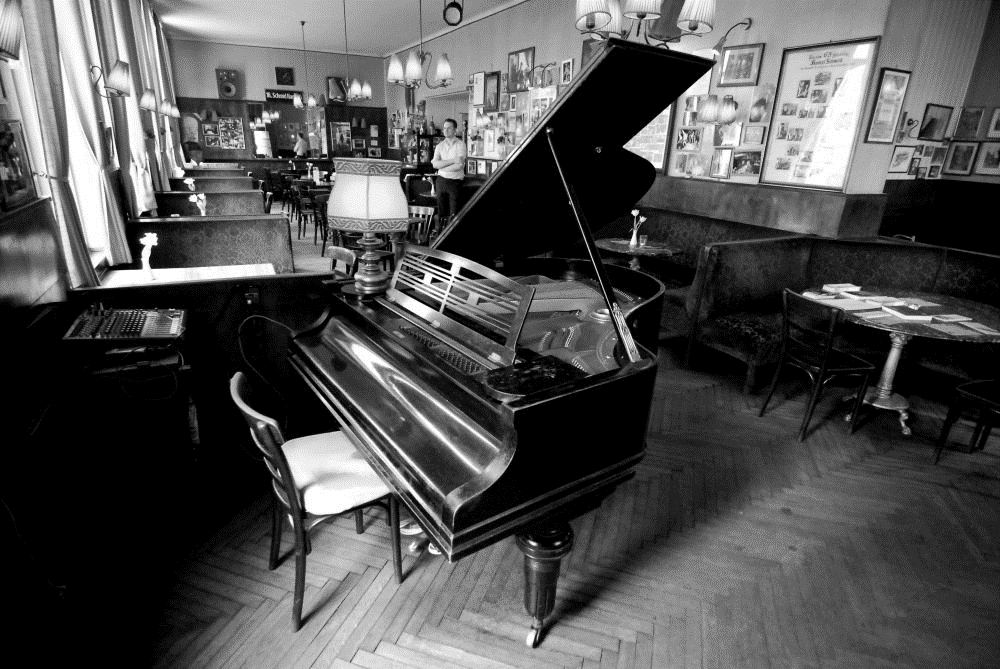
Classical music and concert halls. Expensive and big organisation effort. There are many other suitable solutions to find classical music listeners.

Cafe Hansl 1

There are many ways of presenting classical music. One of the most important is it to organise a concert in a concert hall. But this is not possible for everybody. Concert halls are very expensive and it is not so easy to fill them with audience. Therefore we search places where good musicians can find their audience. It is clear that there are unlimited possibilities. But we are searching for places that combine different features and that enable also the access to classical music listeners who do not go normally in a concert hall.

Country:

Posted in Uncategorized and tagged , , ,