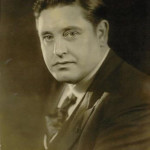
Forgive me if some of the artistes I cover tend to belong to a previous generation or two. I do so for a reason. Many of the older generation recognise and appreciate truly great music. It is my fond hope that mentioning such names as Irish tenor John McCormack will encourage younger generations to take a step back. Perhaps they would extend their small and great pleasures of life by discovering that there is much more to music than that foisted upon them today.
John McCormack, the forth of eleven children, was born of humble Irish beginnings. He was not humble for long. Quite early on in his singing career he became a confidant of the Irish writer James Joyce. James was related to William Joyce, inaccurately described as World War Two’s Lord Haw Haw. The Irish tenor, McCormack was to become one of the 20th Century’s greatest and richest musicians.
As with many great tenors today, McCormack’s singing accomplishments were broadly based and crossed the social classes. However, he was first and foremost considered an Italian-style singer. Furthermore, he recorded French operatic arias in the Italian language. Ask your average singer how many notes he can sing in one breath: McCormack could hit 64 notes before drawing the next breath.
Up until his death in 1945 John McCormack was one of the world’s top recording stars. He broadcast regularly by radio and featured in several movies. As a child, whenever a song of his was announced by a radio presenter, my Irish mother would threaten us with an instant and very cruel death if any of her five brats uttered a word.
McCormack was not just a tenor for opera toffs: Most will remember him for the most famous of all the Great War’s songs; It’s a Long Way to Tipperary. McCormack was the first to record this ballad it. Many will remember the Forces Sweetheart Vera Lynn’s Keep the Home Fires Burning; this was another of the Irish tenor’s great singing successes.
Those were the days when great singers shaped the generation’s thinking. Such periods known as Victorian or Georgian could as easily be said to be McCormack, Beatles or Pavarotti eras. Their stamp on the nation’s psyche was as deep.
McCormack’s was an age that was evoked by songs and ballads such as The Wearing of the Green, The Minstrel Boy, and The Last Rose of Summer. There seemed to be less of a barrier between opera and the ballads so beloved by our cloth-capped forebears. The barrier is being broken down today by Andre Bocelli and Welsh diva Katherine Jenkins.
Long before the Beatles and Madonna, John McCormack, largely unknown to hundreds of millions of those born after 1945, was one of the world’s most acclaimed and richest performers.
The tenor lived internationally and owned owned race horses and stables. He splashed out as only the truly wealthy can and bought Runyon Canyon near Hollywood. He surely warmed to it when he was filming Song o’ My Heart as his earnings from the film paid for it. The world famous singer named the mansion built at Runyon Canyon San Patrizio after the patron saint of Ireland. It became a much used watering hole by the Hollywood greats of the period.
He ended his life at his home near Dublin at the age of just sixty-one. No one can follow his bright starlit curve through the first half of the 20th Century without being impressed by the career of a child born of Co. Athlone Irish mill workers.
Posted in Singer and tagged A Long Way to Tipperary, Irish Tenors, John McCormack, The Last Rose of Summer