Great to have you back!
0
Videos
About
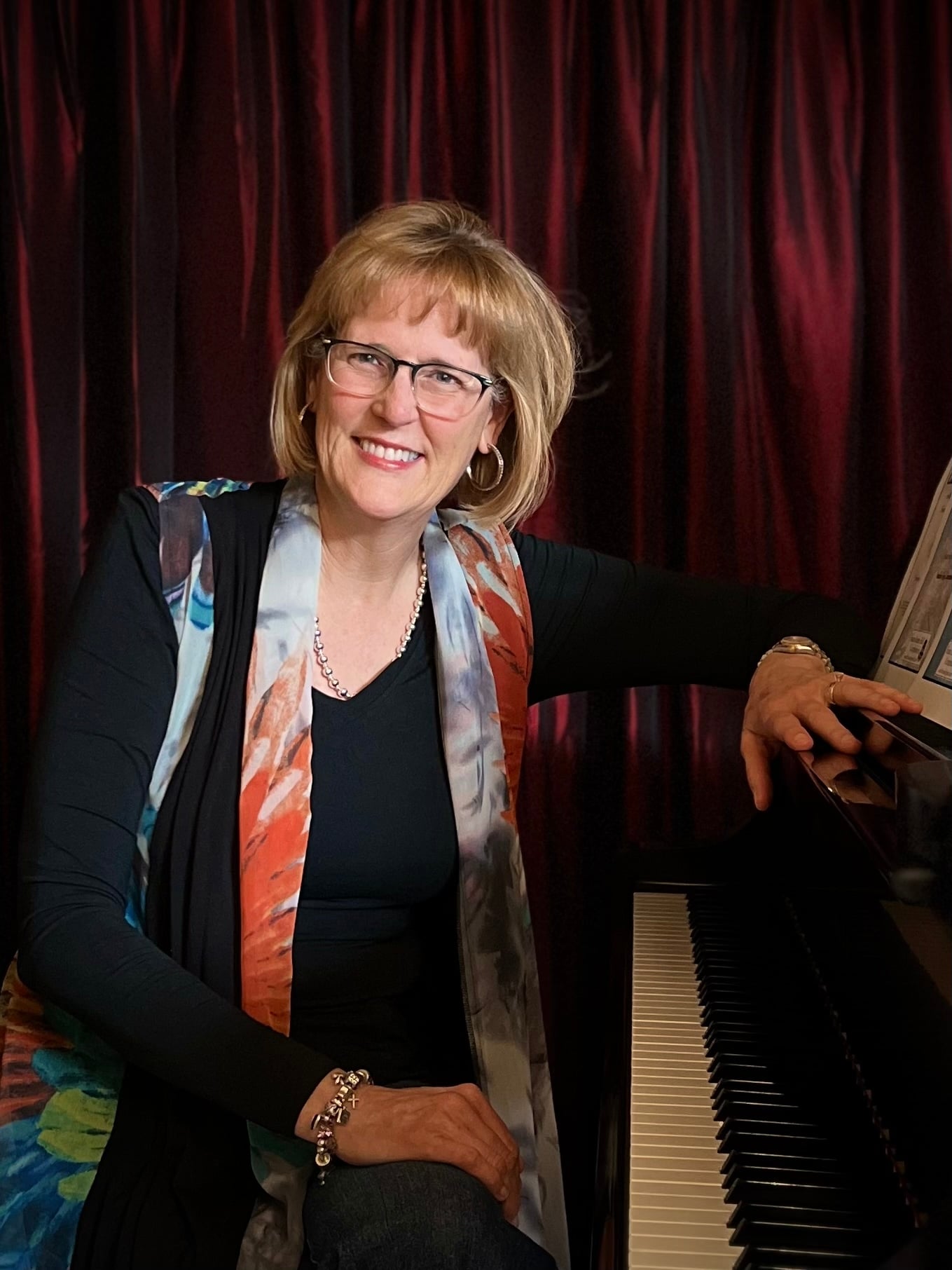
Susan Staples Bell is an American composer, pianist, and educator based in Texas. She holds a Bachelor of Music in Music Education from Trinity University and a Bachelor of Music in Composition from The University of Texas at Austin. She is a member of MTNA and ASCAP. She has composed over 300 works for piano, performed and studied by teachers and students throughout the United States and internationally. Her writing is recognized for its imaginative storytelling, strong melodic voice, and thoughtful pedagogical design, integrating classical traditions with improvisatory and contemporary influences. In addition to her compositional work, she maintains an active private studio and presents nationally on creative approaches to piano education. Her work is available at susanstaplesbellmusic.com.
Videos
Sheets
Interview
What does music mean to you personally?
Music has always felt like both a language and a refuge to me. It’s how I process joy,
questions, tension, beauty — all the things that are sometimes difficult to say out loud.
As a child, I experienced music as imagination. As an adult, I experience it as connection.
When I compose or teach, I’m not just thinking about notes on a page — I’m thinking about
what that sound unlocks emotionally. Music gives us access to something deeper than
words. It invites us to listen — not just with our ears, but with our whole attention.
Do you agree that music is all about fantasy?
Fantasy is certainly one doorway into music — especially for children. Story, imagery, and
imagination make music come alive.
But I wouldn’t say music is only about fantasy. Music is also structure, discipline,
architecture, listening, collaboration. It’s both imagination and craftsmanship. The magic
happens when those two things meet — when creative vision is supported by technical
fluency.
In my own work, I often use story as an entry point, especially for students. But underneath
the story is very intentional musical design.
If you were not a professional musician, what would you have been?
I suspect I would still be doing something creative and educational. Perhaps writing, or
designing curriculum, or even something in visual arts. Or maybe a landscape designer…
At heart, I love building experiences that help people discover something new about
themselves. Music just happens to be the medium I speak most fluently.
The classical music audience is getting old, are you worried about the future?
I’m not worried — but I do think we have work to do.
When music feels distant, overly formal, or inaccessible, younger generations disengage. But
when music feels participatory, imaginative, and emotionally relevant, they lean in.
In my experience as a composer and teacher, young people are not resistant to classical music
— they’re resistant to feeling excluded from it. If we invite them into the process — not just
as listeners, but as creators — the future becomes much brighter.
What do you envision the role of music to be in the 21st century? Do you see that there is a
transformation of this role?
We are living in an age of speed and noise. Music has the potential to be a counterbalance
— a place of intentional listening and depth.
At the same time, the role of music is expanding. Technology allows for new forms of
access, collaboration, and creativity. The transformation I see is this: music is becoming
less about hierarchy and more about participation.
The 21st century musician is not just a performer. They are a communicator, a creator, and
often an educator.
Do you think that the musician today needs to be more creative? What is the role of creativity
in the musical process for you?
Absolutely.
Creativity is not an optional extra — it is central. Historically, many of our great composers
were also improvisers. Yet in modern training, improvisation and creativity are often
separated from classical study.
In my own composing and teaching, creativity is the bridge. I want students to move beyond
reproducing notes to understanding how music works. When they improvise, explore patterns,
or shape phrasing intentionally, they become active participants in the art form.
Creativity transforms music from something performed to something experienced.
Do you think we as musicians can do something to attract the younger generation to music
concerts? How would you do this?
Yes — and I think the key is context and connection.
Young audiences respond to storytelling, to understanding why a piece exists, what it
expresses, and how it relates to their world. Pre-concert conversations, multimedia elements,
or even brief explanations from performers can create powerful bridges.
I also believe programming matters. Blending historical repertoire with contemporary works
— especially music written for today’s students and emerging artists — helps younger
listeners see themselves reflected on stage.
Tell us about your creative process. What is your favorite piece (written by you) and how did
you start working on it?
My creative process often begins with an image or a teaching need.
Sometimes it’s a visual idea — a medieval chase, a winter texture, a jazz groove. Other times
it begins in the studio, when I notice a technical concept students need to master. I ask myself,
“How can this feel musical instead of mechanical?”
One piece that has had a particularly meaningful journey is Funky Gecko, which is currently
being performed by pianist Anna Heller. The piece actually began its life as a jazz band work.
When I was in high school, I performed Herbie Hancock’s Chameleon in jazz band, and its
groove stayed with me for years. When I later began composing Funky Gecko, I intentionally
borrowed five notes from the opening melodic idea of Chameleon as a quiet tribute. I wanted
to honor that influence — not by replicating the piece, but by capturing its rhythmic vitality
and forward motion. Even the title is a playful nod to that origin.
The work was born from groove rather than melody. Rhythm defines its character, and the
melodic material grows organically from that pulse. I loved the energy so much that I later
reimagined it as a solo piano piece, wanting that same drive and personality to live under a
pianist’s hands.
Its journey reinforces something I believe deeply: music written for developing pianists does
not need to feel small. It can carry bold character, artistic integrity, and concert-stage
presence.
Can you give some advice for young people who want to discover classical music for
themselves?
Start with curiosity, not obligation.
Listen widely. Explore different composers and eras. Notice what resonates emotionally.
Classical music is not a single style — it’s a vast landscape.
And if you play an instrument, experiment. Improvise on themes you love. Change the
rhythm. Re-harmonize a melody. When you engage actively, the music becomes yours.
Do you think about the audience when composing?
Yes — especially because much of my work is written for students.
I think about their hands, their level of experience, their attention span, and their emotional
world. I want them to feel successful quickly, but also challenged in meaningful ways.
For me, composing is an act of empathy. I imagine the player at the piano and ask, “What will
make them curious and intrigued?”
When a performer like Anna Heller brings one of my pieces to the stage, it reinforces
something I deeply believe — music written for developing pianists can live beautifully in a
concert setting. Audience and student are not separate worlds. They are part of the same
artistic continuum.
What projects are coming up? Do you experiment in your projects?
I am continually exploring ways to blend structured classical training with improvisation and
storytelling.
Currently, I am expanding collections that integrate creative elements into traditional study —
encouraging students not only to read music, but to understand and shape it.
Experimentation is essential to growth. Whether through multi-level ensemble writing,
creative lead sheets, or thematic collections, I am always asking how music can remain both
rigorous and joyful.
Copyrights © 2019 Moving Classics TV All Rights Reserved.
